Val Gardena vs Cortina: Which Base Fits Your Trip Style?
You’re not choosing between the wrong options here. You’ve already done the hard part.
If you’re stuck between Val Gardena vs Cortina d’Ampezzo, it means you’ve narrowed your Dolomites trip down to two genuinely excellent bases in the Dolomites for a first trip.
That’s a good place to be. Slightly annoying, yes. But good.
This decision isn’t about which one is “better.” It’s about which one fits how you actually want to travel. How much driving you’re okay with. Whether you want your days to feel effortless or flexible. Whether your version of a great day leans more trail-first or view-first.
The short answer is:
Choose Val Gardena if you want easier days.
Choose Cortina if you enjoy building each day yourself.
But of course, we need to look deeper at access to hiking, driving versus cable cars, scenery style, town feel, and which base makes your days simpler depending on how you like to travel.
I’ve been to both multiple times, planned trips to and from both, and watched people absolutely love their choice… or quietly wish they’d picked the other one. And yes, I’ve also been there.
By the end of this, you won’t feel torn. You’ll feel clear. And once you’ve made that call and chosen the base, knowing where to stay becomes the piece that actually determines how smooth your days feel.
This Comparison Assumes One Thing (And If It’s Not You, Stop Here)

I assume that you’re already past the “where should I stay in the Dolomites?” spiral.
You already know why base choice matters. You’ve accepted that trying to stay in five different places in one week is a bad idea. And you also know that staying in one place and somehow seeing the entire Dolomites is just not feasible, no matter how optimistic your Google Maps pins look.
You’re not here for an introduction to the Dolomites like it’s a PowerPoint presentation.
You’re here because it’s come down to Val Gardena or Cortina d’Ampezzo, and you want to make sure the one you pick actually fits how you like to travel.
This comparison also assumes:
- You’re choosing one main base, not hopping hotels every night
- You’re okay missing a few things in exchange for realistic days
- You want a trip that feels smooth, not heroic
If you’re still overwhelmed, still Googling “best base Dolomites first time” at midnight, or secretly hoping there’s a third magical option that lets you see everything without trade-offs, stop.
Instead of this article, you need to go and read the Where to Stay in the Dolomites overview first. Or the Best base for your first trip one. Those will help you narrow things down without spiraling.
This post isn’t meant to calm chaos. It’s a Dolomites base comparison, meant to confirm a decision you’re already close to making.
Sounds like you? Ready to make a decision? Awesome, let’s choose between Cortina d’Ampezzo and Val Gardena.
Val Gardena and Cortina At a Glance (The Energy Check)
Before we get into specifics, this is the fastest way to see which base already fits you better. No spreadsheets. No over-analysis. Just overall feel.
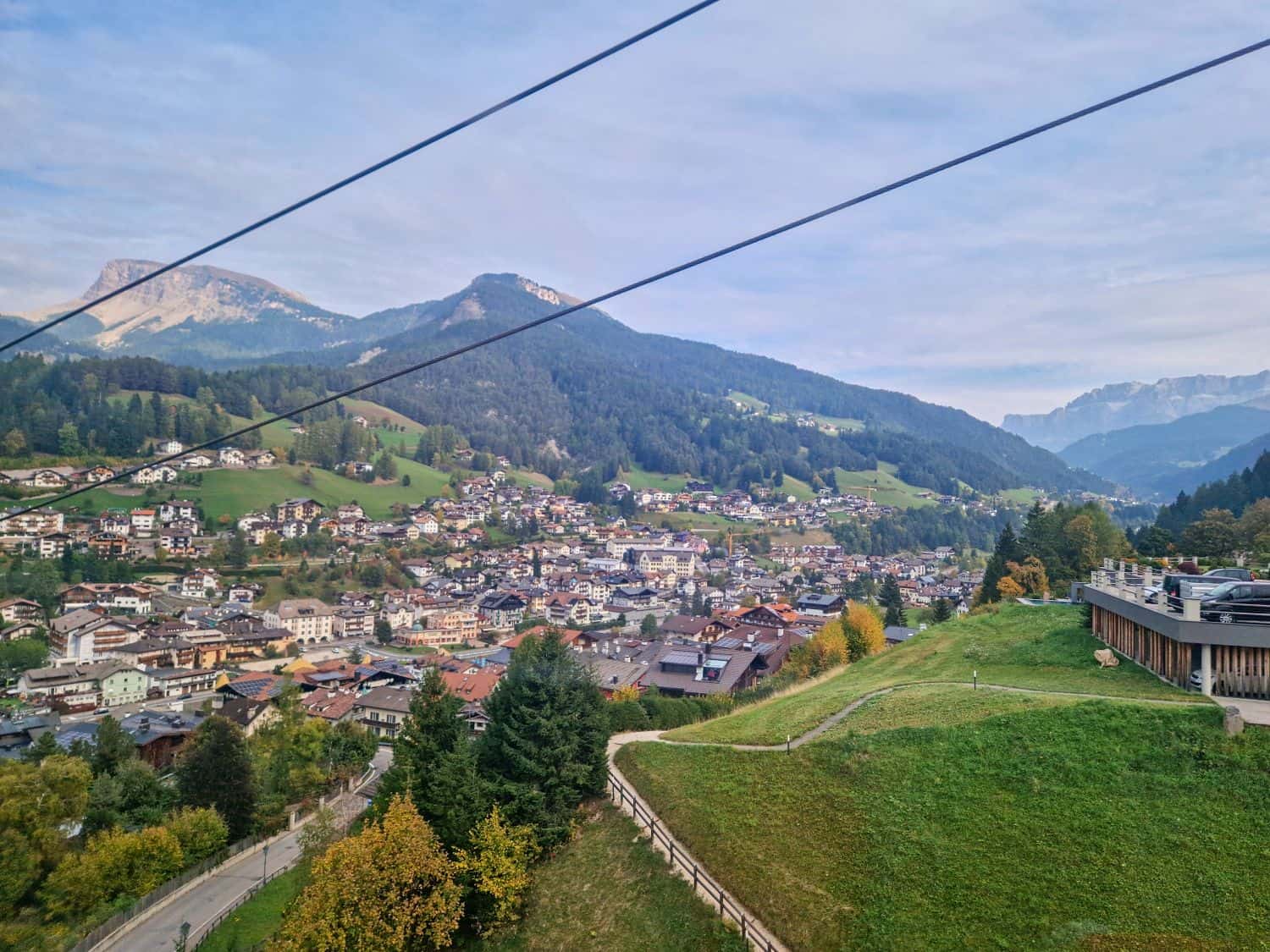
Val Gardena feels like:
- Compact, well-connected mountain villages
- Days that start easily and stay predictable
- Hiking as the default, not a special outing
- Less daily decision-making once you’re there
- A calmer, more structured rhythm
If you like waking up knowing your day will flow smoothly without much tinkering, Val Gardena usually feels reassuring very fast.
Cortina d’Ampezzo feels like:
- A famous and iconic Dolomites town with a strong identity
- Big, dramatic scenery that changes day to day
- Driving as part of the experience
- More freedom, more daily choices
- A livelier, more social atmosphere
If you enjoy variety, iconic views, and choosing your plan each morning, Cortina tends to click immediately.
The quick gut check
Most people already lean one way after this question:
- Do you want your base to simplify your days, or expand your options?
- Would you rather minimize daily logistics, or treat movement as part of the trip?
- Does “smooth and predictable” sound better than “flexible and varied”?
If one of these sections made you nod along, that’s not accidental.
Choose Val Gardena If Your Trip Looks Like This
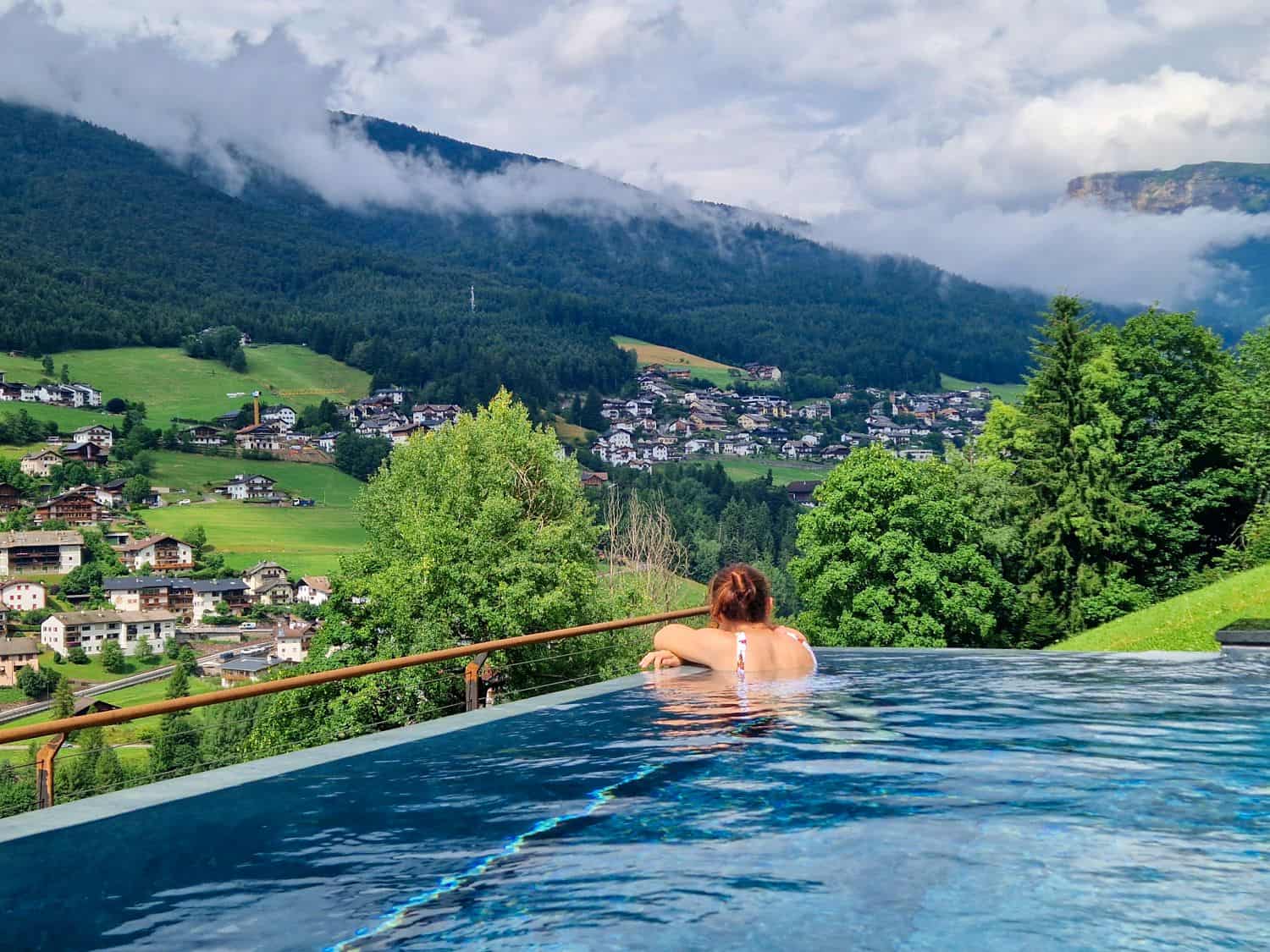
Val Gardena works best if what you want is smooth days, not heroic ones.
You like knowing you can get to great trails and lifts without getting in the car every morning. You prefer compact villages where walking to dinner feels normal. You want logistics that make sense at a glance, not something you have to negotiate every night.
And no, that doesn’t make you boring. It makes you realistic.
What sets Val Gardena apart is range. Not just easy versus hard, but effort versus reward. You can step out of your hotel, hop on a cable car, and be in the mountains within minutes. (Of course, that only really works if you’re staying in the right part of the valley – location matters a lot more here than people expect.)
From there, you decide. Short, flat, stroller-friendly walks with ridiculous scenery. Easy ridge paths that feel epic without draining you. Or full-day hikes with real elevation and scrambly sections if you’re in the mood.
The key difference is this: the reward scales with you.
You don’t have to work hard to get something beautiful here, but you can if you want to. One person can do a full loop, someone else can turn back after 20 minutes, and nobody feels like they picked the wrong option. And if waking up to a view of the mountains is important to you, Val Gardena has quite a few options.
Now, let’s deal with the crowd myth.
Yes, places like Seceda and Alpe di Siusi are popular. That’s not a secret. But crowds here concentrate in very specific spots at very specific times. Walk a little farther, choose a slightly different path, or shift your timing, and the experience changes fast. Val Gardena isn’t crowded everywhere. It’s predictably busy, which is much easier to manage.
This is also why Val Gardena is forgiving.
If the weather shifts or your energy drops, you’re not punished for it. You don’t have to scrap the day or drive an hour to salvage something worthwhile. There’s almost always a lighter version of your plan that still feels completely worth it.
Val Gardena tends to click if:

- You want easy access to trails and lifts without driving every day
- You like compact villages and walkability
- You appreciate structure and efficient logistics
- You’re hiking-focused, even if you’re not hardcore
- You want mountains, not a base that feels like a city
This is why Val Gardena works so well for first-timers. Not because it’s simple, but because it gives you control. You can scale your days up or down and still feel like you experienced the Dolomites properly.
If this sounds reassuring rather than limiting, that’s your answer. Time to look for a hotel!
Choose Cortina If Your Trip Looks Like This
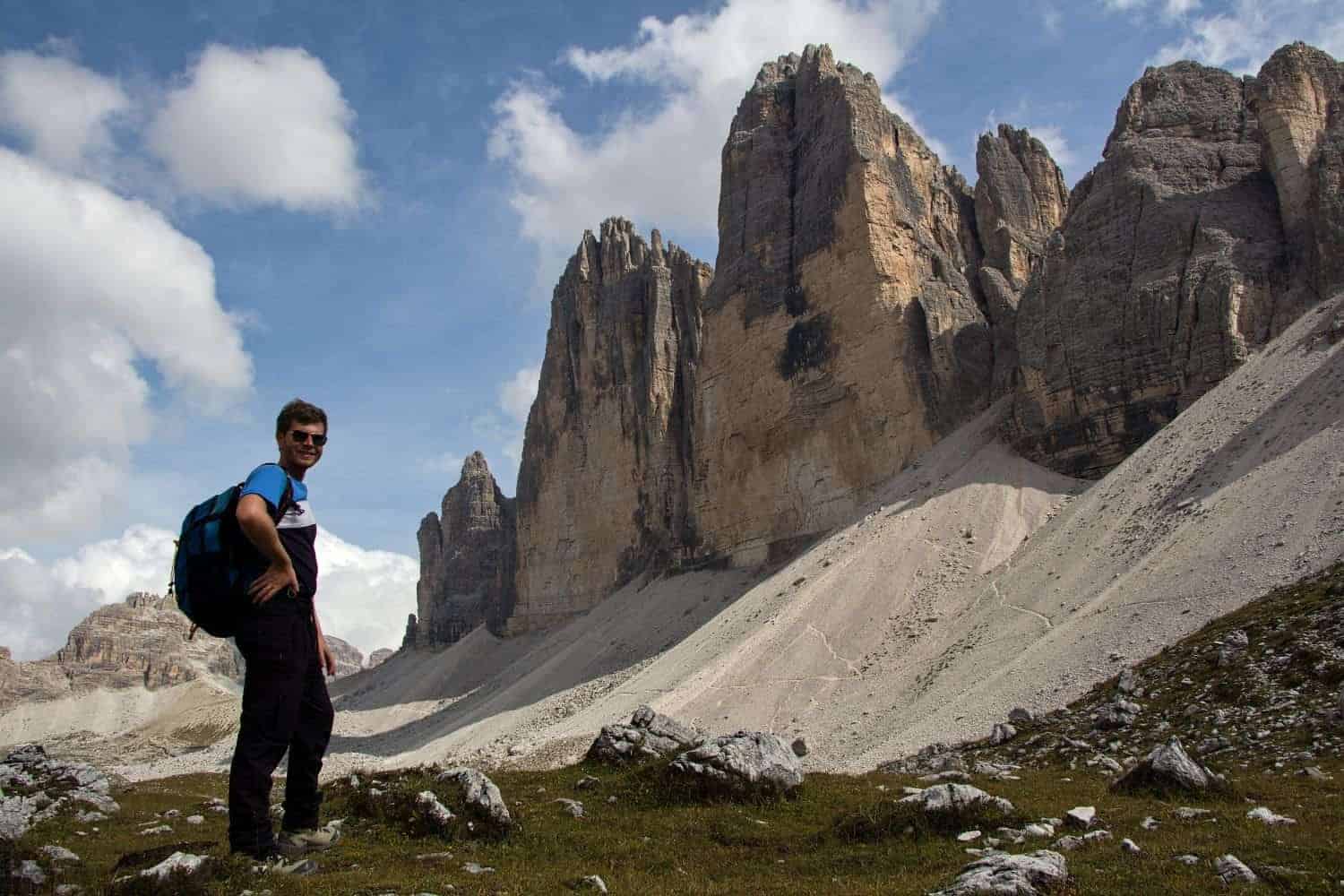
Cortina works best if you like being in charge of your days.
Not “I’ll figure it out if I have to.”
Actually like it.
You’re fine with driving most days. You don’t mind waking up and deciding whether today is lakes, viewpoints, or a hike that might turn out harder than it looked online.
You don’t need your base to quietly organize things for you.
If that sounds annoying, Cortina will annoy you.
If that sounds fun, Cortina usually feels incredible.
Cortina isn’t compact, and it doesn’t try to be. It’s a real town sitting in the middle of a dramatic, spread-out chunk of the Dolomites. The payoff comes from movement. Different trailheads, different scenery, new decisions every day.
Cortina works best when your accommodation supports that flexibility.
And the hiking matches that energy.
Around Cortina, trails often start friendly and then get serious. They narrow. Gravel shows up. Sometimes there are ladders or cables. You’re regularly deciding how far to go and when to turn around.
That’s not a flaw. That’s the point. This is not a base where you stumble into greatness by accident.
Cortina tends to click if:
- You don’t see driving as wasted time
- You enjoy choosing your plan each morning
- You want variety more than efficiency
- You’re comfortable adjusting when conditions change
- You like ending the day in an actual town
About crowds, quickly.
Yes, the famous spots get busy. That’s true. But Cortina doesn’t trap you – it gives you choice. If one place is chaos, you usually have three other directions you can pivot to. That flexibility is the upside of everything being more spread out. You just have to use it.
But. Here’s the honest trade-off.
Cortina d’Ampezzo gives you freedom, yes, but it expects effort in return. You will think more and you will decide more. Some days will feel brilliant, and some days will feel a bit messy.
If you want everything to flow without friction, this might start to feel a bit like work. Like, it’s not that hard, but it’s also not as easy as Val Gardena. And what hotel you choose in Cortina is more important than in Val Gardena.
But if you like trips that feel active, dynamic, and a little bit self-directed, Cortina rarely feels boring.
If you’re reading this and thinking, “Yeah, I want that kind of trip,” then you already know. Cortina isn’t better than Val Gardena. It’s just asking a different kind of question.
If this sounds exhilarating, Cortina is the choice for you.
And if Cortina is a bit too upscale for you hotels-wise, you can check places like Dobbiaco. It’s still conveniently located, but more budget-friendly. And if you’re going in off-season, like April, Dobbiaco is also a better choice.
What If Neither Val Gardena nor Cortina d’Ampezzo Fully Fits? (This Is Where Alta Badia Enters the Chat)
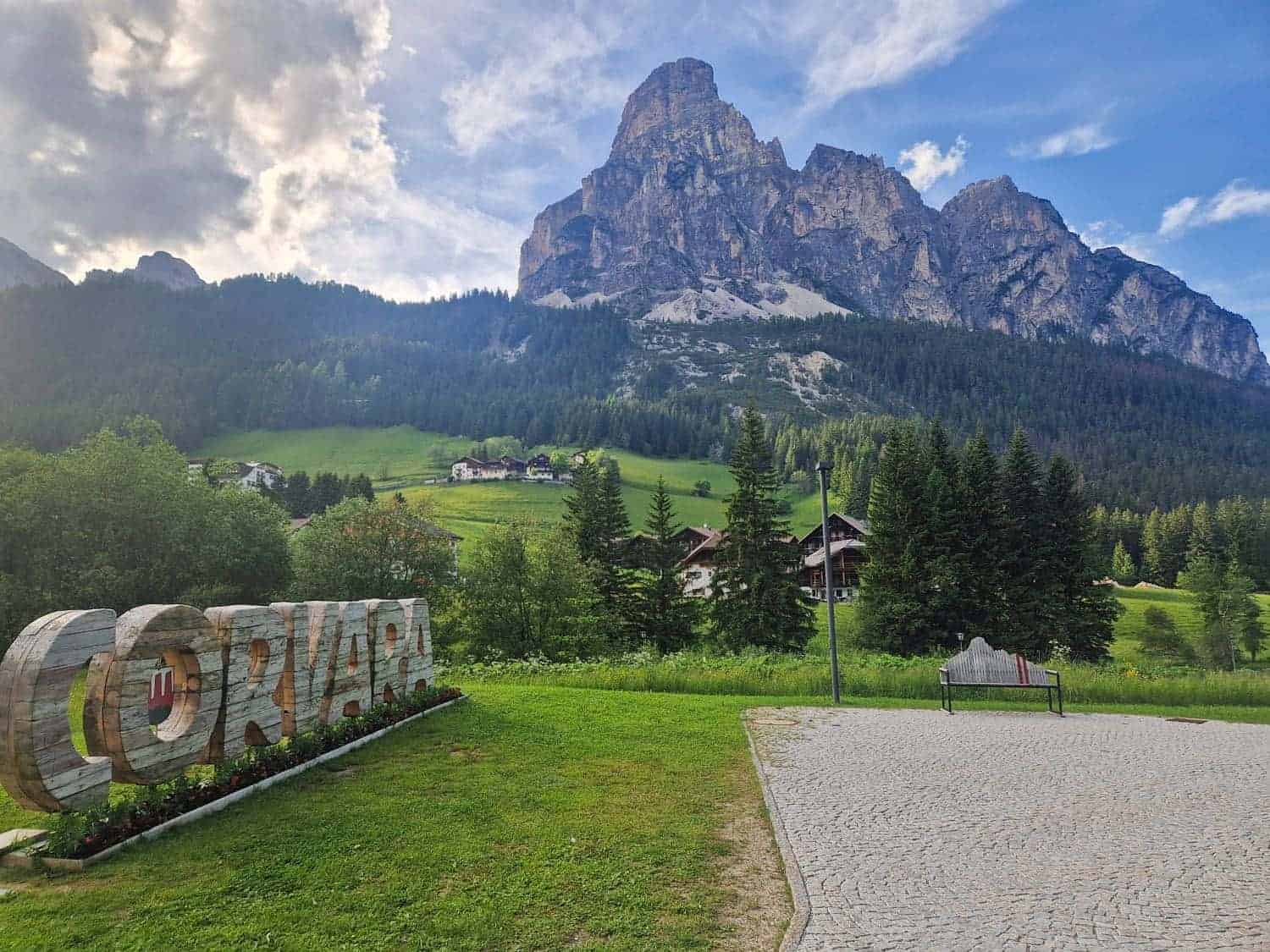
If Val Gardena feels a bit too optimized and Cortina feels like too much time spent driving, you might be looking at Alta Badia. That instinct isn’t wrong – it just needs context.
Alta Badia is quieter, more local, and far less focused on the Dolomites greatest hits. It doesn’t hand you dramatic viewpoints easily, and it doesn’t make things convenient by default. The hiking here is excellent, but generally more demanding – longer, steeper, and more alpine than what most first-timers expect.
You don’t get the same density of easy, wildly rewarding hikes you find in Val Gardena or around Cortina. Alta Badia tends to work better if you actually want to earn your days a bit.
Evenings are calm, towns are small, and food matters in a low-key, taken-seriously way. Dinner isn’t an afterthought here – it’s part of the rhythm.
Here’s the important part though.
I don’t usually recommend Alta Badia as a first Dolomites base.
If you haven’t seen the classic scenery yet, it can feel subtle rather than satisfying. Alta Badia shines more once you already understand the Dolomites and don’t feel the need to chase the must-sees.
Alta Badia works best if:

- You’ve already visited places like Val Gardena or Cortina before
- You’re comfortable with longer, more demanding hikes
- You don’t need iconic viewpoints every day
- You value quiet evenings and good food over variety
If this is your first Dolomites trip, Val Gardena or Cortina will usually give you more immediate payoff. Alta Badia is better saved for later.
And if you’re thinking, “That sounds great, but not for this trip,” that’s not indecision. That’s good planning.
The Trade-Offs People Don’t Talk About (But Should)

You don’t actually understand them until you’re there.
Not while planning. Not on Instagram. Not on Google Maps.
Usually somewhere around day three, when the novelty wears off and your real travel habits take over.
That’s when your base choice decision stops being theoretical and starts feeling very real.
Daily friction vs daily freedom
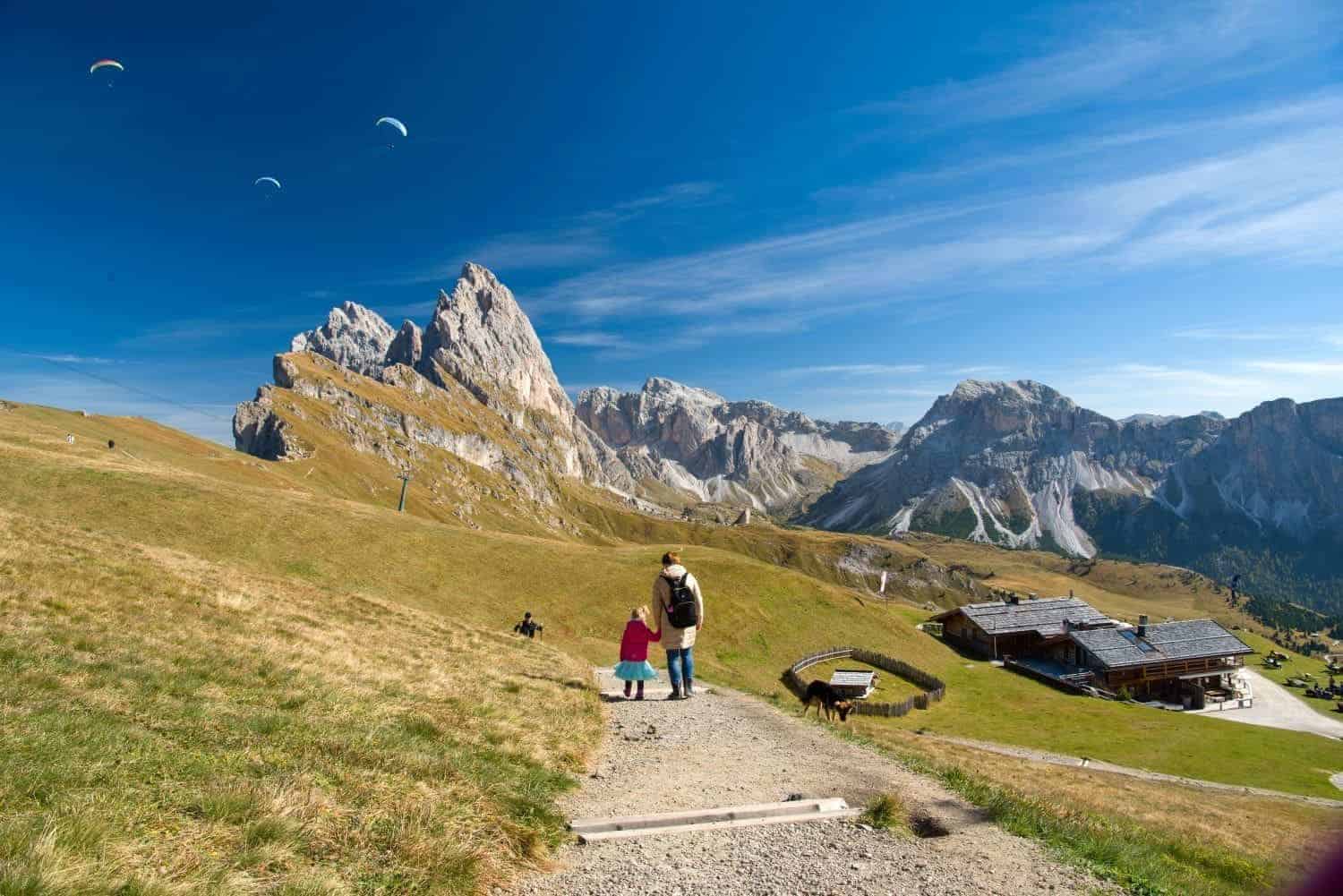
Val Gardena absorbs friction for you.
Cable cars take care of much of the vertical, trail access feels obvious once you’re there, and days tend to unfold smoothly without much negotiation. You spend less mental energy making the day work and more time actually enjoying where you are.
That flexibility matters more than people expect.
I’ve seen this play out very clearly with clients. One had planned an e-bike day on Alpe di Siusi that sounded great on paper, but partway through it became obvious it was far more demanding than expected.
And yes, Alpe di Siusi is not a flat meadow, no matter what the photos suggest.
Cutting the plan short didn’t cause stress or panic, because there were easy, low-effort alternatives everywhere. The day shifted, but it didn’t fall apart.
That’s what friction absorption looks like in real life.
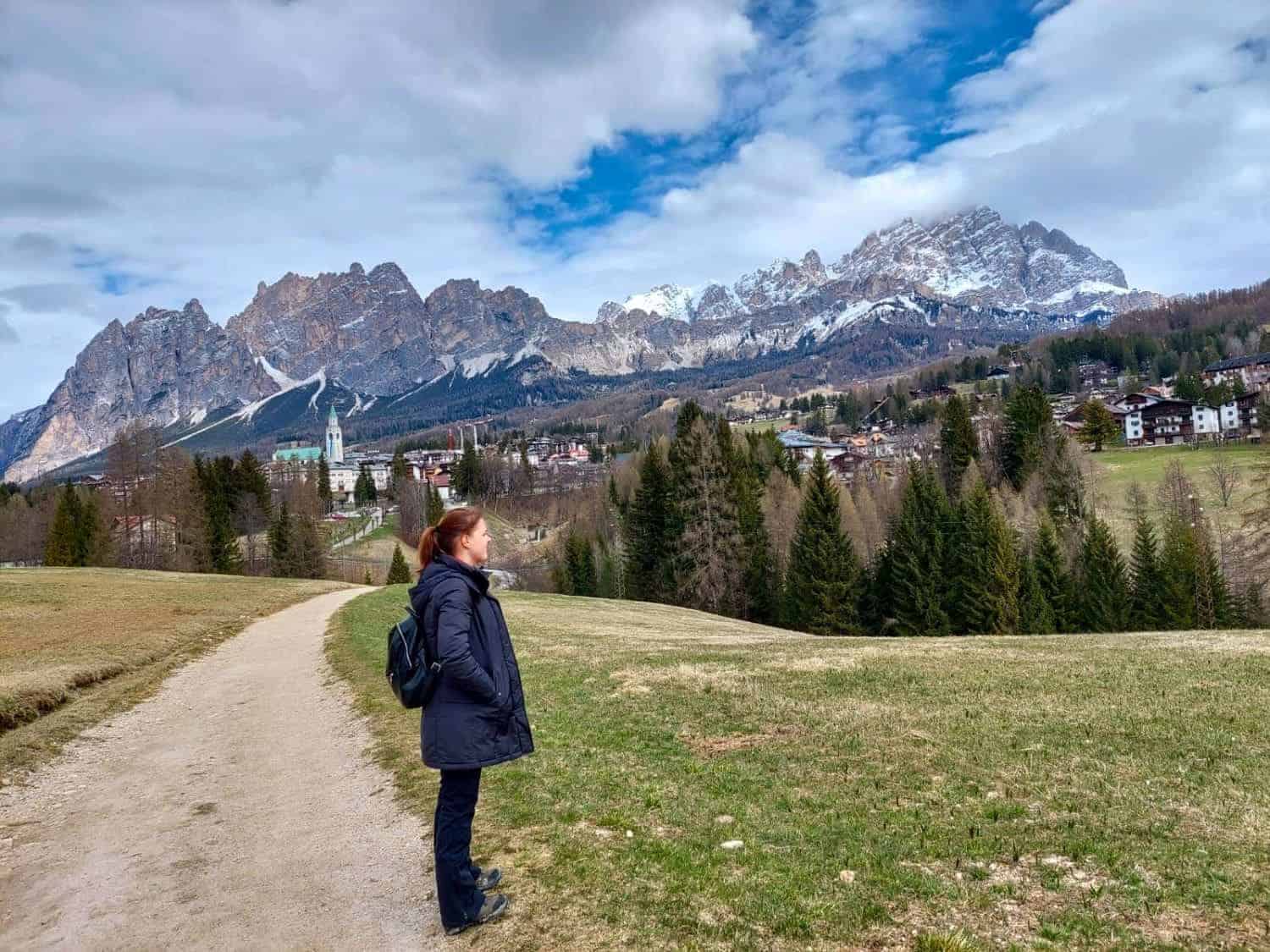
Cortina d’Ampezzo works differently. It gives you freedom instead.
More directions and more variety, but that freedom comes with decisions you have to make yourself. Where to go, when to leave, and what to do when a plan doesn’t work out the way you imagined it would.
I felt this very directly on a trip with a friend when I had planned a full “best of the Dolomites” road trip day out of Cortina. It looked efficient and impressive on a map, and it would have been completely, irrevocably terrible in real life. Don’t plan that. It will not be possible.
So there we were, sitting in our apartment, scrapping the plan and starting over. We threw a few pins into Google Maps, picked a direction, and drove. It worked because we’re both very comfortable going with the flow and making decisions as we go.
The real question is whether you are.
Neither base is better than the other. They just cost you different things.
Weather flexibility is not the same thing in both places
Val Gardena handles uncertain weather better.
When clouds roll in or energy dips, you can usually adjust without scrapping the day entirely. Shorter walks, different lifts, or lighter versions of the same plan still feel worthwhile, and in many cases you can simply keep going if conditions stay safe.
We saw this firsthand in July, when we got caught in multiple rain showers and even a thunderstorm while out on the trails. Luckily, large parts of the routes ran under tree cover, which meant we stayed safe and relatively dry. The day didn’t need rescuing, it just shifted shape a bit and carried on.
That kind of flexibility lowers the stakes in a big way.
Cortina d’Ampezzo lets you change direction too, but it asks more of you when plans shift.
You often commit to a drive or a specific trailhead, and when weather intervenes, the adjustment feels bigger. If a plan fails, it fails more visibly. You pivot, but you feel the pivot.
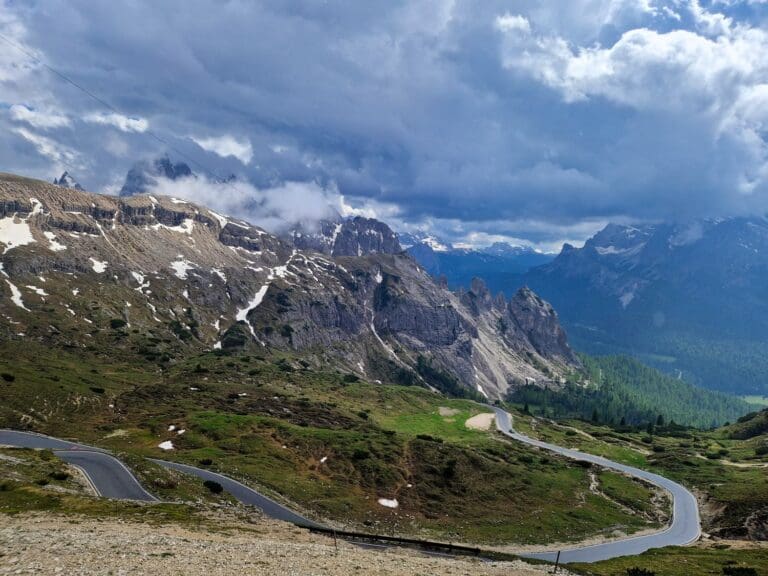
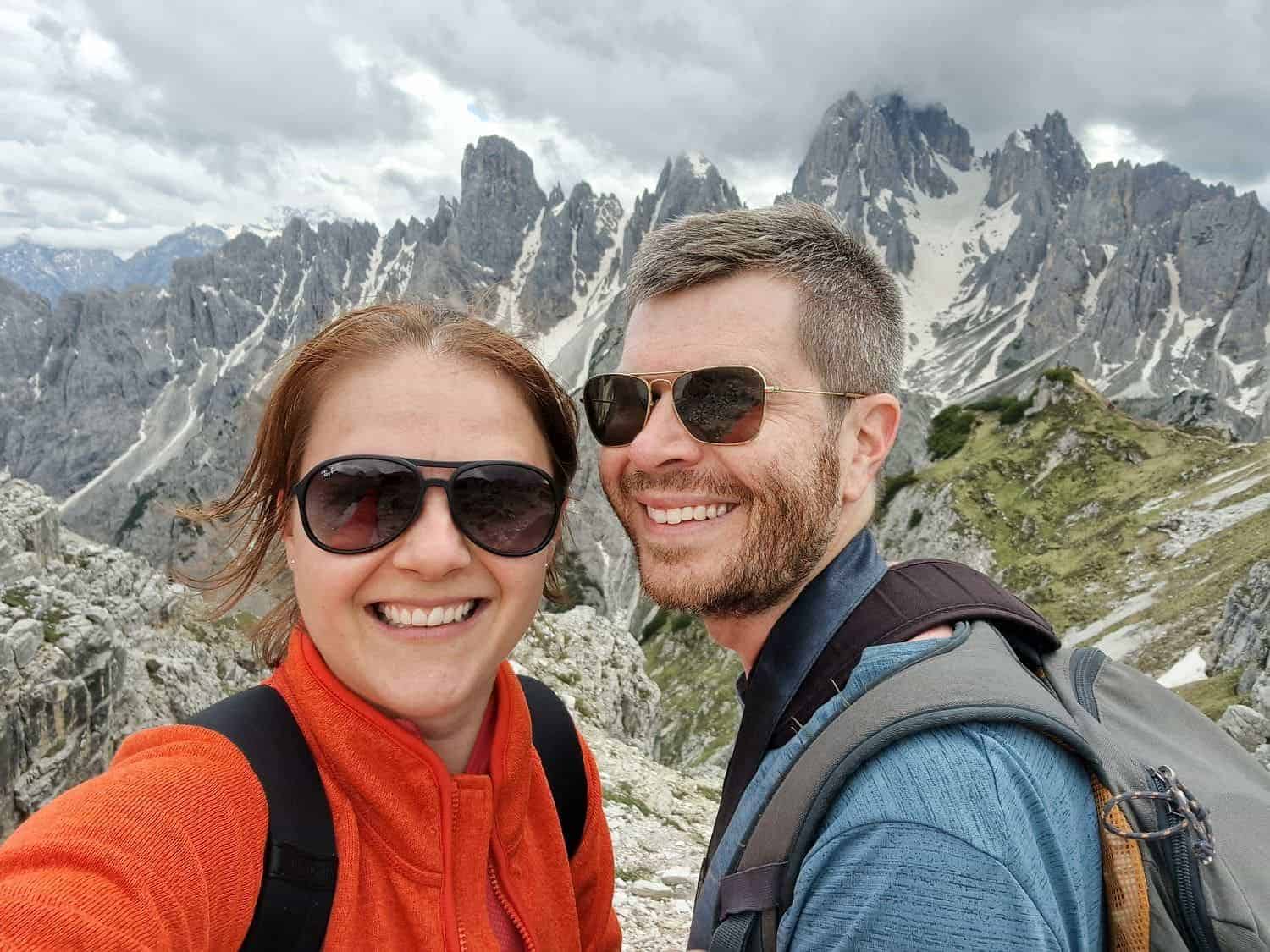
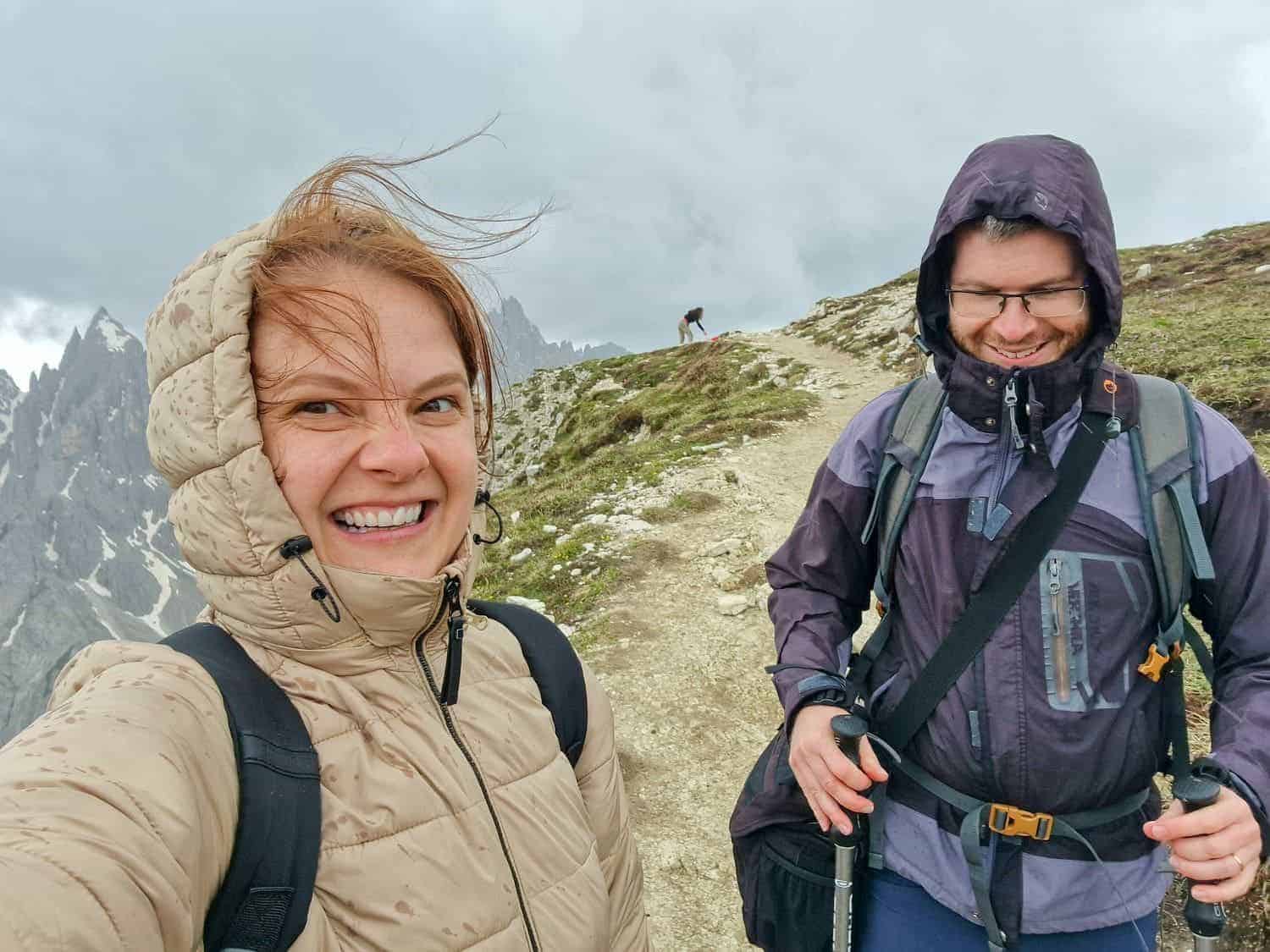
We felt that contrast at the Cadini di Misurina viewpoint when a rain shower surprised us at the, well, viewpoint. The trail there is narrow and rocky, which already demands attention, and once rain, lingering snow, and reduced visibility entered the picture, it stopped being a “let’s linger” kind of place very quickly. I remember thinking we should have snapped the photo and gone.
We were safe, obviously, and we even got rewarded with a spectacular rainbow in the end. Still, parts of that walk felt… interesting in a way you don’t necessarily want when weather turns on you.
If weather stress makes you tense, this difference matters more than you think.
Crowds and access work differently in each base
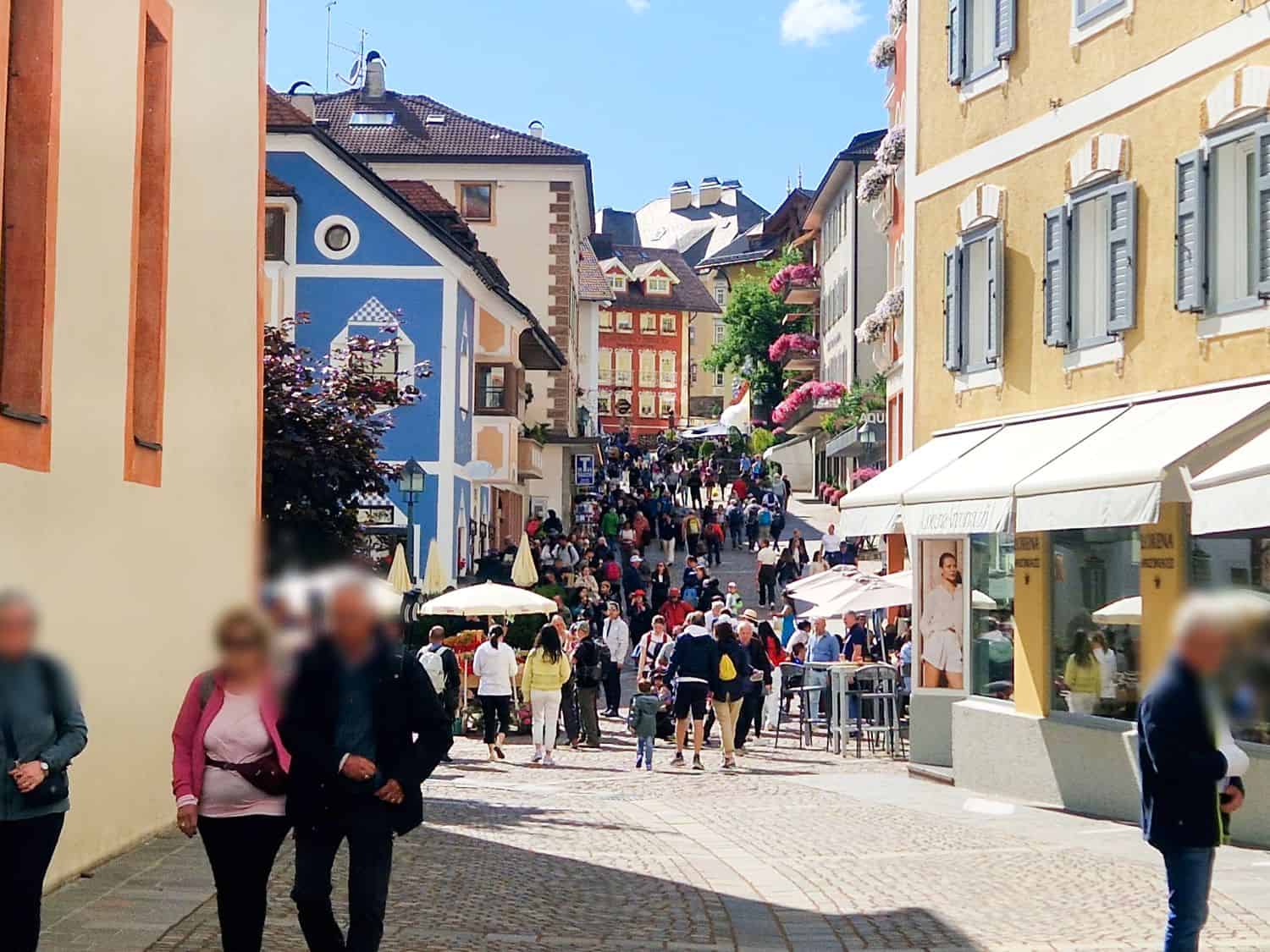
Val Gardena makes it easier to get away from people because the trail network is more legible once you’re actually on the ground. You can see where paths branch off, how routes connect, and which directions quietly pull you away from the busiest spots. Quieter trails aren’t hidden, and you don’t need insider intel to find them. You just… keep walking while others stop.
Once you understand the layout, escaping the crowds feels intuitive. Walk a little farther. Take the less obvious fork. Continue when most people turn back. The vibe changes faster than you expect, and you don’t have to outsmart anyone to make that happen.
In Cortina d’Ampezzo, crowds are less about “too many people everywhere” and more about how much effort it takes to get past them.
At places like Lago di Braies, most people pile up right at the arrival area. If you walk fifteen or twenty minutes in either direction around the lake, it already feels noticeably calmer. Same story at Tre Cime di Lavaredo. The easiest, most obvious sections soak up the crowds, and they slowly thin out the farther you’re willing to go.
But here’s where Cortina gets spicy.
Sometimes the crowd problem shows up before you even start walking. Parking fills early. During peak periods, access to places like the Braies Valley or Rifugio Auronzo can require a reservation just to get in the door… or road, as it is.
If you mistime it, congratulations, your hike just got longer and not in the fun way.
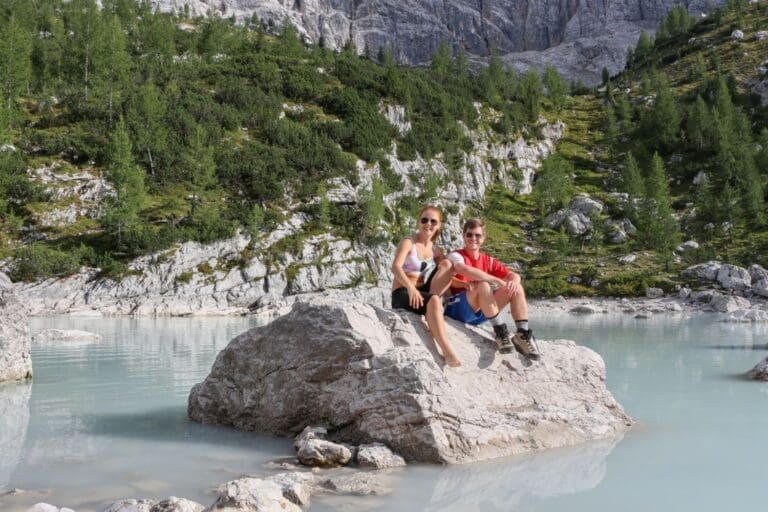
And on hikes like Lago di Sorapis, you should plan on company. You’ll meet people on the trail, you might wait at narrower sections, and you will not have the lake to yourself. You can still enjoy it, but solitude is simply not on the menu.
You can work around crowds in Cortina. People do it all the time. It just usually means earlier alarms, more driving, longer approaches, or accepting that the first half of the experience will be busy before it calms down.
So the real question isn’t whether crowds exist.
It’s whether you want easy, intuitive escape routes, or whether you’re okay managing access rules, timing windows, and logistics as part of the deal.
Neither answer is wrong. But pretending they feel the same is.
The Kind of Traveler Who Quietly Regrets Each Choice?

This isn’t about a trip going badly.
It’s about the low-level doubt that creeps in once the novelty wears off.
People who regret Val Gardena rarely say it right away.
They liked how easy everything felt. They liked how smoothly the days unfolded. And then, at some point, a thought pops up that sounds like, “I wish we’d moved around more,” or worse, “Isn’t this kind of the same view from a different angle?”
Val Gardena doesn’t frustrate them loudly. It just starts to feel contained.
Yes, the view is still completely incredible. But, if you thrive on change, enjoy diversity, and want like dramatic shifts of scenery pretty much every day, it can get tiring. And yes, I’ve been there. (And I’m still returning to Val Gardena happily, again and again).
People who regret Cortina d’Ampezzo tend to have a different moment of realization.
They talk about how stunning everything was, and then, almost as an aside, admit they didn’t expect it to take quite so much effort.
The driving really does add up. The daily decisions start to weigh on you, and you wish the next stop would just be… closer. And what felt exciting at first slowly turns into a lot of mental work just to get the day started.
Cortina simply keeps asking – What now? Where to next? Is this worth the drive?
That constant need to choose is exactly what some travelers love, and exactly what others didn’t realize they were signing up for.
It’s not that they wanted less freedom. They just wanted days where you don’t need to think. And yes, I’ve also been at that point, haha.
But once you’ve chosen your base, the rest of the trip gets much easier – or much messier.
This is the point where most people either enjoy the planning… or start second-guessing everything. If you want help turning this decision into a realistic route, hotel plan, and day-by-day flow, that’s exactly what I help with.
The real question this comes down to

Ask yourself this, honestly:
Do you want your base to absorb complexity for you, or do you want it to give you room to create your own days?
If you want flow, elasticity, and fewer daily decisions, Val Gardena does that beautifully.
If you want agency, variety, and movement, Cortina rewards that choice.
Once you answer that, the decision usually stops feeling hard.
Still Torn? Ask Yourself These Five Questions

You don’t need a pros and cons list at this point. You already know the facts. What you’re deciding now is how you want your days to feel.
So ask yourself this, honestly:
- Do I want my days to feel mostly pre-decided, or mostly open-ended?
- Do I enjoy driving mountain roads every day, or does that start to feel like work?
- Am I more excited by hikes, or by viewpoints and variety?
- Do I want calm evenings that wind down easily, or livelier ones with more going on?
- And most importantly: what would annoy me more by day five?
Sit with that last one for a second.
Would it be realizing you’re seeing similar landscapes from slightly different angles?
Or would it be realizing how much thinking, driving, and decision-making each day requires?
If your answers lean toward ease, flow, and letting the mountains do some of the work for you, Val Gardena usually fits better.
If your answers lean toward movement, choice, and the satisfaction of building each day yourself, Cortina d’Ampezzo is probably the better match.
Either way, once you answer these honestly, the decision tends to make itself. And that’s when planning stops feeling like research and starts feeling like relief.
You’re Not Choosing the “Best” Base

If one base quietly clicked while you were reading, that’s the one. Not because it’s perfect, but because it matches how you actually want your days to feel once the excitement wears off.
At this point, choosing between Val Gardena and Cortina d’Ampezzo isn’t about research anymore. It’s about self-awareness. And you’ve already done the hard part by noticing what reassured you and what energized you.
So make the call, lock in the base, and move on with the planning!
The Dolomites will still be dramatic either way.
What changes is how you move through them.
If you’re still stuck between Val Gardena and Cortina for your specific trip, let’s talk – we can go over your options on a short (free) call and look into planning your trip properly.