Best Dolomites Hiking Shoes: Boots, Trail runners, other?
A lot of people don’t think too much about what shoes to pack for the Dolomites.
Experienced hikers already know what they need and what’s safe for them – they have checked their trails and know the terrain, so they know what to pack.
The inexperienced hiker, on the other hand, will probably not even think about the fact that different terrains will benefit from different shoes! And that’s kind of dangerous, since the wrong shoes can mess up everyone’s day, and not in the fun way.
Quite recently, on the trail to the Cadini di Misurina viewpoint, I watched a girl give up because she couldn’t handle the terrain in the shoes that she had. Her family got so frustrated they left her there and kept going. She was near the start of the trail, so she could make it back to the parking lot – but I can’t imagine how that felt for anyone involved.
It’s important that you choose the correct hiking shoes for the hikes that you want to go on.
Easier trails and ones that don’t have too much tricky terrain can be done with hiking sandals or good sneakers. If the trail gets harder – move on to trail runners or proper hiking shoes.
And it also depends on your experience and clumsiness level. Michal is fine doing harder hikes in trail runners, while I need high-ankle hiking boots so that I don’t twist my ankle, haha.
This post might contain affiliate links, which means that if you purchase anything via them, we might earn a small commission – at no extra cost to you. Check our disclaimer policy for more information.
As an Amazon Associate we earn from qualifying purchases.
No time? Here’s the quick answer
clicking the links will take you to our favorite options for each
* Short, flat, well-marked walks – sneakers or hiking sandals are fine. But it’s still better to go for trail runners ⤵️
* Easy to moderate day hikes – trail runners. Look into the Nike ones we use – they’re great quality for a reasonable price. (Directly on Nike website or on Amazon)
* Moderate to hard hikes – low-cut hiking shoes. (shop directly or on Amazon)
* Harder, rockier, or longer hikes – high-ankle boots, no question. (shop directly or Amazon)
* Not sure which category your hike falls into – high-ankle boots. (shop directly or Amazon)
Sandals – Proceed With Caution
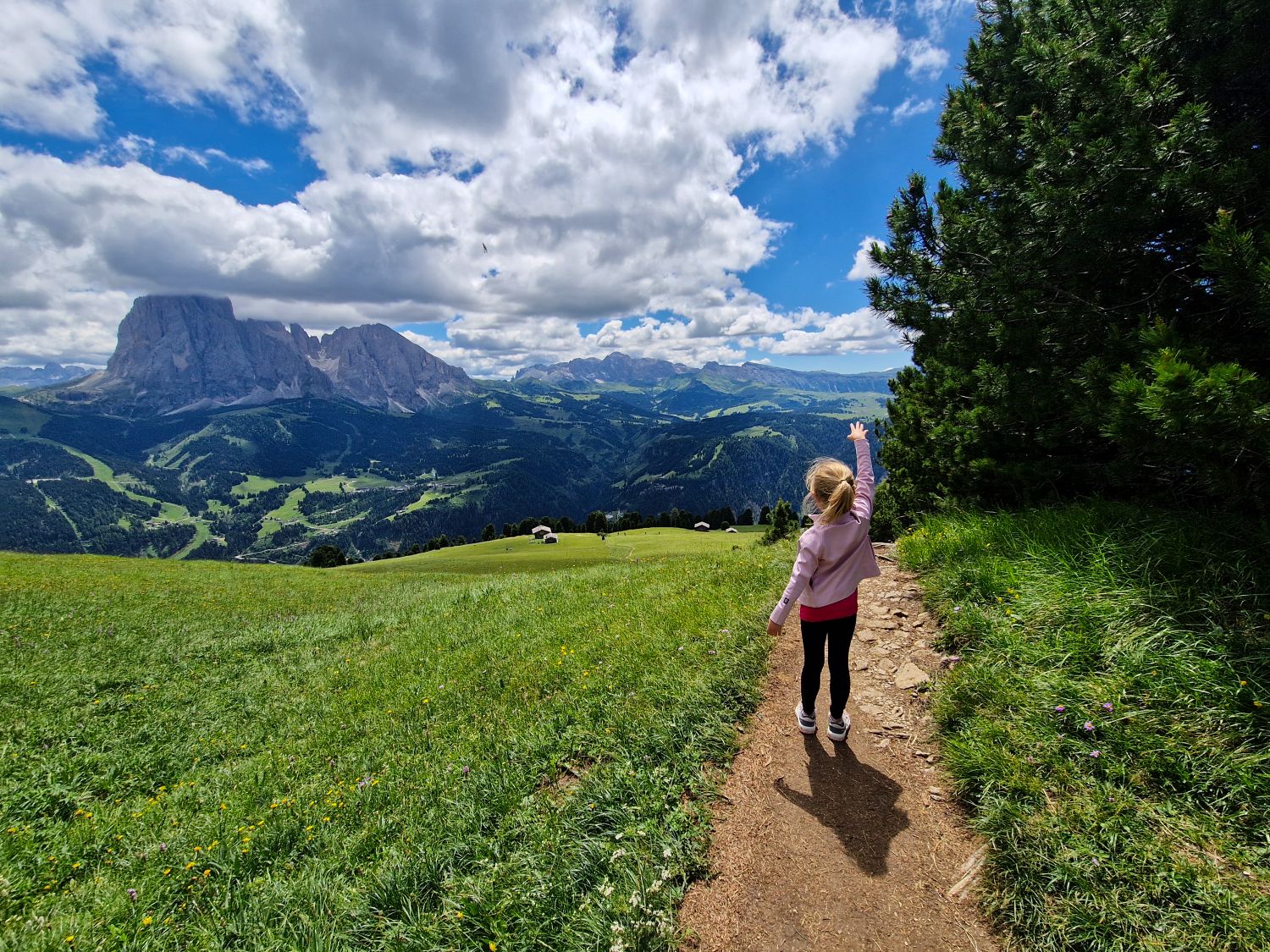
Surprisingly, hiking sandals are not an automatic NO from me for the Dolomites.
I was kind of unsure about them at first, but then we got ones for Emma from Decathlon for this trip. Honestly, the idea was that we would go on easy hikes, while for the harder ones she’d stay in the hotel’s kid’s club.
But life (and Emma) decided that she wants to go hiking with us – and she handled moderate hikes and some interesting terrain just fine. She hiked Monte Pic and Rifugio Passo Forcella in them, so yeah, if you’re not clumsy like me, hiking sandals are fine.
We’re talking closed-toe hiking sandals with a proper sole, though, not anything like TEVAs or flip flops – those are rifugio shoes at best.
And we’re talking easy to moderate trails, not anything that is longer, more technical, scree-ful, or with serious elevation changes. Sandals are not ok for those – there, proper hiking shoes are necessary, otherwise you’re just asking for trouble. Emma was sliding around Forcella Sassolungo – the sandals don’t have a good enough grip for scree.
Here are some sandals that actually do work for hiking… but still, be careful
Sneakers and Running Shoes
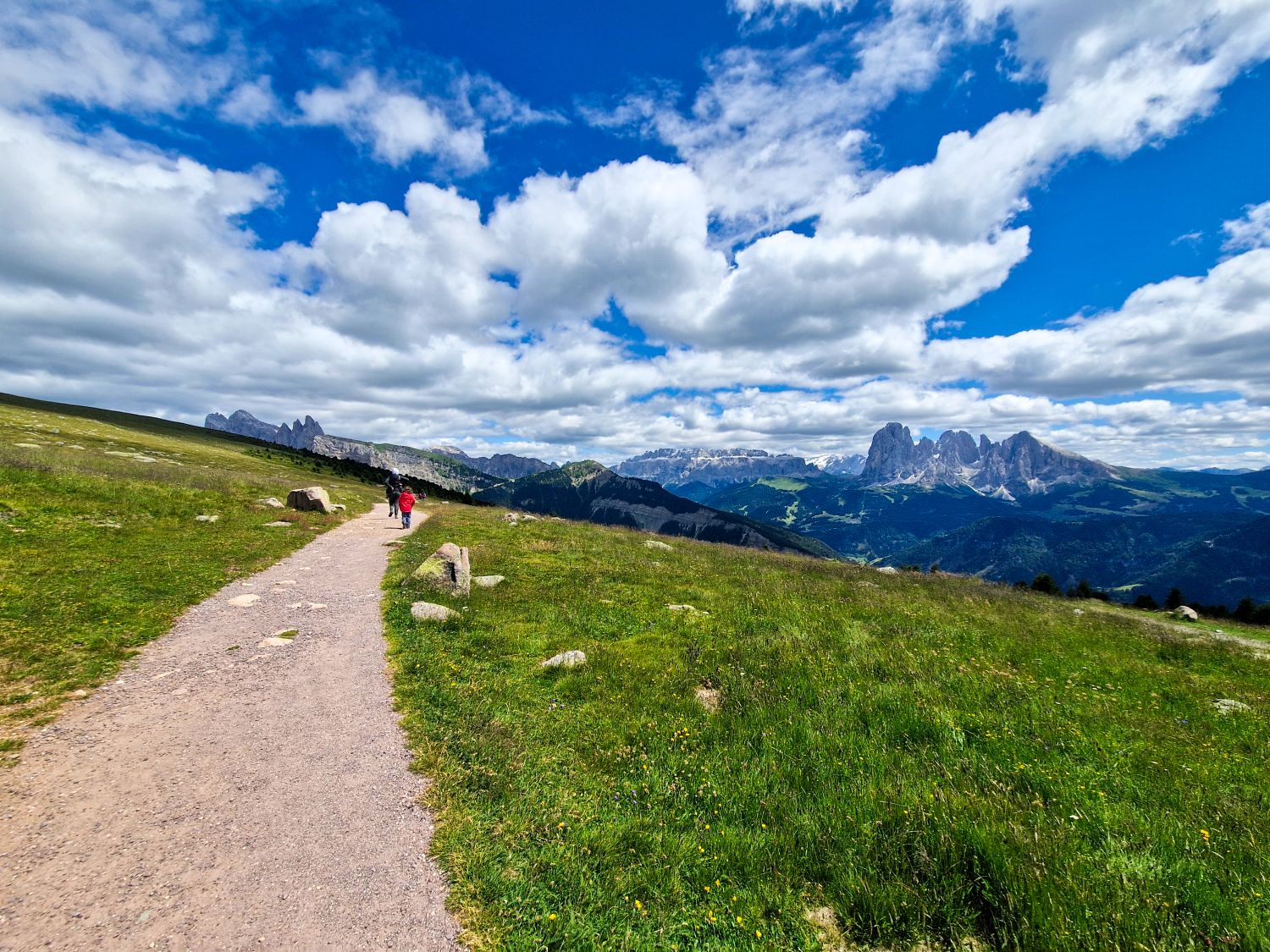
In general, sneakers are fine in the Dolomites – as long as you’re not heading out on a longer or more technical trail. Going for easier and shorter hikes is a better idea.
My friend hiked a harder trail in sneakers by Lake Iseo, where we lived in Northern Italy, and she could do it completely fine. But only a part of that trail was rocky – so if you’re planning something harder, look into trail runners.
For me, this would be the rule: easy, well-marked trails are generally fine in sneakers. If you’re looking into shorter walks by viewpoints are also fine in your normal exercise sneakers.
The moment you’re looking at something longer, more technical, or with scree, you want a proper grip under your feet, so go for proper hiking shoes – or at least trail runners.
I do see quite a few people in our Dolomites Facebook group saying they tackle even longer trails, and even Alta Via 1, in sneakers. If that’s you – you’re probably an experienced enough hiker to know your own limits and have done your research.
I personally wouldn’t, but I’m also clumsy enough that I benefit from ankle protection just to exist in the mountains without incident. You know your skills better than I do.
Trail Runners
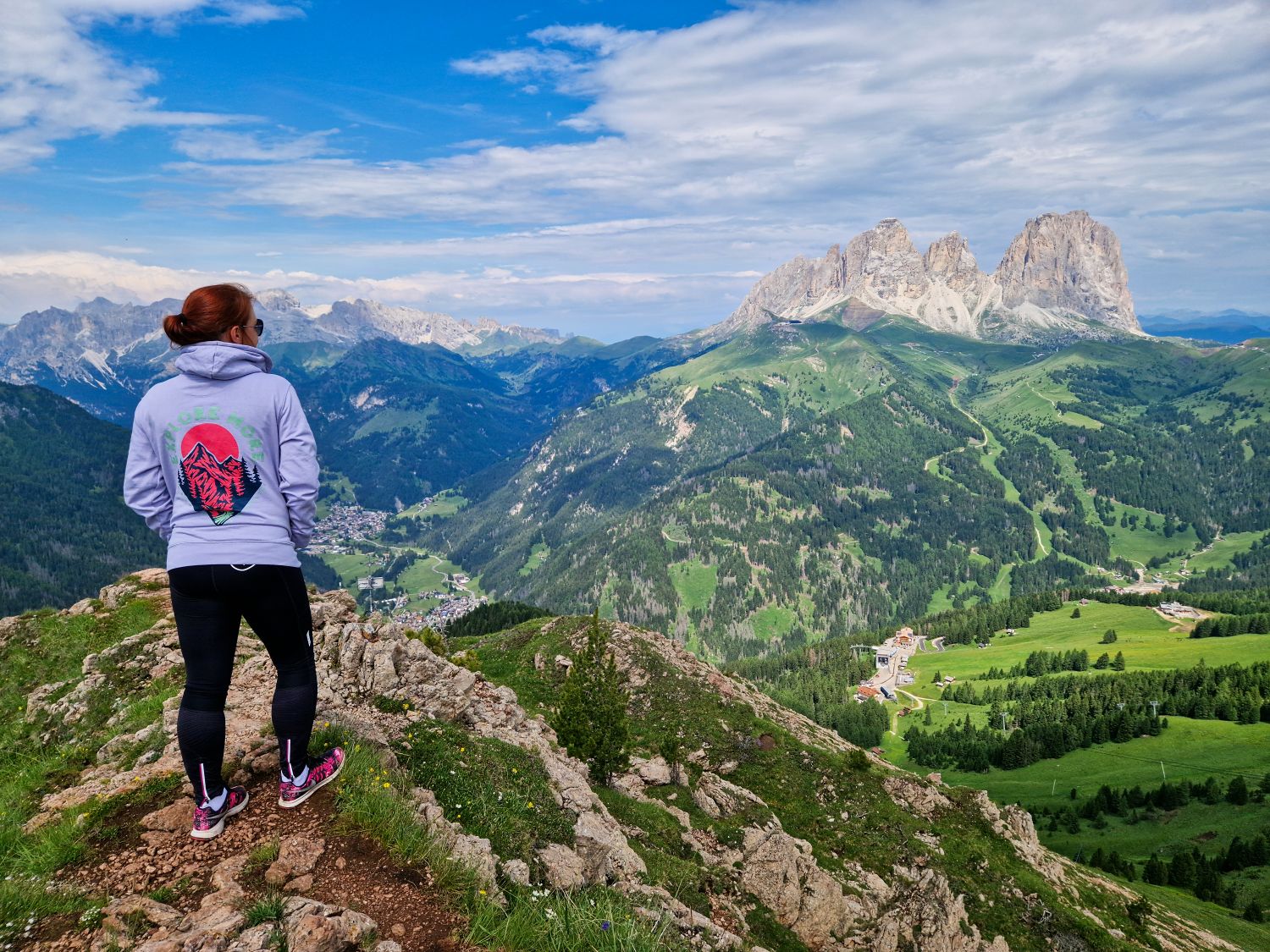
Trail runners are something in-between your normal running sneakers and low-cut hiking shoes, well, at least, when it comes to hiking. The great thing about them is the grip – it’s better than your typical exercise sneakers, so you can use them on a more technical terrain than the normal exercise shoes.
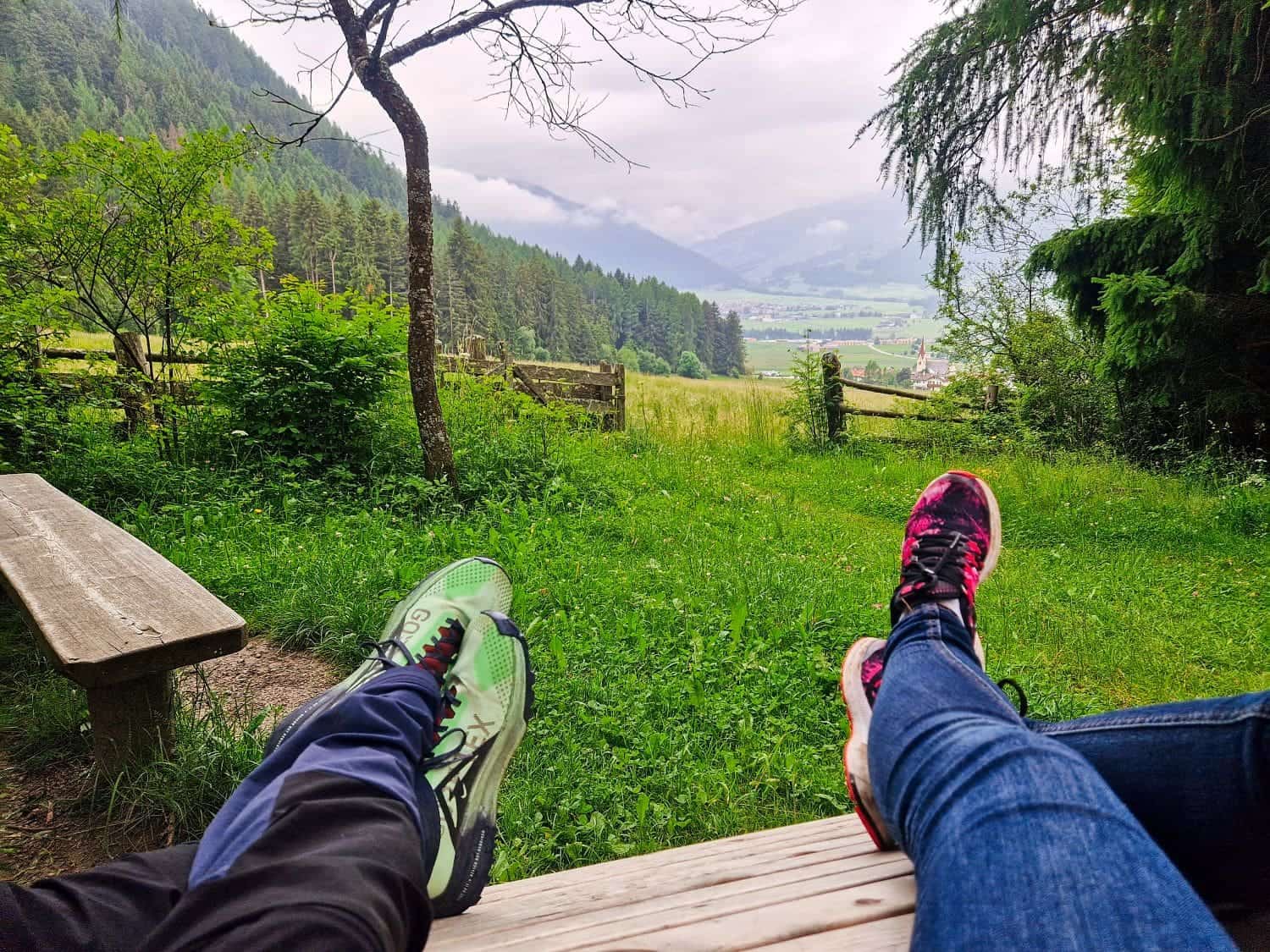
I personally have two kinds of shoes that I wear for hiking – ones are proper, high-ankle hiking boots, and the other ones are Nike trail running shoes. You can see the Nikes in the image above.
Both have a sole with a great grip so they can be worn on more interesting terrain, although if it’s a “proper” hike that we’re going for, I generally use the hiking-hiking shoes.
Michal’s poor little Nike Pegasus trail runners have been tested all over the place – the Dolomites, French Alps, Fatra and Tatras mountain ranges in Slovakia, trail running and hiking in Czech Republic, and even the gym. Because why not. They’ve been completely fine for most of the terrain, because their grip is great.
The good thing about Emma being older and more independent – she occasionally agrees to stay in the kid’s clubs in the family hotels!
They’re showing the wear after a couple of years of use, but boy, have they been used.
So the pros of trail runners: good grip, breathable, comfortable, and quite durable.
The one con that you need to be aware of, though, is that the ankle protection is pretty much nonexistent. If you’re a confident hiker who knows their footing and their limits, it’s completely fine and shouldn’t be an issue. If you prefer a bit more stability on your foot or you’re still building the hiking confidence, it’s something to factor in.
For most of the half-day and even some day hikes in the Dolomites, trail runners are going to be great. But if the terrain gets more tricky or technical, I would personally pack something that will hold my foot in its place a bit more – just in case.
Low-Cut Hiking Shoes
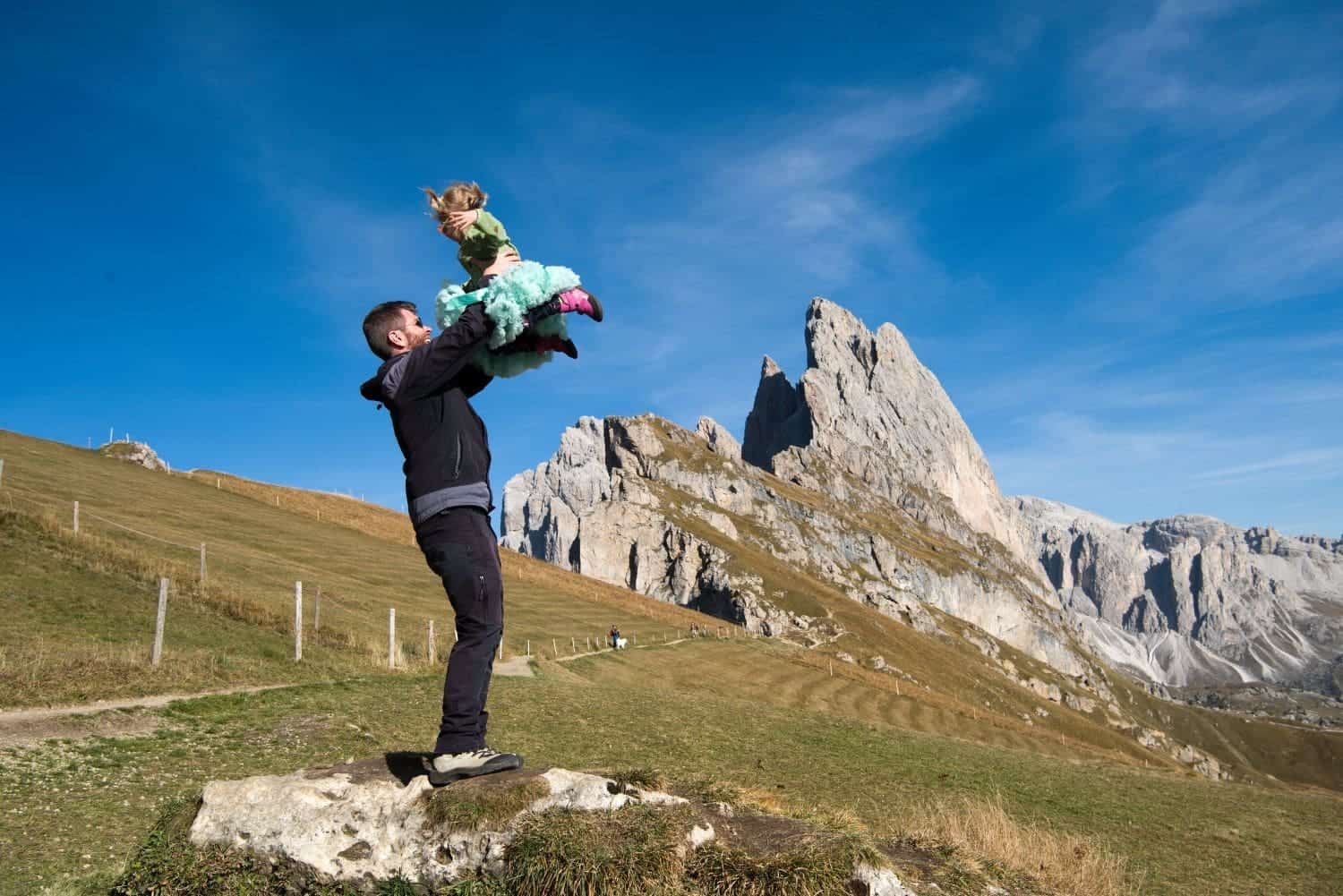
If you want something more solid than trail runners, but not as bulky as full hiking boots, low-cut hiking shoes is the best compromise.
They’re sturdier than trail runners, with proper toe protection, and handle rocky and scree-heavy terrain much better than sneakers or sandals. In the Dolomites, you’ll encounter both of those fairly regularly, even on easier hikes.
The thing to keep in mind is the same as with trail runners – the ankle is still not protected, so if you’re someone who rolls their ankles on a flat pavement, this might not be the best choice.
Michal wore his Grisport low-cuts until they were basically held together by hope. We’re talking a near-hole at the heel and a sole that had almost no grip left. He got well over ten years out of them, which is really what you can expect when investing in a proper pair.
If you know you’ll be hiking regularly and you don’t want the bulk of high-ankle boots, or maybe you feel like trail runners aren’t quite sturdy enough for where you’re going, low-cut hiking shoes are the sweet spot.
High-Ankle Hiking Boots
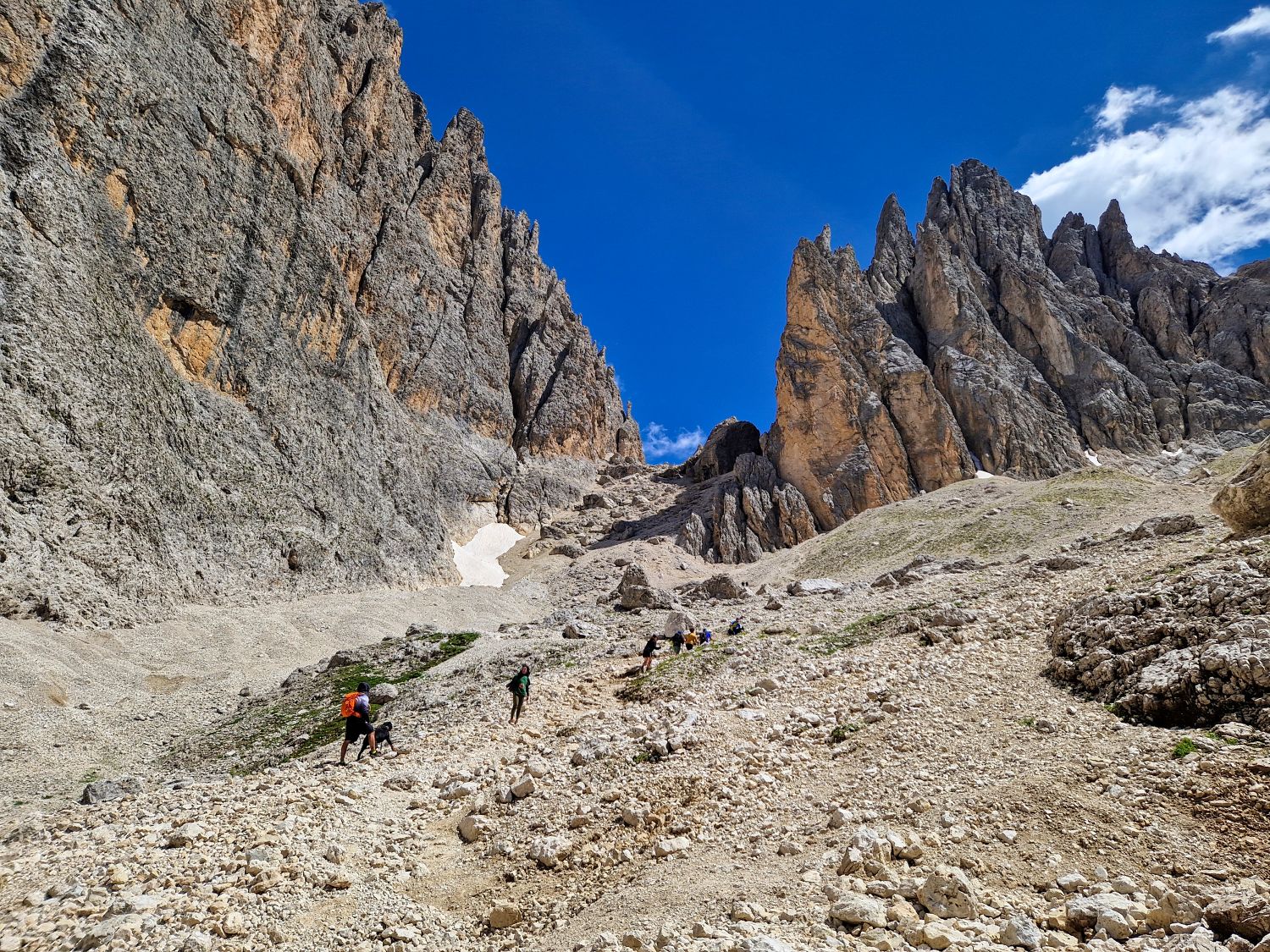
High-ankle hiking boots are my go-to for anything than can be characterized as “not an easy hike” – so, in the Dolomites, that means I wear them a lot.
I have Mammut boots that are over ten years old and still in great shape, which just shows you that a decent investment is worth it. Michal has Garmont boots that are pushing 20 years, and they’re… not in such great shape anymore, but they’ve had quite a run.
For me, the reason that I wear mostly high-ankle boots is simple. I’m an ADHD person on the clumsy side, and the Dolomites terrain is not exactly made for not paying attention. It’s rocky, uneven, and often comes with some interesting surprises.
High-ankle boots give me toe protection, ankle protection, and just general “my feet are safe” confidence that I can’t get from trail runners or low-cuts.
Michal is a more confident hiker than I am, so he usually hikes in his trail runners. But if he’s going for something more “interesting”, such as the Sassolungo loop, Mt Pic to Col Raiser, or some of the other harder hikes, he chooses the boots.
Better safe than sorry.
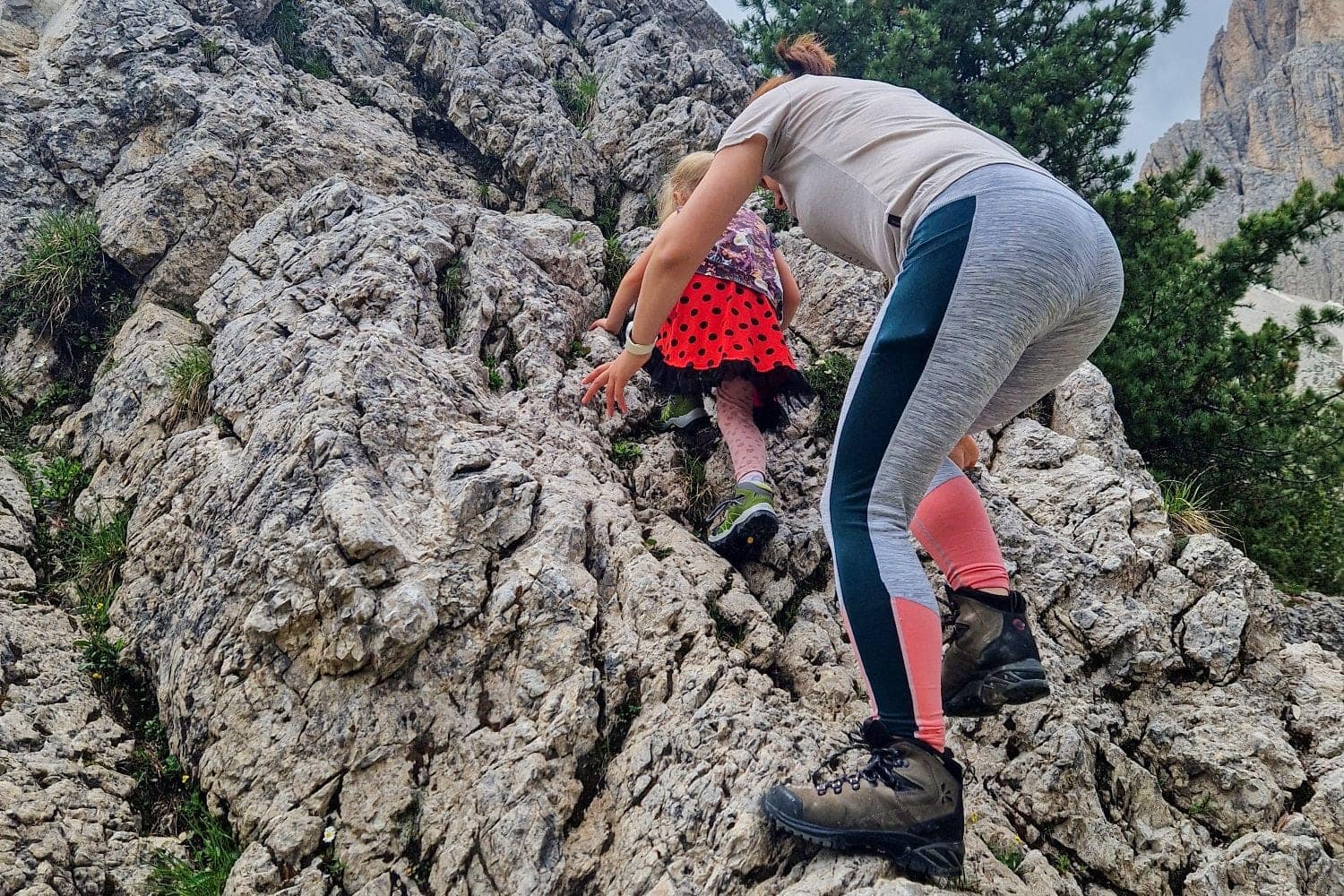
When we were in Selva looking for shoes for Emma, we knew we wanted proper hiking boots instead of sneakers or low-ankle ones. We found a pair that fit her well, felt sturdy, had a great sole, and got them. Emma didn’t wear them for too long – kid’s feet grow way too fast, but at least her ankle was well protected when she was climbing in Citta dei Sassi.
If you’re heading to the Dolomites and you’re not sure whether you need high-ankle boots – you probably do. Especially if you’re not a very experienced hiker, or if you’re naturally on the clumsier side of the spectrum. The ankle support will protect you from unpleasant accidents on the uneven ground.
If you’re hiking in winter? Well, in that case, it’s only the high-ankle hiking boots that I’d consider as an option.
What shoes not to wear when hiking in the Dolomites
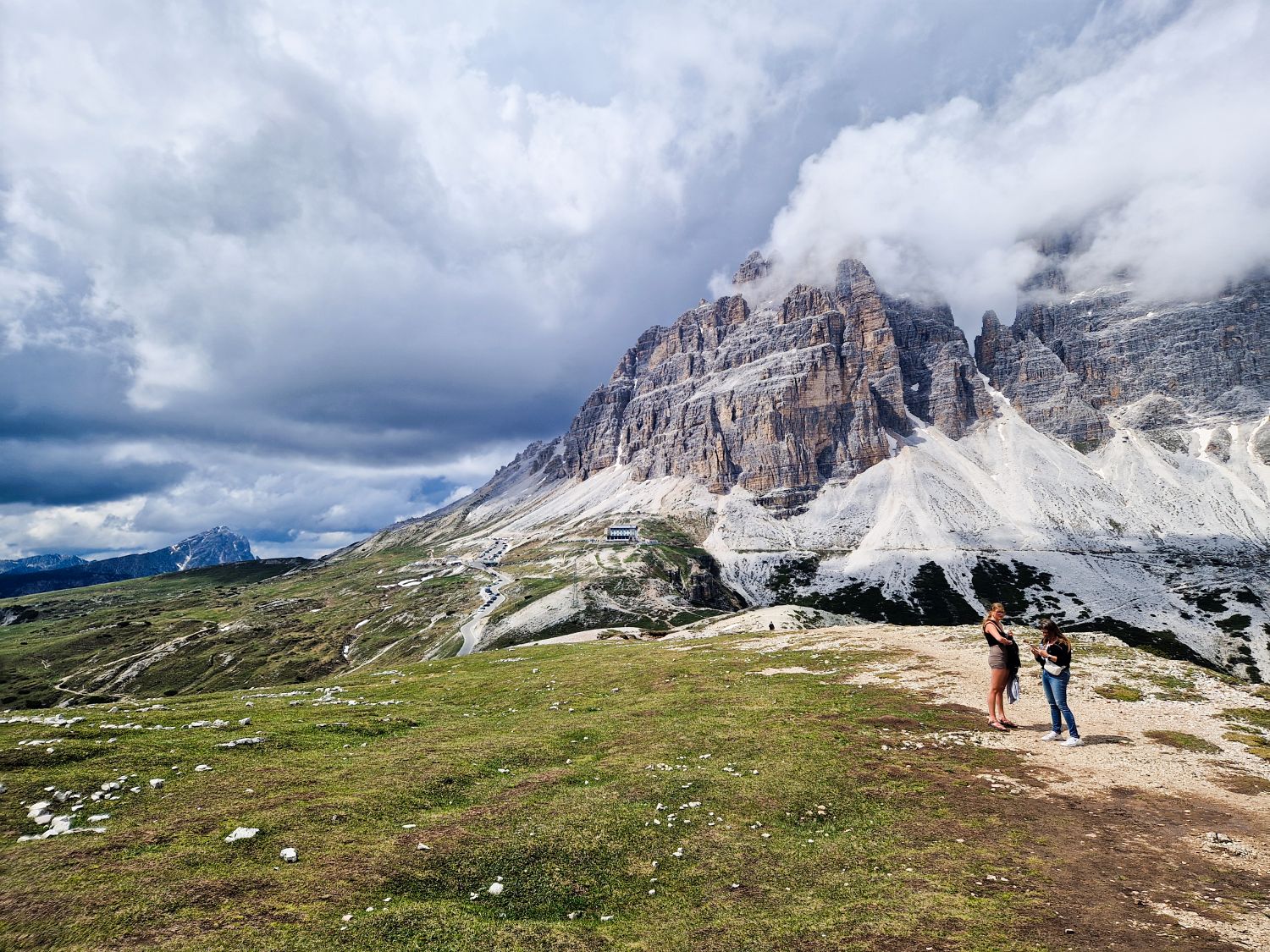
Yes, there is such a thing as the wrong shoes for the Dolomites.
Let me tell you about two times when I was genuinely scared or sad for people that we saw who were hiking.
The first situation was on the trail to the Cadini di Misurina viewpoint.
When we went up the first hill when walking towards the viewpoint, we saw a girl sitting and crying with her family looking angry around her. We heard her say that she can’t go on because she can’t walk – she was wearing sandals.
Her family got so frustrated they left her there and kept going.
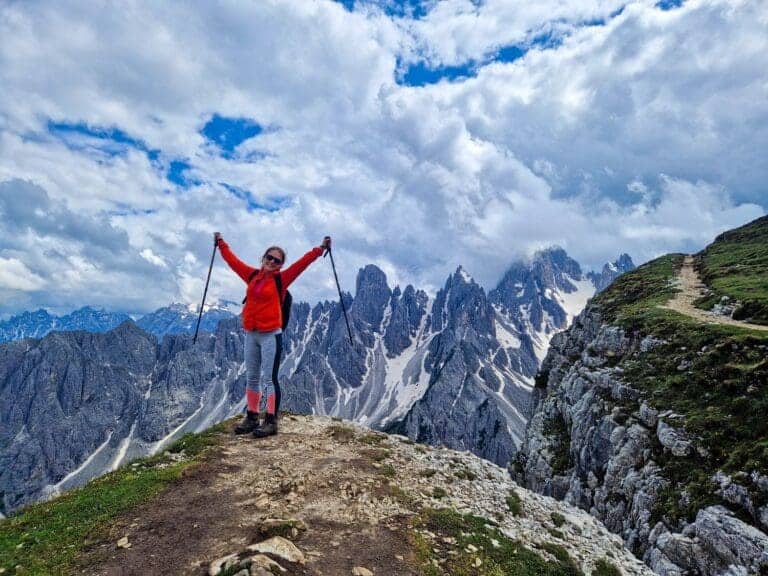
She was near the start of the trail (the place is where the picture was taken from), so she could make it back to the parking lot without any problems – but I genuinely can’t imagine how that felt for anyone involved.
The second was at Sass Pordoi.
On our last trip, I saw way too many people heading out in completely unsuitable shoes. There were everyday walking shoes, sneakers a la Converse, sandals… No grip, no protection, nothing. It’s basically like going iceskating on the mountains.
I was genuinely scared for them and really, really hoping they were just exploring the area around the cable car, and not planning to hike up to Piz Boè.
The wrong shoes don’t just make the hike uncomfortable – they can ruin the trip for the people you’re with, and in more serious situations, put you in actual danger on the mountain.
If you’re just walking around a village or a viewpoint with a flat path, your everyday shoes are fine. The moment you’re stepping onto a hiking trail – even an easy one – you want proper grip under your feet.
No one wants a rescue.
What to know before buying hiking boots
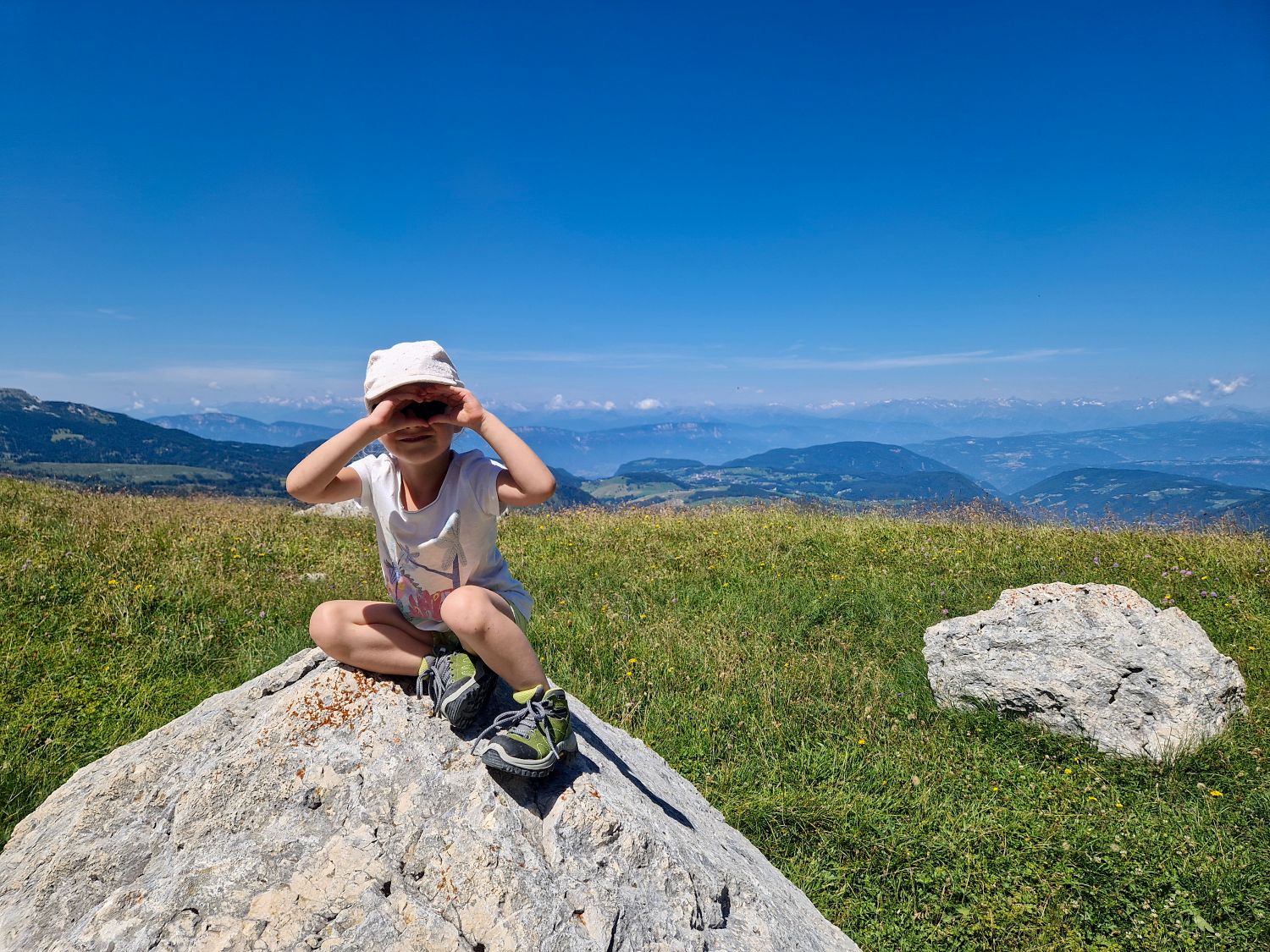
First thing: invest in a reliable brand. Cheap hiking shoes exist, and they’ll get you through a trip – maybe even two – but don’t expect them to last too long. Mammut and Garmont are still going strong in our house after 10 and 20 years respectively, and they were quite an investment in the beginning.
Second: buy them in a store if you have the option, especially if it’s your first pair. With hiking boots, it’s really important that you find a proper fit – width, length, the sole, etc. And also, you’ll most probably have a place where you can try them out on different “terrain”. Even Decathlon stores have little testing stations with different terrain angles and surfaces so you can try how the shoe feels before buying.
Third – and this one is a bit tricky – they’re going to feel uncomfortable at first. They’ll squeeze in places you didn’t expect, feel way too hard on the foot, or even give you blisters. That’s normal – they will need breaking in. As long as your toes are not folding in incorrect ways in the shoe, and your heel is not moving up and down too much, they will be fine. That’s why – do not buy hiking boots the day before a long hike.
When I got my first pair (which are actually the Mammut ones), I was walking up and down the stairs in Michal’s parent’s apartment building to test them and break them in. The shoes were still giving me blisters and felt uncomfortable, but I could already tell they’d be fine… once broken in. That’s the feeling you’re looking for.
On features:
- grip is non-negotiable, but any hiking shoe worth buying should come with it.
- Gore-Tex is also something worth getting – it makes the shoes waterproof, windproof, and breathable.
- Proper lacing – so that you can tighten the shoes in a way that they become a second “sock”.
- Toe protection – so that if you hit a rock, your toes remain unbroken
- Motion control in the heel – my Mammuts have it, and it helps ensure that my ankle remains un-twisted.
FAQs about the best hiking shoes for Dolomites
Do I need waterproof hiking shoes for the Dolomites?
Waterproof hiking shoes for the Dolomites are always a good idea, so if you can, get them. It’s not nice to hike in wet shoes.
Can I hike Tre Cime in trail runners?
Yes, for sure, you can hike Tre Cime di Lavaredo in trail runners. The trail is not technical.
Are hiking boots necessary for easy Dolomites trails?
Whether hiking boots are necessary for easy Dolomites trails generally depends on the trail in question. If the terrain is not technical, then no, you don’t need them. Unless you’re extra clumsy.
What shoes are best for the Dolomites in summer?
The best shoes for the Dolomites in summer depend on what you’re planning on doing. For me, if you’re going hiking, then either trail runners or hiking boots are the best idea.
Which Shoe Should You Pack?
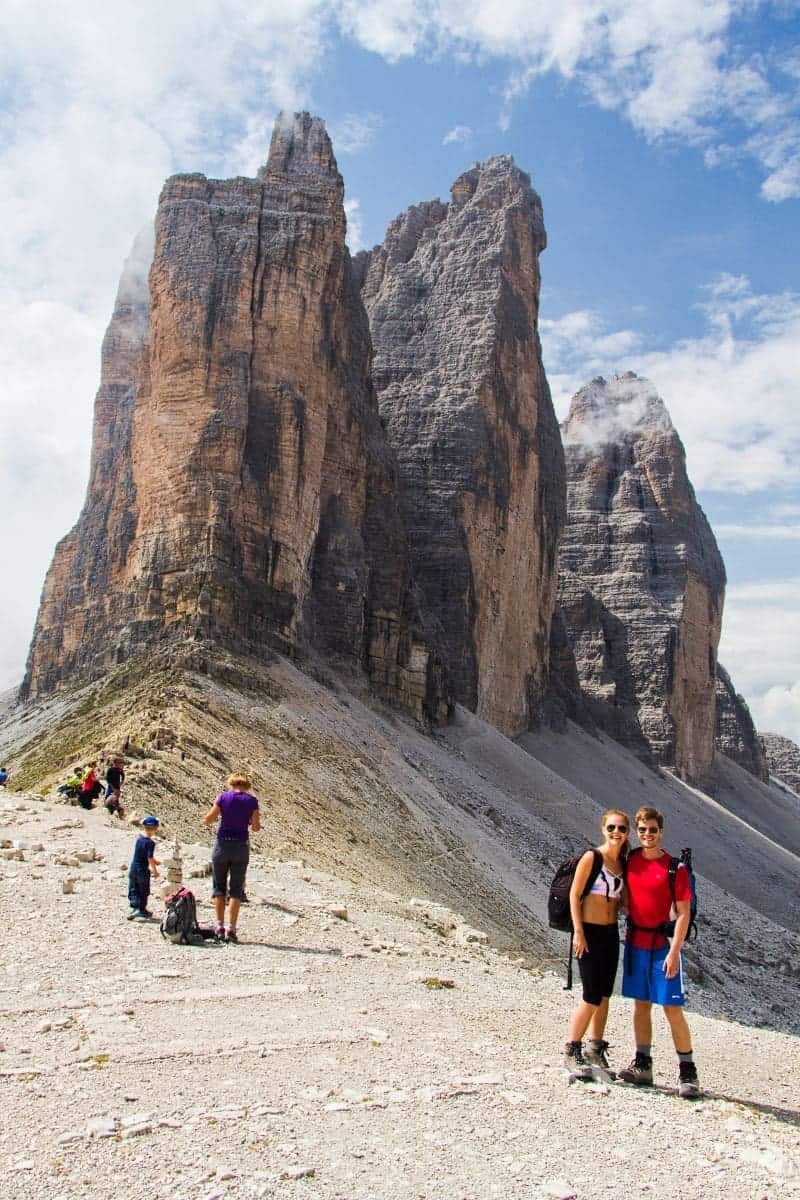
If you’ve read through everything and you’re still not sure – go for the hiking boots.
You cannot overboot- you can only underboot.
You’ll almost certainly have a pair of regular sneakers with you anyway, so once you familiarize yourself a bit more on how trails are characterized in the Dolomites, you can always wear those.
Some washing might be needed afterwards, though.
But you can’t conjure ankle protection out of thin air if you need it and don’t have it. Buying new boots if you have perfectly fine ones at home seems like a waste.
Here’s the quick version:
- Short, flat, well-marked walks – sneakers or hiking sandals are fine
- Easy to moderate day hikes – trail runners or low-cut hiking shoes
- Harder, rockier, or longer hikes – high-ankle boots, no question
- Not sure which category your hike falls into – high-ankle boots
And if you’d like to compare your planned trails to the shoes you’re packing, we can do that on a call. We can also take a look at your itinerary while we’re there and see if anything needs adjusting before you go.
Travel Planning services
Is your trip planned?
Is it planned well?
If you’ve put together an itinerary, but are still overwhelmed by routes or logistics, or is it even gonna work, you don’t have to figure it out alone. Our Dolomites travel planning services turn ideas into clear, realistic itineraries built around how you like to travel.
Let’s check your plan for timings and routes, and see if it’s realistic – so that you can at last be excited about your trip to the Dolomites!