Where to stay in the Dolomites for skiing
Figuring out where to stay in the Dolomites for skiing is surprisingly difficult, mostly because there isn’t one Dolomites ski resort. There are dozens of ski areas spread across different valleys, and choosing the wrong base can mean spending a lot more time getting to the skiing you actually wanted to do.
We’ve skied in Val Gardena, Alpe di Siusi, and Carezza, and they really don’t all suit the same trip. Some areas are brilliant if you want to ski all day and cover ridiculous amounts of ground. Others make much more sense for beginners, kids, or anyone who would rather repeat a few good pistes than turn every morning into a logistical operation.
For most first-time ski trips, I’d start by choosing the ski area before choosing the hotel.
Val Gardena is my pick for variety and easy access to a huge interconnected network, while Alpe di Siusi and Carezza are much easier to get your head around if you want gentler, less complicated ski days.
But those aren’t your only options. Some ski areas are better for long days covering as much ground as possible, while others make more sense if you want quieter slopes, good food, or plenty to do when you’re not skiing.
This post might contain affiliate links, which means that if you purchase anything via them, we might earn a small commission – at no extra cost to you. Check our disclaimer policy for more information.
As an Amazon Associate we earn from qualifying purchases.
Quick Answer: Which Dolomites Ski Area Would I Choose?
|
Ski area |
Good for |
|---|---|
|
Val Gardena |
Variety, flexibility, iconic ski carousels |
|
Alpe di Siusi |
Gentle skiing and a more peaceful atmosphere |
|
Val di Fassa |
Extensive skiing and Sellaronda access, with a less resort-like atmosphere. |
|
Carezza |
For a first family ski trip |
|
Alta Badia |
Relaxed skiing, food, and families |
|
Cortina d’Ampezzo |
Confident skiers who also want town life |
|
Tre Cime |
Skiing mixed with winter activities and sightseeing. |
|
Kronplatz |
Varied skiing concentrated on one mountain |
Val Gardena – best for variety and flexibility
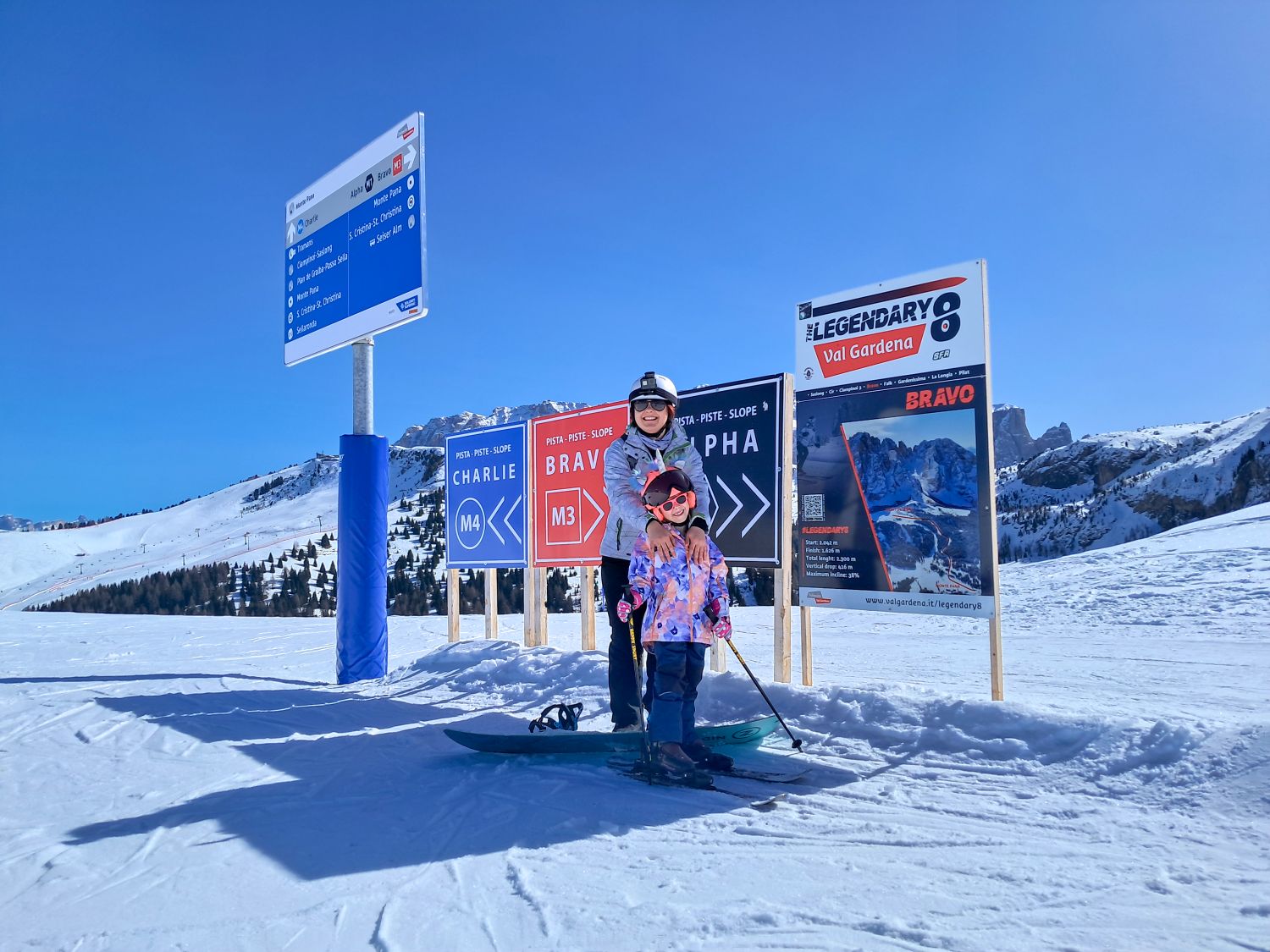
Val Gardena is great for a lot of reasons, but I especially like it for first-time visitors because you have pretty much everything there within convenient reach.
There are plenty of ski schools, easier slopes, rentals, hotels, and even ski parks.
And once you’re comfortable, you can go much farther – onto the Sellaronda, around Val Gardena itself, over to Alpe di Siusi, or into the other valleys around the Sella group.
We tried Bravo, one of the Val Gardena Legendary 8, and also added in a smaller slope on Monte Pana after lunch at Hotel Monte Pana.
That was while Michal was off doing a huge winter hike from Alpe di Siusi to Seceda and back, so Emma and I had a much more civilized afternoon, haha.
That’s probably one of the biggest reasons I like Val Gardena so much – you can keep things easy without feeling stuck, but there’s loads more there once you want it.
And if someone in your group doesn’t ski, or you just want a break from skiing, there’s still a lot to do. Winter hiking, cross-country skiing, snowshoeing, tobogganing, horse-drawn carriage rides, horseback riding, zip-lining, tandem paragliding, museums – whatever kind of winter day you want, you can probably find it somewhere in Val Gardena.
The only bad thing is – since Val Gardena is so popular, it gets crowded, which also leads to it being more expensive.
As an example – in Selva, if you were moving between ski areas, you had to cross through town, and there were skiers everywhere. And this was at the beginning of December when not everything was open yet! Ortisei, on the other hand, felt much quieter when I was there.
So I wouldn’t choose Val Gardena if your main goal is empty slopes and a very quiet ski trip.
But if you want a place where you can ski at very different levels, change plans easily, and still have plenty to do off the slopes, it’s one of the easiest areas to recommend.
Would you like to stay in Val Gardena? Here are our favorite ski hotels in the valley.
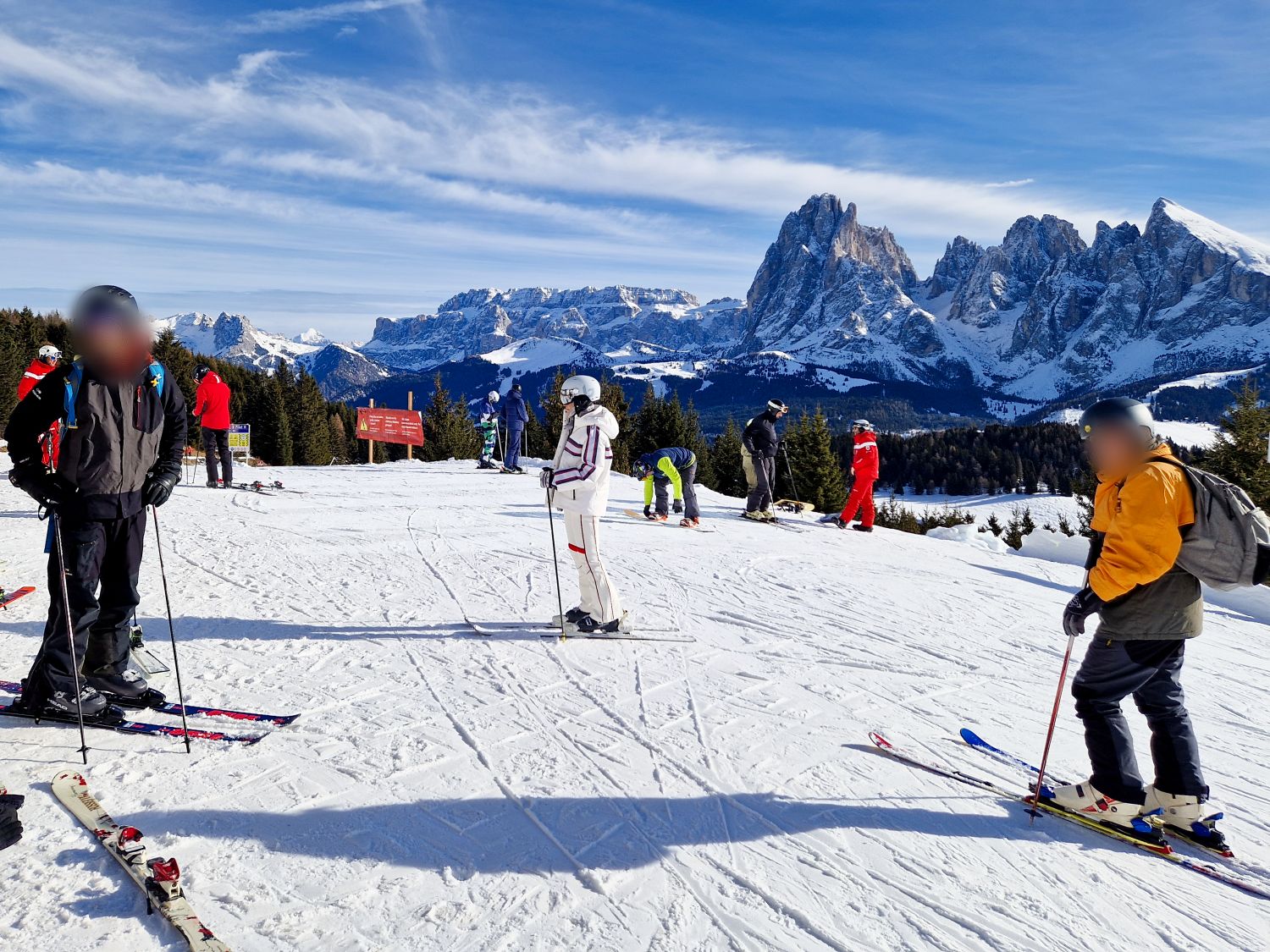
Alpe di Siusi (Seiser Alm) – best for beginners and quieter ski days
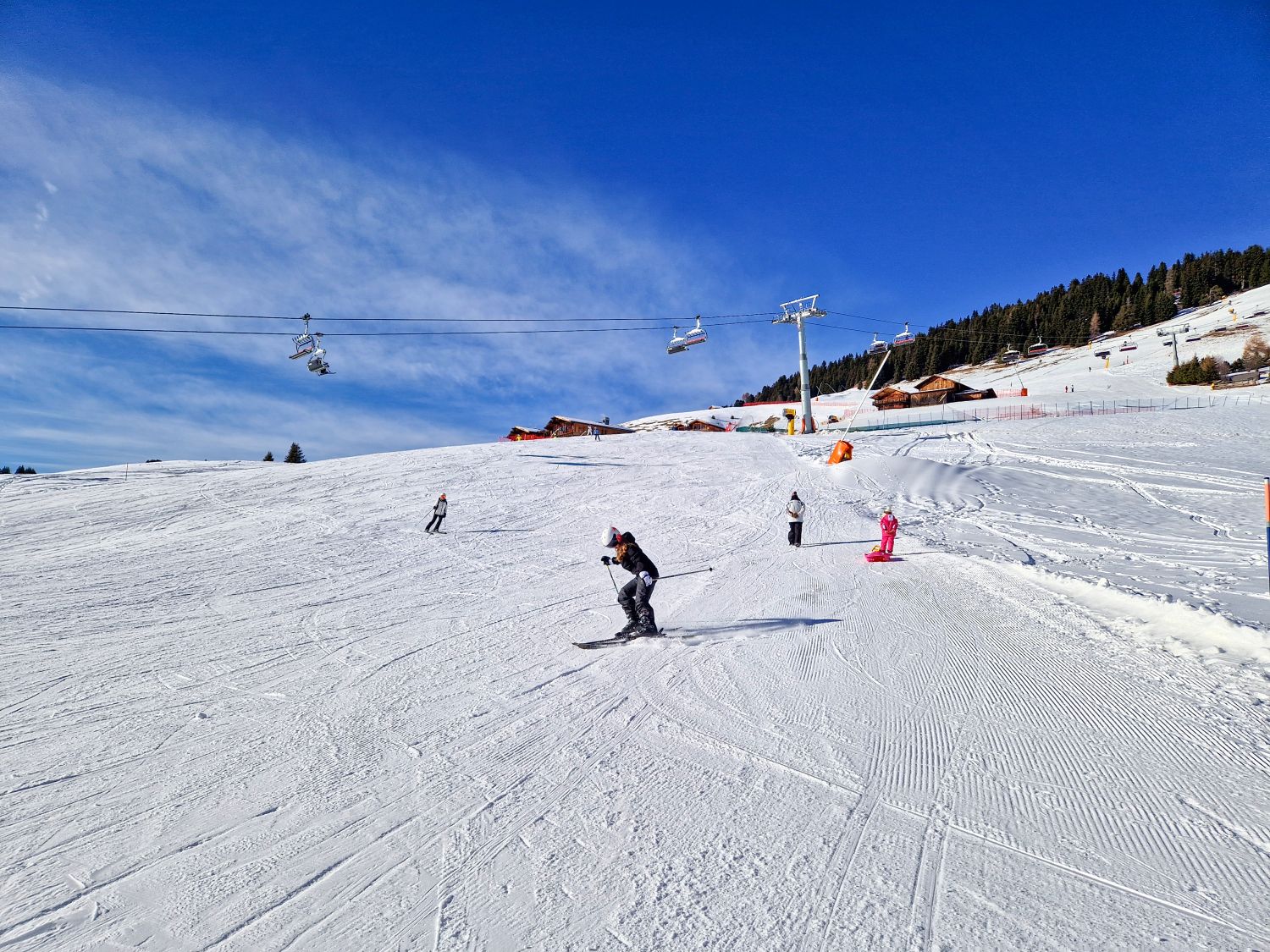
Alpe di Siusi felt completely different from Val Gardena, although officially, Dolomiti Superski groups them both together.
We stayed deeper on the plateau in Saltria, farther from the main arrival points around Compatsch, and I really liked how quiet it was there. We were basically ski-in ski-out, with a ski bus stop close to the hotel, which gave us a chance to get to Monte Pana and connect into Val Gardena and the Sellaronda quite easily.
The ski bus is the easiest way to connect from Saltria to Monte Pana. It’s not included in your Dolomiti Superski card – you pay it separately.
The other way to connect to Val Gardena is the Pilat slope that goes from the top of the Mont Seuc gondola down to Ortisei.
But in the evenings, once most of the day visitors had left, it was incredibly peaceful. And honestly, it’s hard to find a place on Alpe di Siusi without great views.
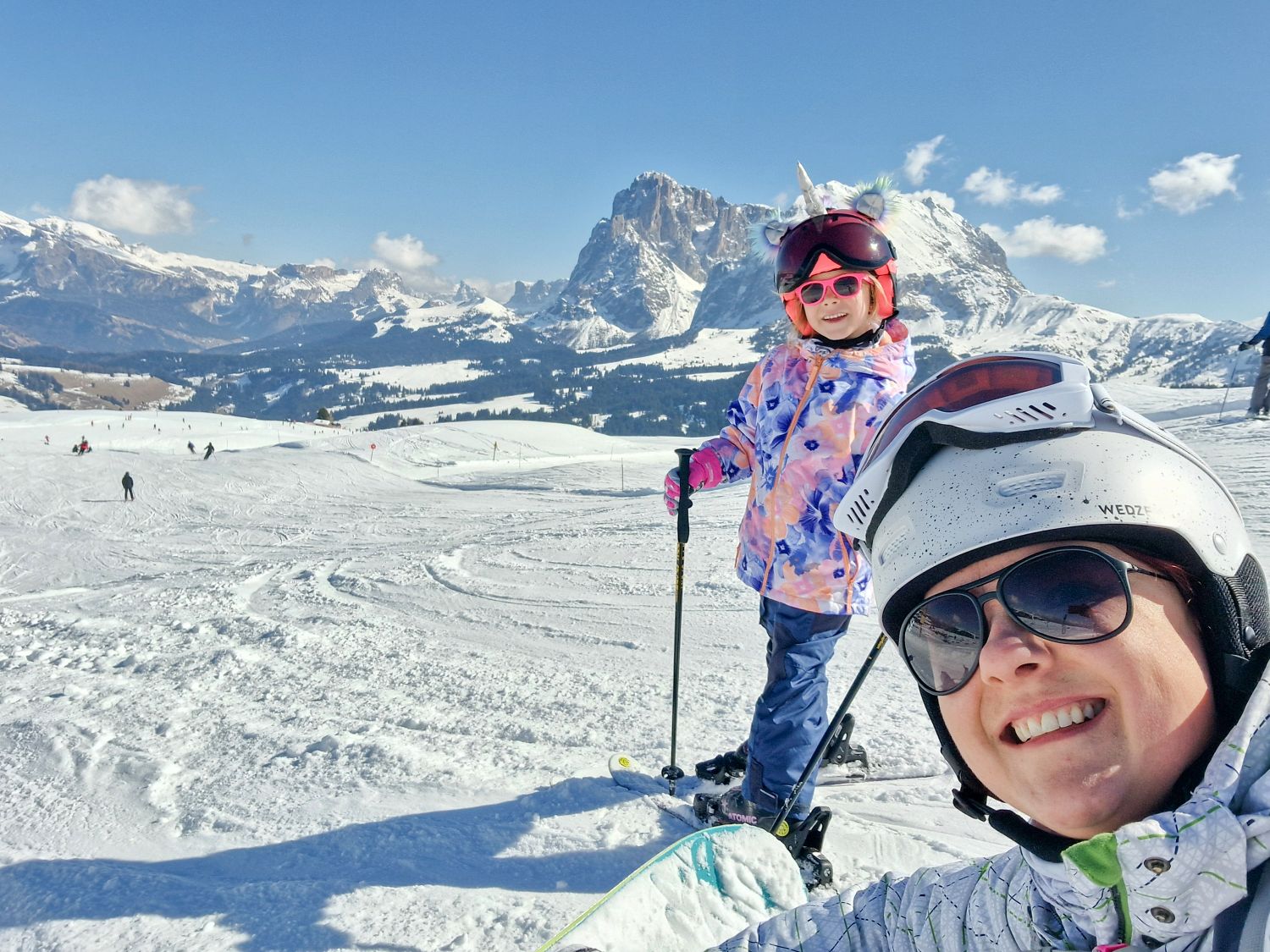
Most of the slopes are blue and red, which is one of the reasons I’d recommend it so highly for beginners. Emma and I had instructors for our first two days, and after that we were comfortable enough to ski around Alpe di Siusi by ourselves.
Just don’t read “blue” and imagine a tiny, flat beginner slope. Some of these runs are long, and you still need to be able to stop, turn, and get yourself down them. During my first two-hour snowboarding lesson, I managed the blue and a slightly harder red a few times before my legs basically said nope, we’re done.
Even once I got more comfortable on the reds, I still enjoyed the blues. They weren’t boring at all.
Snowboarders should know that some sections are quite flat, though, and if you’re mainly looking for difficult black runs, Alpe di Siusi probably isn’t the right base.
I also noticed a big difference depending on where you ski. I did the whole Alpe di Siusi Ronda, and the slopes around Compatsch and the easier-to-reach lifts were much busier, with noticeably worse snow by the afternoon. Farther into the plateau, around Saltria, it was much calmer.
The other small downside to staying that deep is rentals. We had our own gear, but there weren’t nearly as many obvious rental options around Saltria. We did have a ski school right there, though, which for us was much more important.
For beginners, families, or anyone who wants a quieter ski trip but still wants the option to connect into Val Gardena for a bigger day, I think Alpe di Siusi is one of the best places you can stay.
Val di Fassa (Central Dolomites) – best for big ski days and lots of options
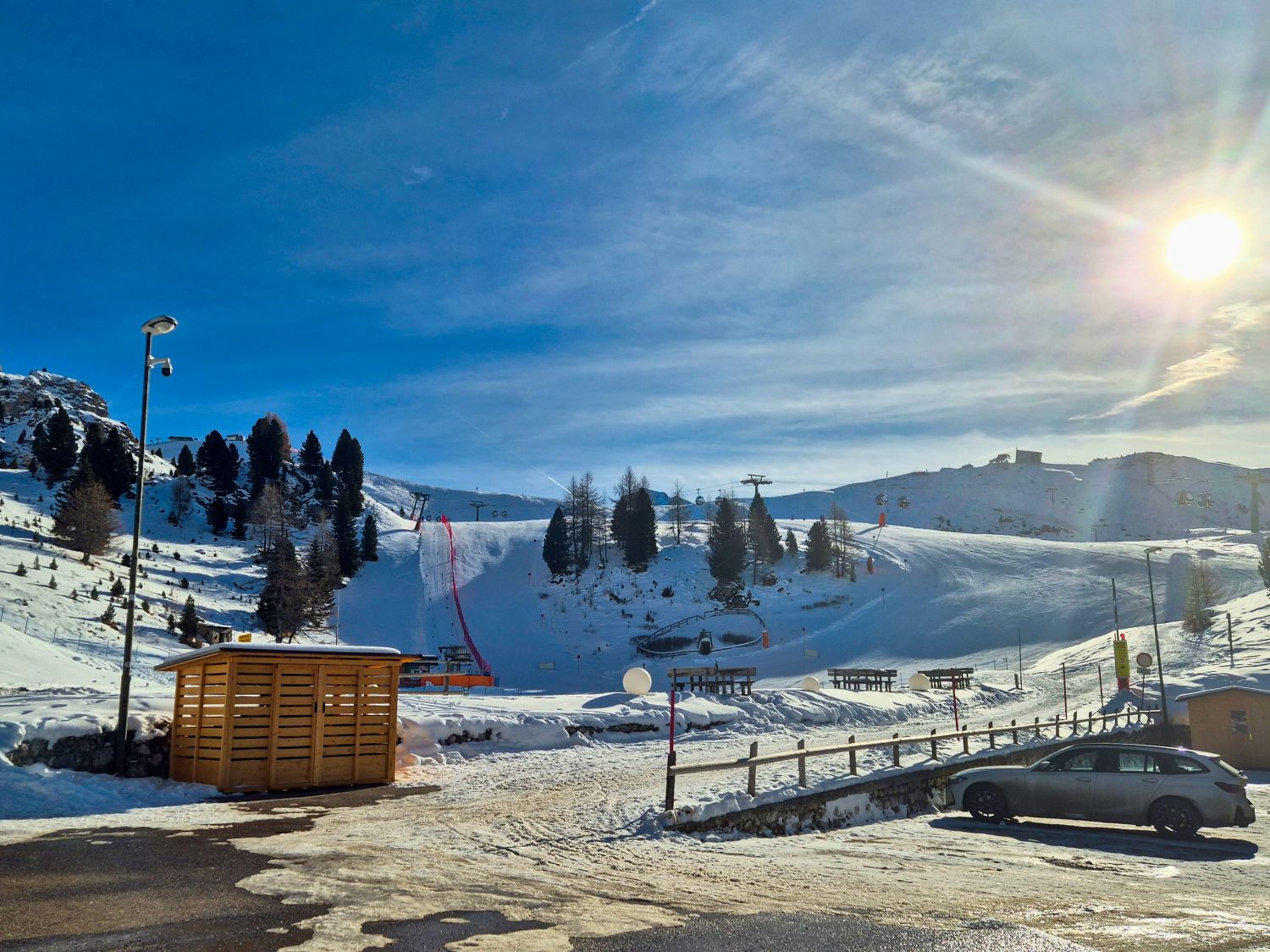
We went to Val di Fassa specifically to see the slopes from the top of the lifts, drive through the area, and look at the connections from places like Passo Pordoi. Although unfortunately, sans skiing this time.
Compared with Val Gardena and Alpe di Siusi, Val di Fassa felt more open, and the villages had a slightly less resort-like atmosphere. More local, I suppose.
You still have the mountains all around you, obviously, but the views felt wider somehow. From Passo Pordoi especially, it almost looked like you could just keep going forever.
Depending on where you stay, you can ski locally, connect into the Sellaronda, head toward Marmolada, or spend the day moving between completely different parts of the valley. In some places, the ski network even crosses above roads on dedicated bridges.
The biggest thing with Val di Fassa is choosing your base carefully, because different villages give you very different access to the wider ski network. If your goal is to cover a lot of ground and do longer ski days, I’d stay somewhere that makes those connections easy rather than choosing a hotel first and figuring the skiing out afterward.
What about Carezza?
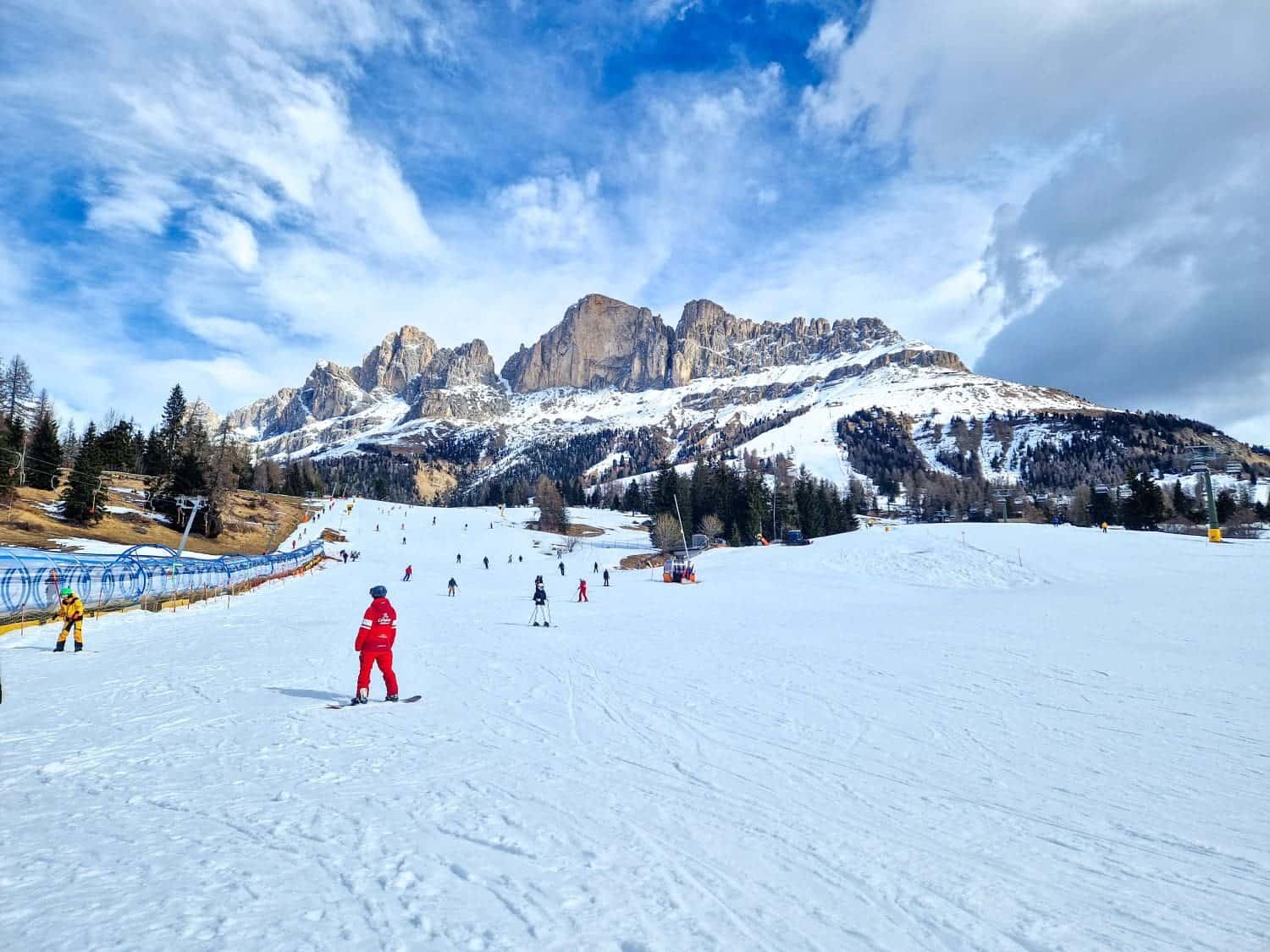
Carezza is officially part of the wider Val di Fassa/Carezza area within Dolomiti Superski, but it isn’t connected to the other Val di Fassa ski areas by slopes.
We’ve actually skied there, and it felt much more compact and self-contained than the rest of Val di Fassa.
That was perfect for us on our first Dolomites ski trip. We stayed at Hotel Alpenrose, had the ski school right there, and could go from very easy beginner terrain to proper slopes without needing to work out some enormous ski circuit first.
You can absolutely explore farther around Carezza, but you don’t have that same feeling of where on earth shall we ski today? that you get looking across Val di Fassa.
So I’d choose Carezza if you want an easier, more manageable ski trip, especially as a beginner or with kids. If you want long days, lots of connections, and the option to just keep going, I’d look farther into Val di Fassa instead.
Alta Badia (Central Dolomites) – best for relaxed skiing, families, and really good food
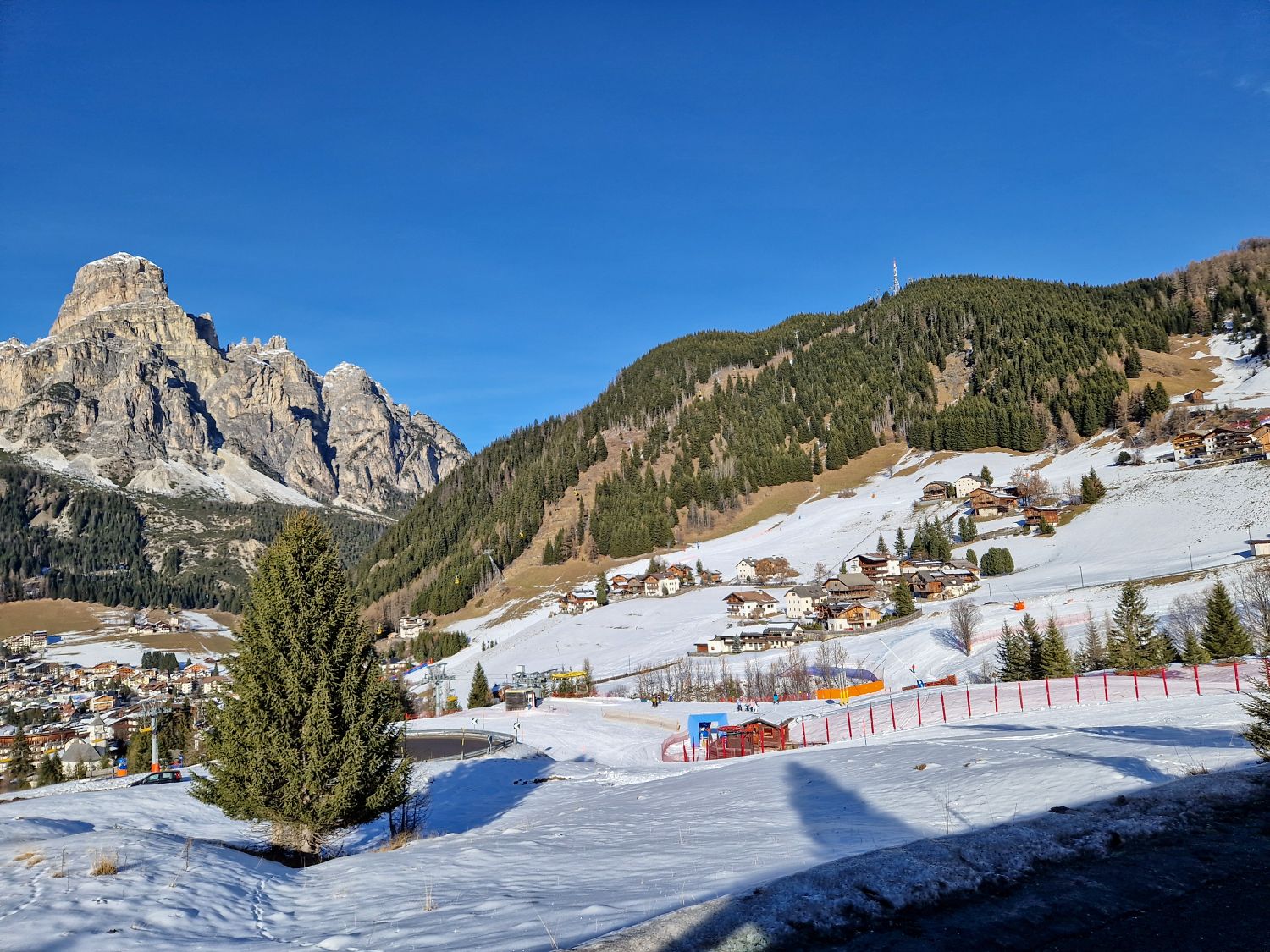
Alta Badia is actually one of the areas we’re considering for our next family ski trip. We’ve stayed there several times already, and I absolutely love it. It’s such a beautiful part of the Dolomites, the food is excellent, and there are some really lovely family-friendly hotels right next to the ski slopes.
And the skiing looks great for us, too. Most of the slopes are blue and red, with plenty of connections between them, so we could spend the day skiing around without needing to tackle difficult black runs.
Although there are blacks, too, including the famous Gran Risa. But also… there’s being able to ski a black, and then there’s deciding you’d like to ski a World Cup black. Those are not necessarily the same thing.
When I explored Alta Badia with a friend at the beginning of December, I was surprised by how many kids were already skiing. There was still quite a lot of grass around the slopes, but some were open, and you could see the ski schools and families out on the gentler runs.
So especially if you’re going early in the season, I’d check what’s actually open before booking. I wouldn’t assume that everything is running just because the ski season has started.
And you still have the option of joining the bigger ski carousels, like the Sellaronda, if you want a much bigger ski day. And, compared to Alpe di Siusi, there’s more town life and easier access to the “big-name” carousels.
I think Alta Badia is a little underrated, especially for families. You have plenty of skiing for different abilities, some really nice hotels close to the lifts, and an area that’s beautiful even when you’re not skiing.
Cortina d’Ampezzo (Eastern Dolomites) – best for confident skiers who want more than just skiing

We haven’t skied in Cortina ourselves yet, but several of our friends have, and they’ve all been very enthusiastic about it. And they keep coming back, ignoring my attempts to convince them to try somewhere else, haha.
From everything I’ve seen and researched, Cortina makes more sense once you’re already fairly comfortable on skis. There is beginner terrain, yes, but there are also plenty of reds, blacks, and some proper World Cup and Olympic runs, so I wouldn’t pick it over somewhere like Alpe di Siusi for a very first ski trip.
The skiing is also a bit more spread out than other places. You have different areas like Tofana, Faloria-Cristallo, and Cinque Torri-Lagazuoi, and they don’t all feel like one big seamless network, which can get slightly less convenient at times.
Although the new Cortina Skyline gondola connects the Tofana side of Cortina with Cinque Torri, and from there, you can continue toward Lagazuoi.
And from the Lagazuoi side, you can connect into longer routes like the Great War ski tour, so you’re definitely not limited to doing the same local slopes over and over.
Cortina also has a lot going for it off the slopes, which is a big part of the appeal for me. You have a proper town, restaurants, shopping, cafés, and plenty happening beyond skiing, so it works well if not everyone in your group wants to ski from first lift to last lift every single day.
I’d choose Cortina if you’re already a reasonably confident skier and want variety, harder runs, and a ski trip that still feels like an actual holiday rather than just a mission to collect as many kilometers as possible.
3 Zinnen Dolomites – best for a quieter ski base in one of my favorite parts of the Dolomites
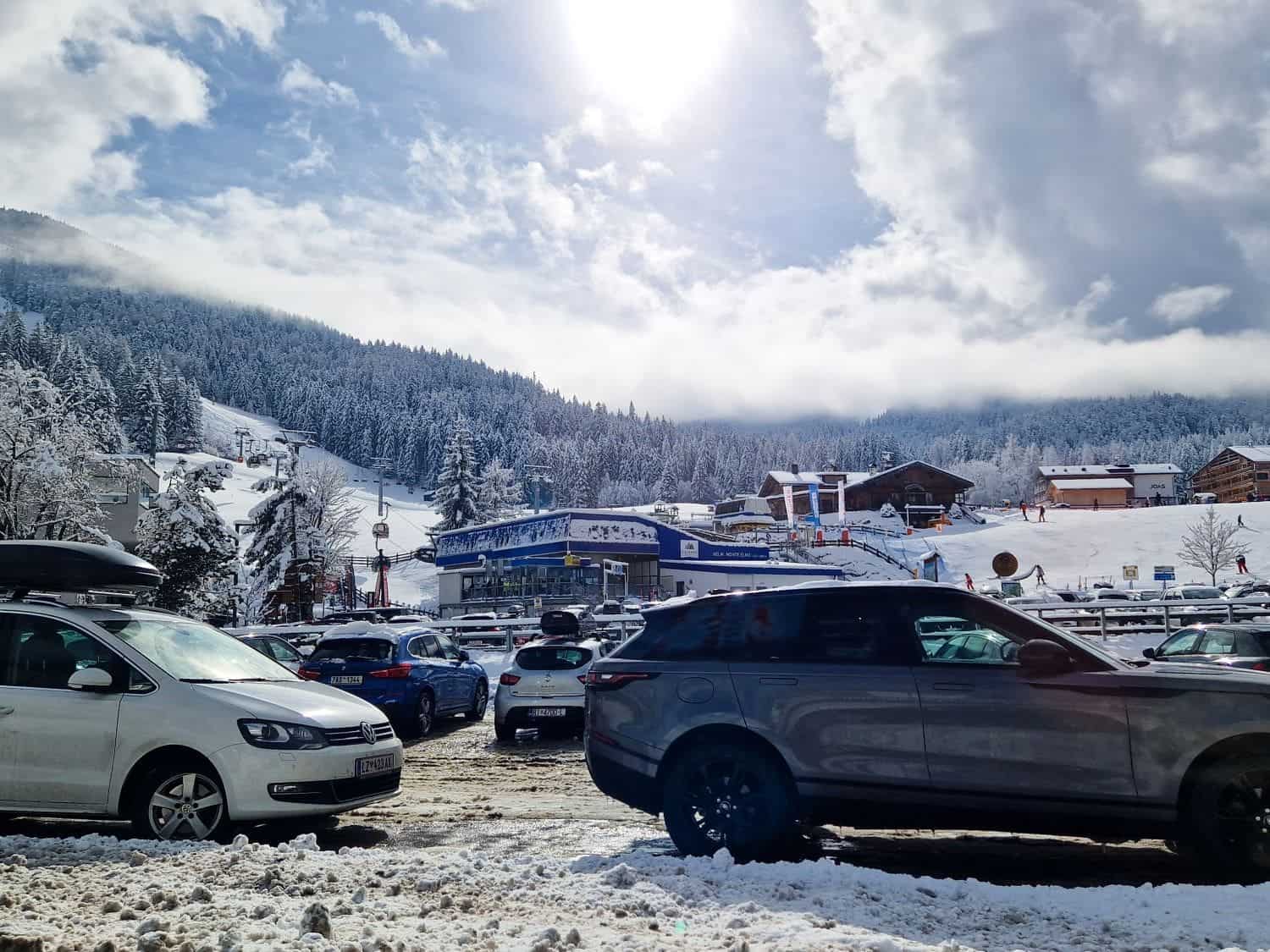
Tre Cime Dolomites Ski Area is similar to Cortina for us, because we haven’t skied there yet, but Alta Pusteria is one of my favorite areas in the Dolomites overall. You have Tre Cime di Lavaredo, Lago di Braies, Prato Piazza, San Candido there, and just a lot going on that has absolutely nothing to do with skiing.
So if I was planning a winter trip where I wanted to ski, but I also knew I’d want a few non-ski days, this is one I’d seriously consider.
The skiing itself also looks like it would suit us as a family quite well, too. There are a lot of red runs, especially around Monte Elmo, Stiergarten, and Croda Rossa, so it’s not just a beginner area where you’re going to run out of things to do after two days.
And if you do want a bigger ski day, you can ski the Giro delle Cime ski carousel, which connects several parts of the area together.
What I like, though, is that it doesn’t seem to have that same slightly overwhelming feeling as Val Gardena or Val di Fassa, where you can look at the map and immediately start wondering whether you’ve somehow planned your entire day wrong.
You can stay around Monte Elmo, have plenty of places to ski, and still be based in an area I’d happily choose even without the skiing.
Kronplatz (Plan de Corones) – best for long ski runs and a good mix of abilities
Kronplatz is great if you enjoy long, wide slopes and want plenty of skiing within one ski area. It’s actually quite different from most other ski areas in the Dolomites.
We’ve actually been up Kronplatz twice, but unfortunately, only in summer. The first time, I went tandem paragliding while Michal and Emma explored the summit, and we loved the area enough to come back another time just to enjoy the views and let Emma try some of the kids’ activities up there.
Kronplatz is essentially one big, rounded mountain, with slopes running down in different directions. There are plenty of blues and reds, so beginners and intermediates have a lot to enjoy, but there’s also some properly challenging skiing, including the famous Black Five runs.
And the views from the top are beautiful!
What I remember especially is how open the summit feels. You have these huge views in pretty much every direction, across the Dolomites and toward the Alps, and so much space around you.
The main downside is that Kronplatz is a fairly self-contained ski area, so you don’t have the same easy connections to other ski areas that you get in some parts of the Dolomites. You can still reach other resorts by train or ski bus, but it takes a bit more planning rather than simply skiing from one area into the next.
So if you want plenty of variety on a single mountain – with the opportunity to stay in many nice places around it – Kronplatz is a great option.
Before You Book a Ski Hotel in the Dolomites
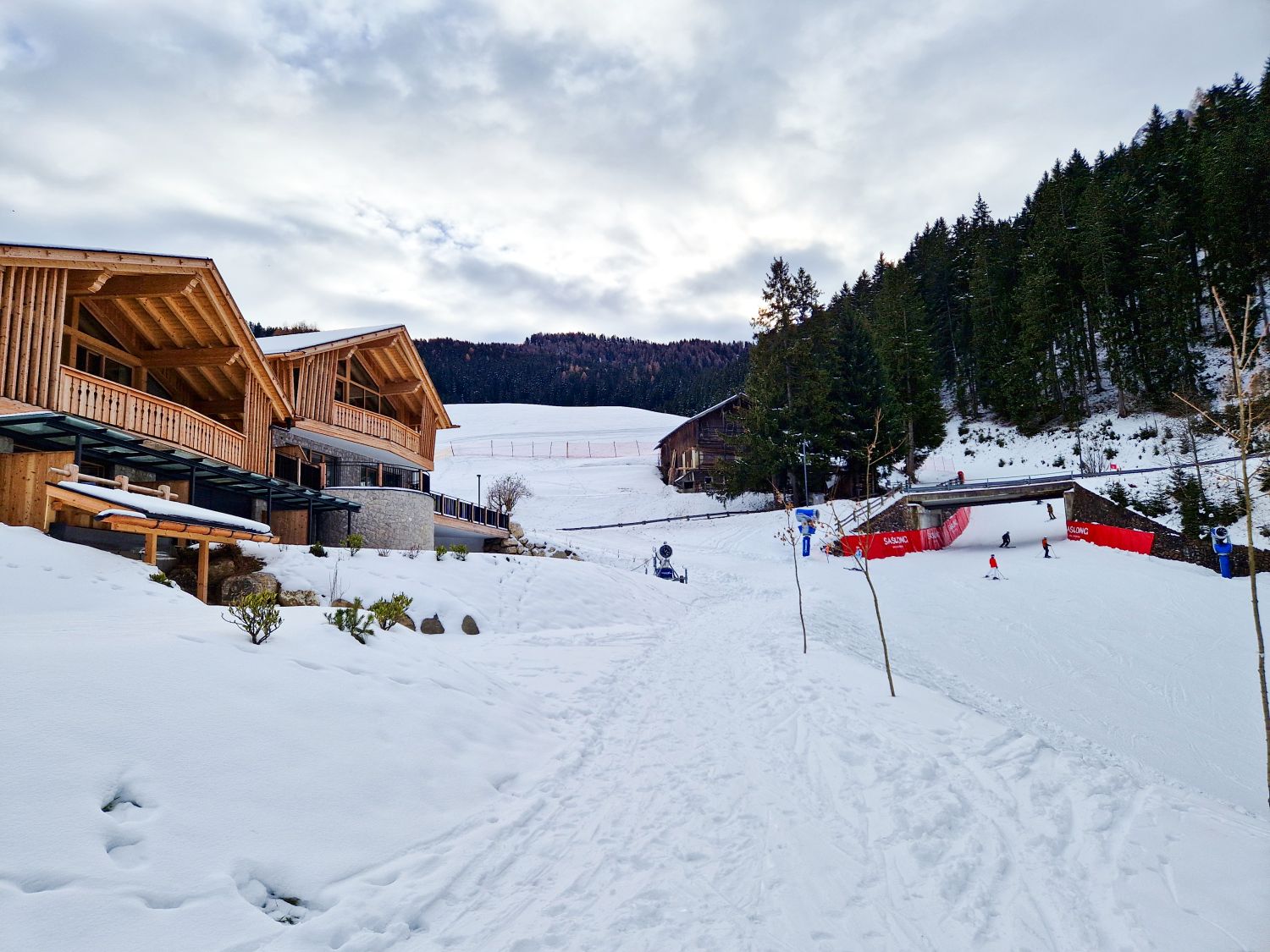
Once you’ve chosen your ski area, you still need to figure out where exactly to stay. And I’d be a little careful here, because two hotels in the same valley can give you very different skiing experiences.
I’ve seen plenty of beautiful hotels that look absolutely perfect until you check where they actually are in relation to the ski lifts.
Check which lifts you can actually reach
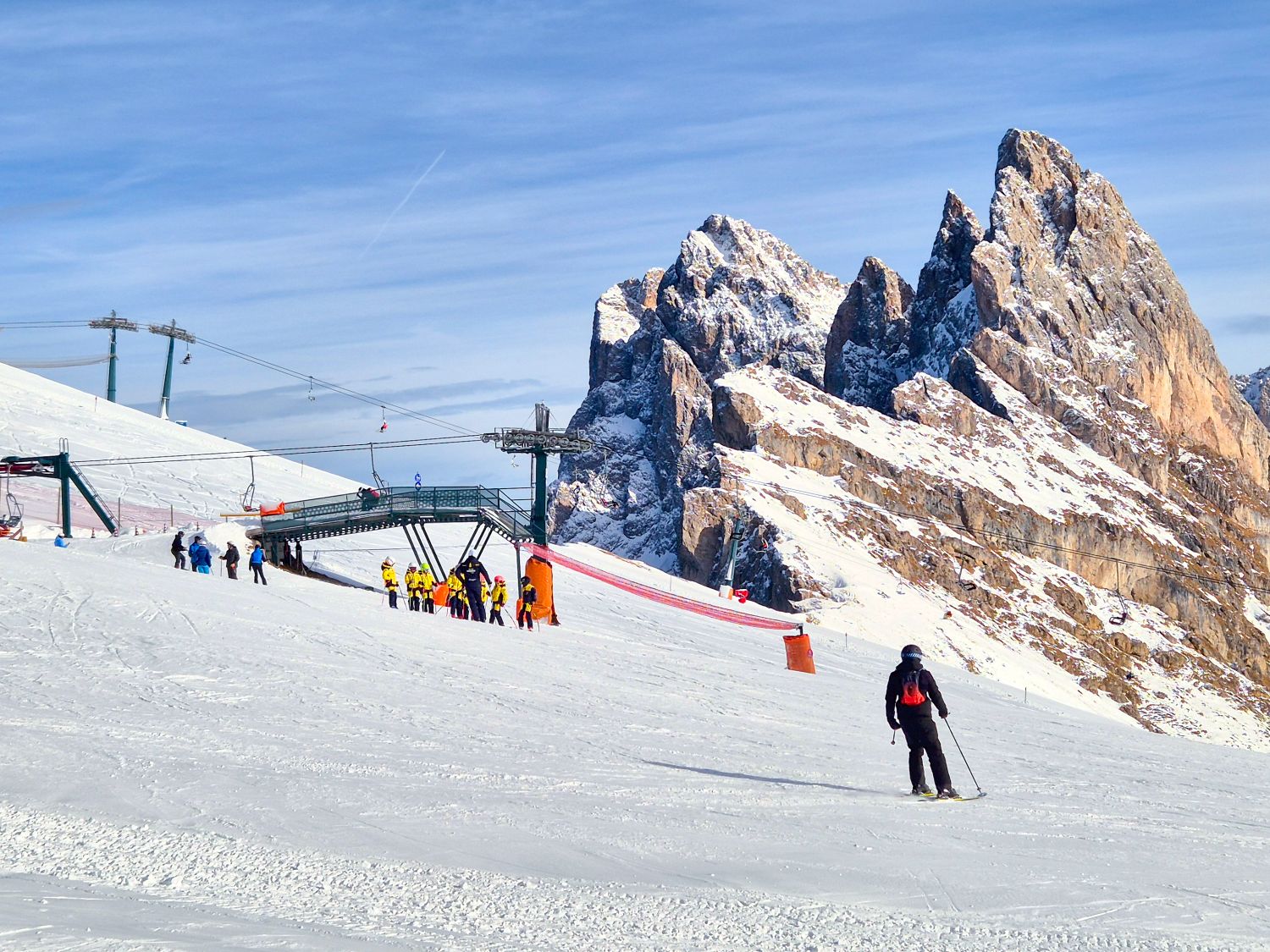
Don’t just look at whether your hotel is in Val Gardena, Alta Badia, or whichever area you’ve chosen. Check which lift is closest, what slopes it gives you access to, and whether those are the slopes you actually want to ski.
This is especially important in larger ski areas where different villages connect to different parts of the network – and some of the villages in the same valleys don’t connect to any other areas at all.
And if you’re traveling with beginners or kids who will need some lessons, make sure you can easily get to the ski school and beginner slopes. You really don’t want to discover on your first morning that the ski school is on the other side of the valley.
Think about how you’ll get to the slopes every morning
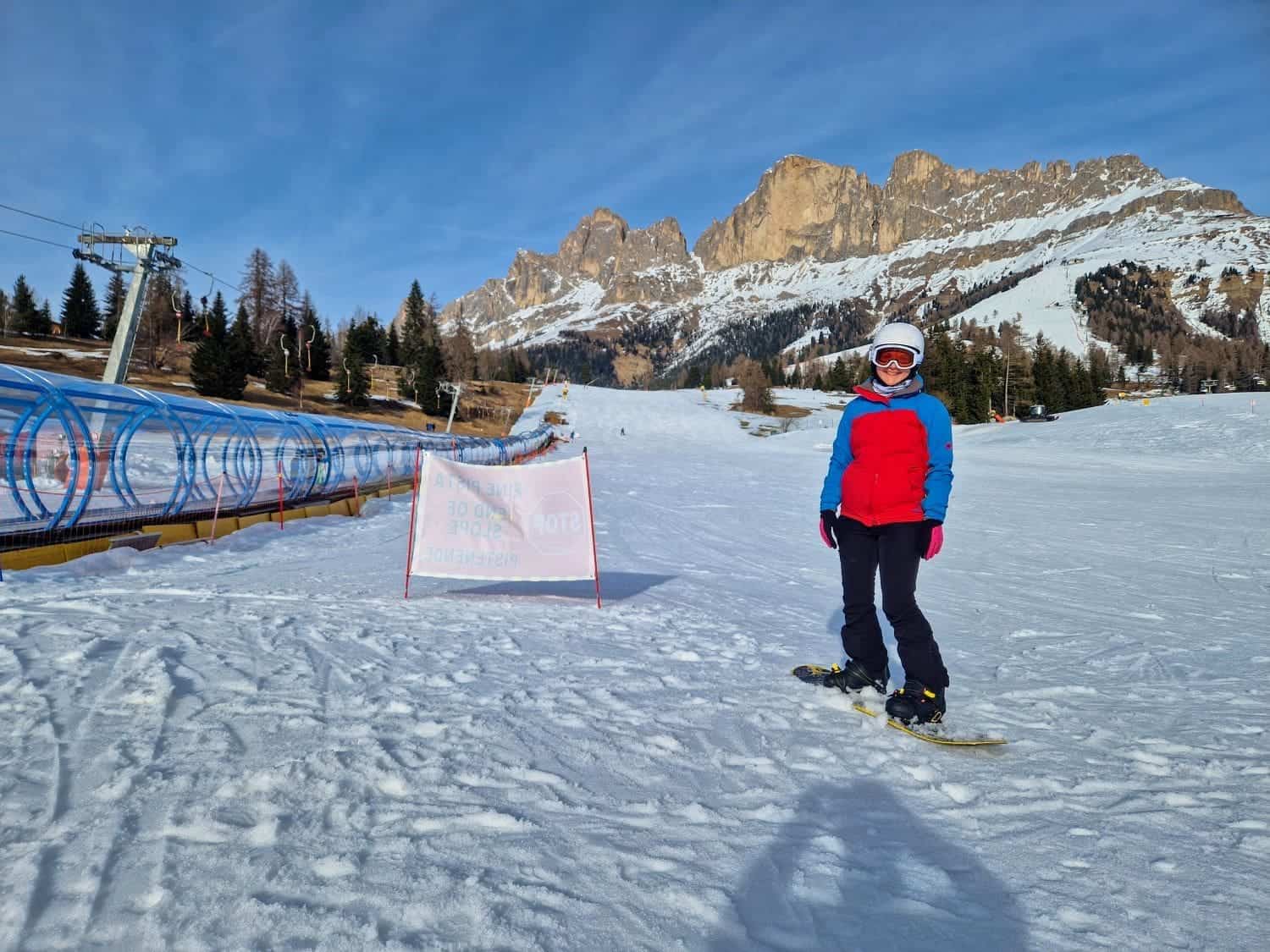
A ski-in ski-out hotel is lovely, and having experienced it in Carezza, I can absolutely see the appeal. Being able to get ready, step outside, and start skiing without worrying about getting to the lifts is wonderful.
But I wouldn’t pay significantly more for it just because it seems more convenient.
A hotel within walking distance of a lift or close to a convenient ski bus stop can work just as well. Just check how far that walk actually is, because 10 minutes in normal shoes and 10 minutes carrying skis while wearing ski boots are two very different experiences.
Our hotel on Alpe di Siusi was a 5- to 10- minute walk from the lift, which seemed really easy in the mornings, but after a whole ski day, I was struggling a bit uphill. It was still more than manageable, though, and definitely worth it.
If you’re planning to drive, check parking arrangements at the lifts, too. Or maybe there’s a ski bus nearby, which would be the more convenient option.
Don’t forget about the rest of your holiday
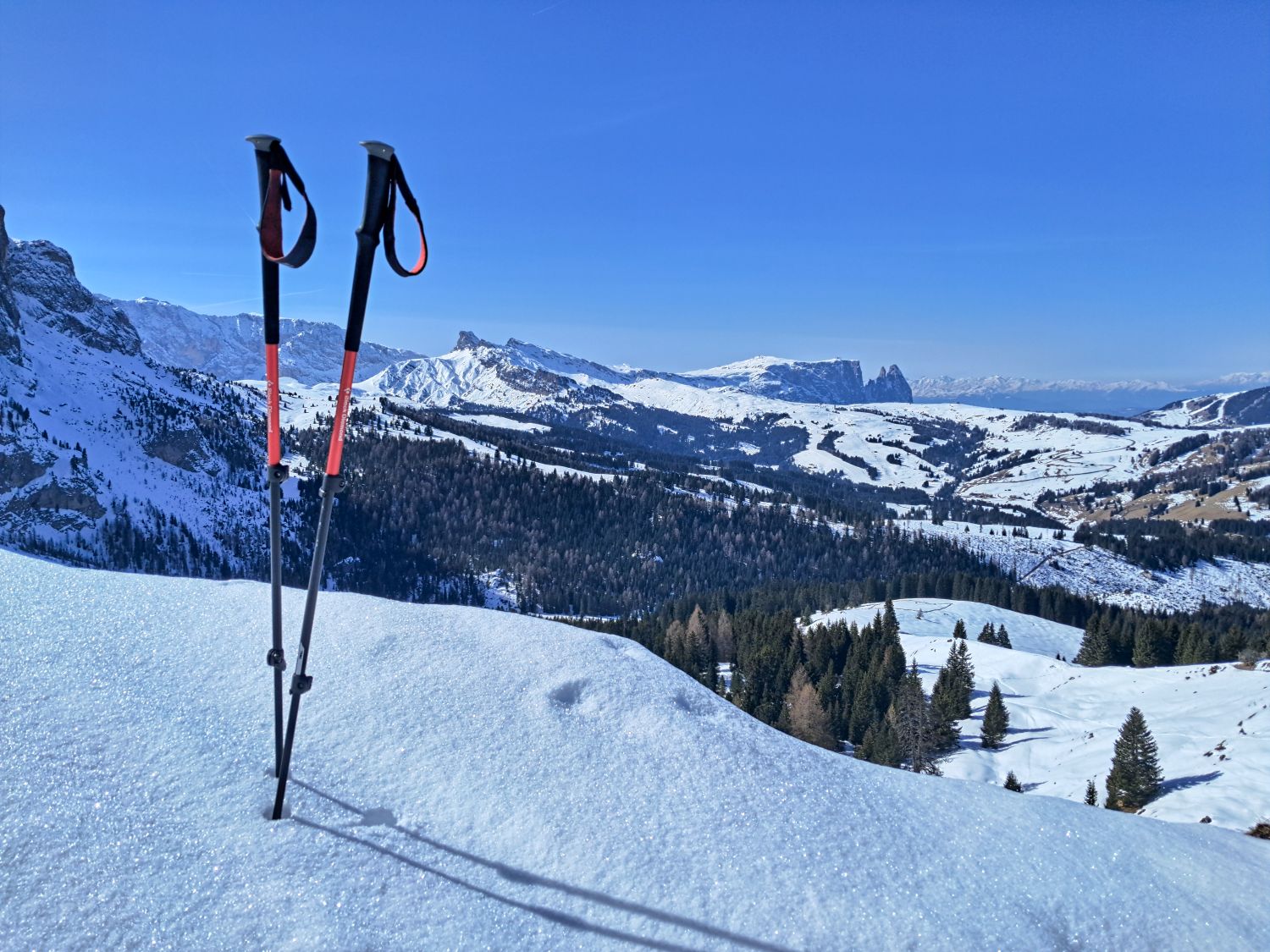
I’d also think about what you want to do once you’re finished skiing.
Some hotels are in beautiful, peaceful locations, but there’s very little around them. That can be wonderful if you want to enjoy the hotel spa, have dinner there, and relax for the evening.
We really enjoyed that when we stayed in Carezza. There was really almost nothing for shopping or restaurants around, at least not walking distance, which was fine because the hotel provided our entertainment.
But if you want to walk around town, try different restaurants, go shopping, or have plenty of options for non-skiers in your group, I’d pay more attention to the village itself. Both in Carezza and Saltria, there were non-ski winter fun options, so we all could have fun, but it’s not always the case.
And don’t forget to check what’s included in your hotel. Half-board or 3/4-board, ski storage, equipment rentals nearby, and a good wellness area can all make quite a difference to your stay.
Personally, I’d rather have a hotel that works well for our actual plans than pay extra for a beautiful location that makes every morning unnecessarily complicated.
So, Where Would You Stay in the Dolomites for Skiing?
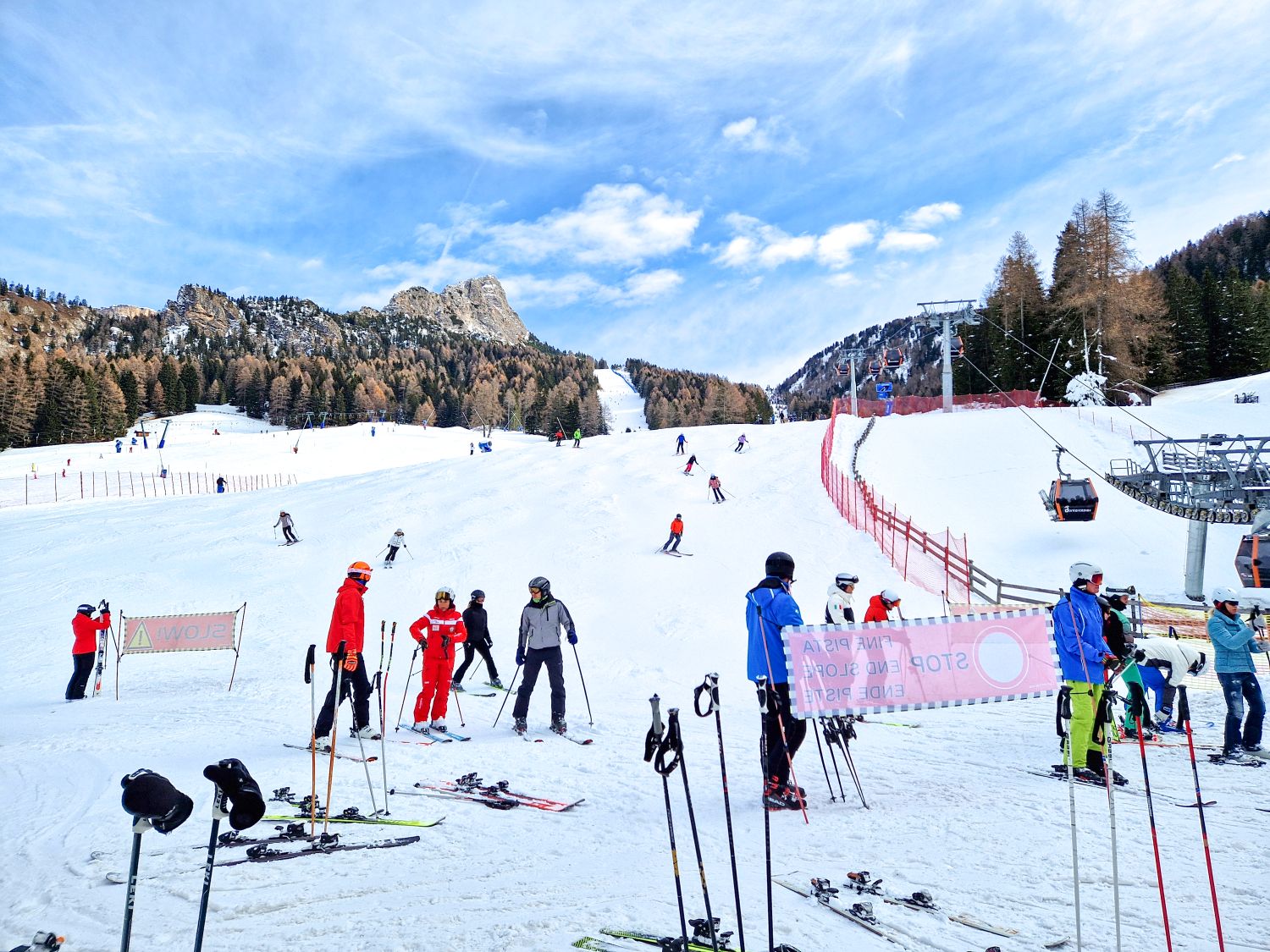
If you’re still trying to decide between a few ski areas, I’d think about what you actually enjoyed on your previous ski trips, or what you’re most looking forward to if this is your first one.
For a first Dolomites ski trip, I’d personally start with Val Gardena if you want plenty of variety, or Alpe di Siusi or Carezza if you’d rather keep things a little more manageable.
If you’re already comfortable skiing and want to explore farther, Alta Badia, Val di Fassa, and the other larger ski areas give you plenty of options.
For us, especially when skiing with Emma, having a ski school nearby and plenty of slopes we can comfortably manage is much more important than having access to hundreds of kilometers of pistes. And I really enjoy having time for other winter activities, too.
But once you’ve settled on an area, don’t book a hotel just because it’s in the right valley. Check which lifts and slopes you can actually reach from there.
We generally recommend ski-in ski-out hotels for convenience, but staying close to the right lifts can work just as well. I’d rather have a slightly less impressive hotel with easy access to the slopes we actually want to ski than a beautiful hotel where we have to drive to the lifts.