

Northern Italy Winter packing list: From Essentials to Specials
It’s not that easy to create a Northern Italy winter packing list. The weather differences from the valleys, to the lakes, to the mountains are just incredible!
When we lived in Sarnico (Northern Italy, province of Bergamo, by lake Iseo), we could expect to see snow maybe a couple of weeks a year. It was rare, y’all. The weather in winter was generally humid and cold, so – unpleasant.
But if we look into the mountains, there might be snow up there most of the year. And definitely in winter.
Anyways, smart layering and weather-appropriate items will help you stay comfortable and stylish through snow, rain, and city strolls.
In this packing list for the Northern Italy. In it, you’ll find essentials for every trip, and then add-ons for different occasions, such as mountains, lakes, and cities.
Enjoy!
This post might contain affiliate links, which means that if you purchase anything via them, we might earn a small commission – at no extra cost to you. Check our disclaimer policy for more information.
As an Amazon Associate we earn from qualifying purchases.
Understanding Northern Italy’s Winter Climate

Before we start building your packing list for the winter in northern Italy, it’s essential that you understand what to expect from the climate.
First things first – winter in Northern Italy is officially from December to February, but I would say that it’s realistically from November until the end of March. Especially if you’re going to the mountains, you will encounter snow.
Second, Northern Italy ranges from the northern side of Rome up to Italy’s Northern border. It includes the regions of Piemonte (Turin), Valle d’Aosta, Trentino-Alto Adige, Friuli-Venezia Giulia, Veneto (Dolomites), Lombardy (Milan), Emilia-Romagna (Bologna, Modena), and Liguria (Portofino).
As you can see, the area is enormous, so the temperatures and climate in general differs quite a lot. It will, obviously, be warmer in the Southern parts and colder in the mountains. But in general, winter in northern Italy is long, relatively dry and rather cold. And there is a peculiarity here – the region, especially the Po plain, is covered by a thick fog from October until December.
The main things to know about the climate, then, are that in the mountains, the temperatures in winter will be freezing. The average temperature can go up to maybe 10 degrees during the winter, and there will be snow. Not a question – in the mountains, in the winter, there will be snow.
In the areas by the mountains – that’s where you’ll find Milan, Venice, Bologna, etc., the weather is general cold and humid, but rarely goes below freezing temperatures.
The Southern areas, that is, Florence, Bologna etc., it’s going to be a bit warmer, but generally – sweater weather, not winter coats weather. As for precipitation – snow is common in the upper-most regions, but in Liguria, you’ll most probably encounter rain.
Packing list for the winter in Northern Italy

So, now that we understand the climate, let’s see what you should pack for your trip.
Clothing essentials

Let’s start with what clothing items. Since, as we established, the weather is really varied, you’ll want to take waterproof outerwear for possible rain in the valleys and plains, and warm insulated layers for alpine cold.
It’s a good idea to pick clothes that are both warm and breathable which would be perfect for outdoor strolls and heated interiors.
For outside

- Warm coat
- Fleece (or similar warm) jacket
- Lightweight rain jacket
- Warm base layer
- Waterproof warm pants
- Jeans/trousers
When going outside, you want to make sure to layer up and dress warmly, and that’s for anywhere, not just the mountains. Although the thermometer or your weather app might be showing warm temperatures, it mostly feels quite cold, especially in the Northern-most parts and when the sun is hiding.
So you’ll want to take a warm coat, preferably winter and waterproof one.
A fleece or a softshell layer will help you stay warm even if you don’t have a thick, insulated winter coat with you. This is an especially good idea if you’re planning to visit both cities and the mountains, as it will for sure keep you warm.
If you don’t plan to go up to the mountains, a rain jacket on top of a fleece or softshell jacket will still keep you warm.
The same goes for the waterproof pants – you can make-do with jeans or trousers if you don’t go higher in altitudes. But if you plan to go somewhere to the mountains, make sure to take waterproof pants with you. It’s not exactly pleasant to be out for a day exploring in the snowy mountains when your pants are wet.
As the base layer, you can just wear a normal, everyday shirt or long-sleeve t-shirt. If the weather forecast shows freezing temperatures, though, look into a thermal layer, such as merino wool or thermal fabric that will trap heat while wicking away moisture.
For inside

- Sweater
- T-shirt, shirt, blouse
- Jeans or trousers
For everyday use you can take, well, everyday clothes.
Jeans, a t-shirt, and a sweater/jacket will work for most inside places. Unless you plan to go to a fancier restaurant (or you’re staying in a 4+ star hotel), this combo is enough.
In case of the fancier restaurants or hotels, pack a nicer-looking shirt and maybe some pants that look better than jeans. I’ve noticed that Italians actually dress up in formal clothing for 4* hotel dinners.
Shoes and accessories

When traveling to Northern Italy in winter, proper shoes and the correct accessories are essential.
Shoes
- Winter shoes or boots for cities
- Hiking boots or winter boots for mountains
- Sneakers or loafers (or similar) for inside
Whether you’re going to the mountains or to the towns, make sure to have waterproof winter shoes with you. If you want your whole body to feel warm, it’s essential that your feet are warm. I have Rieker winter boots, and they are perfect – warm and elegant.
High-heel shoes are not exactly a good idea for Italy in general, so I recommend that you leave them at home (or at least don’t wear them outside). The streets in cities are, at least partly, cobblestone, and let’s not even start talking about how bad a combination is heels and mountains.
For inside, that is, for example, for hotel breakfasts or dinners, pack something not-winter. I usually have my black sneakers with me – they look a tiny bit better than sporty sneakers. My husband wears loafers with jeans and a t-shirt.
When eating out in restaurants, unless you go specifically for the restaurant, you’ll really have no choice but to stay in your warmer shoes.
Accessories

- Anti-theft cross body bag
- Gloves
- Hat
- scarf
- socks
- underwear
- day pack
An anti-theft bag is very important if you’re travelling in the bigger cities such as Milan, Venice, and Florence. Since the places are so touristy, there are, unfortunately, also quite a few pickpockets.
And, as a side note, please be careful about the tourist scams. On my very first trip to Italy, I fell for the “take these seeds and we’ll take pictures of you with the birds” on the Duomo square in Milan. Three huge guys stood around us two student girls until we paid them.
On that note, never keep all your money in one wallet. If you have the cross-body bag or if your normal bag has hidden pockets, it might be a good idea to keep most of your bills there.
When travelling in the winter, you’ll need a hat, gloves, and scarf with you for sure. It’s hard to enjoy strolling around if you’re cold – and yes, even in the lower altitudes, it can get very cold.
Underwear and socks are self-explanatory, right?
And a day pack – a small backpack where you can put the things you’ll need during the day – is also a must-pack for me. Water, layers, snacks, wallet, napkins – it’s just too much to carry in the pockets, hands, or a small purse.
Travel essentials

These are some the things that you should take on every single trip you go on. Here are the ones that I have on my packing list.
Documents
- Id card or passport
- Driver’s license
- Reservations for hotels, car, public transport etc.
- Itinerary
Passport or ID are essential, of course. Without a valid Id, you can’t even check in in your hotel – and most hotels in Italy will not accept a driver’s license as an ID document.
If you plan on renting a car, make sure to have your driver’s license with you, though. And check if you need an international driver’s license – if you’re from the UK or USA, you most probably do need it.
I usually print my reservations. There has been more than one time when the hotel has tried charging me for items that were included in the reservation! And occasionally I’ll print my flight tickets, too – I’ll never forget the time that my phone died on the way to the airport… that was one stressful hour for me.
Have at least a rough itinerary for yourself to know what you plan to do on each of the days. You don’t need to plan it out minute-by-minute – I actually don’t recommend doing it. But map out some things to do and alternatives for them.
Technology
- Camera
- Paper tissues
- Chargers
- Electronics adaptors
- Portable battery
- Small zip-lock bag for trash
- Water bottle
I believe you’re gonna use your phone a lot to take pictures, so don’t forget your chargers – and a portable battery is definitely a good thing to have, too. I have a really old portable battery so I need a charger for my, well, charger with me also.
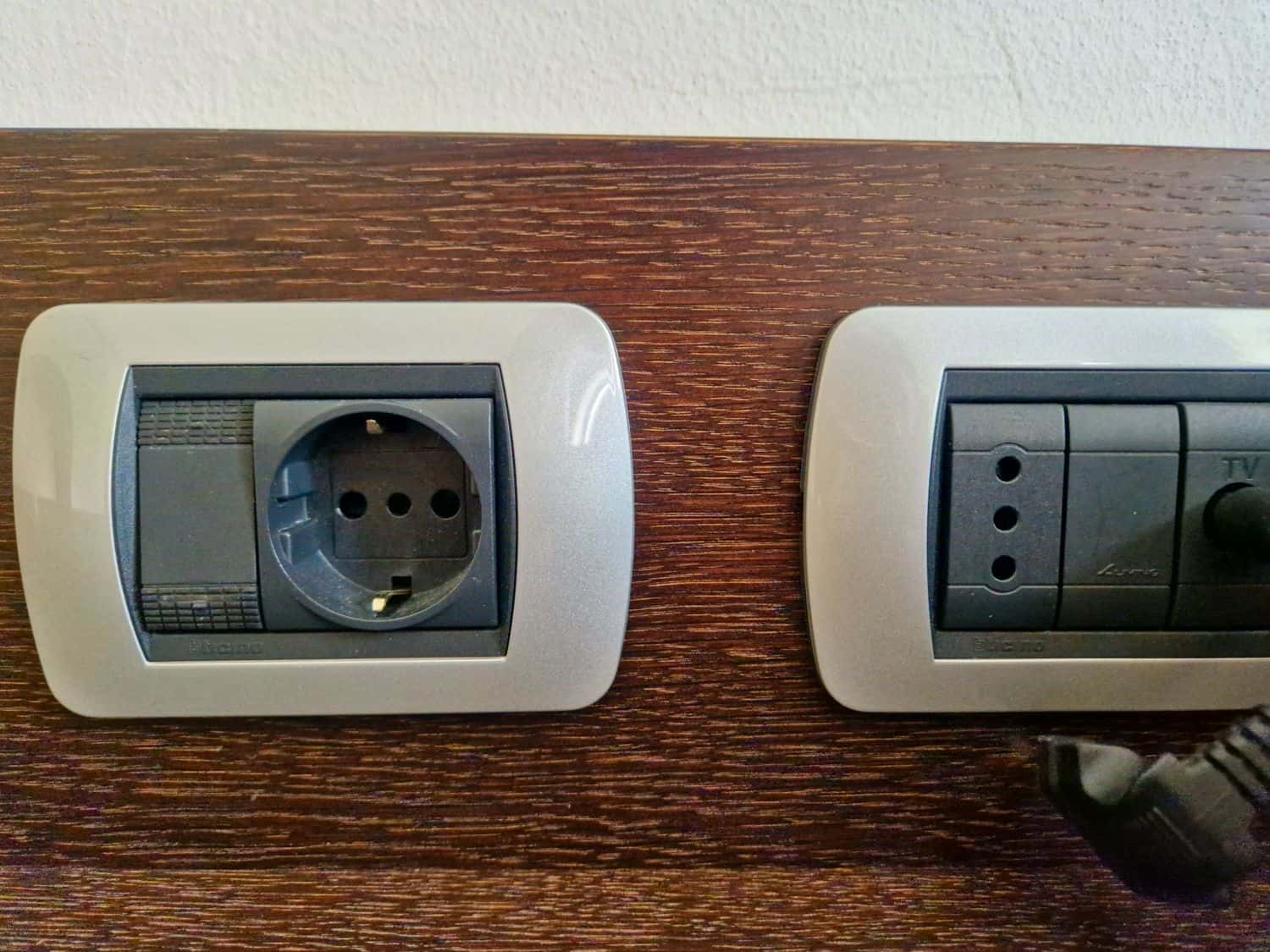
Even if you are from Europe, you might need power adapters. There are three plug types used in Italy: C, F and L. C is a plug with two round pins, F has two round pins and two earth clips on the side, and type L is a type which has three round pins. Italy operates on a 230V supply voltage.
We have had occasions that we don’t have where to plug in our two-pin chargers, so make sure that you have at least one charger that has the thin ones.
And a camera, as much as I love my phone pictures, is just better sometimes.
Since I have allergies, I always take paper tissues with me. It’s much nicer than cleaning your nose in your sleeve, isn’t it?
And on that note, I have a zip-lock baggie where I can put all the trash that I gather when out and about.
As the last but not least, we always take reusable water bottles with us on our trips. The water in Italy is generally great, so you can use the tap water instead of buying bottled one.
First aid and medicine

- Band aids
- Medicine for fever
- Pain medicine
- Medicine for stomach issues
- Something for sore throat
- Nose spray
- Medicine you take every day
- Travel insurance
I have a small baggy where I keep our travel medical kit. It includes most of the things above, except for the medicine I need to take regularly. Before the trip, I check the expiration dates and if I need to fill anything in.
It’s always a good idea to have your own medicine with you, as you never know where the nearest pharmacy will be. Or if it even will have the thing that you need – and let’s not even think about language barriers and allergies! And medicine in Italy is crazy expensive.
Make sure to take the stuff with you if you go hiking, too! Who knows what can happen – especially blisters!
Like on our last trip to the Dolomites, when Michal got a crazy headache during a hike, but we didn’t have anything that he can take for it. I was trying to ask one hut owner if he has Paracetamol (Michal is allergic to ibuprofen), but the owner spoke only German and Italian, and I speak no German and barely any Italian. We managed and it was quite interesting, but still stressful.
And never travel without travel insurance, even if you’re an EU resident travelling in the EU. I’ve had too many times when the travel insurance just was better than the EHIC, for example, on Tenerife, when the hospital was far away and, according to the reviews, no doctors spoke English.
I personally have Revolut Premium with a travel insurance included, and it covered most of our trip to the Dolomites for skiing when we had to cancel it before going because I broke my sits bone.
Hygiene
- Toothpaste and toothbrush
- Deodorant
- Soap/shower gel
- Shampoo
- Small amount of clothes washing liquid
- Sunscreen
- Chapstick
- Hand cream
- Menstrual products
- Hair brush and hair ties
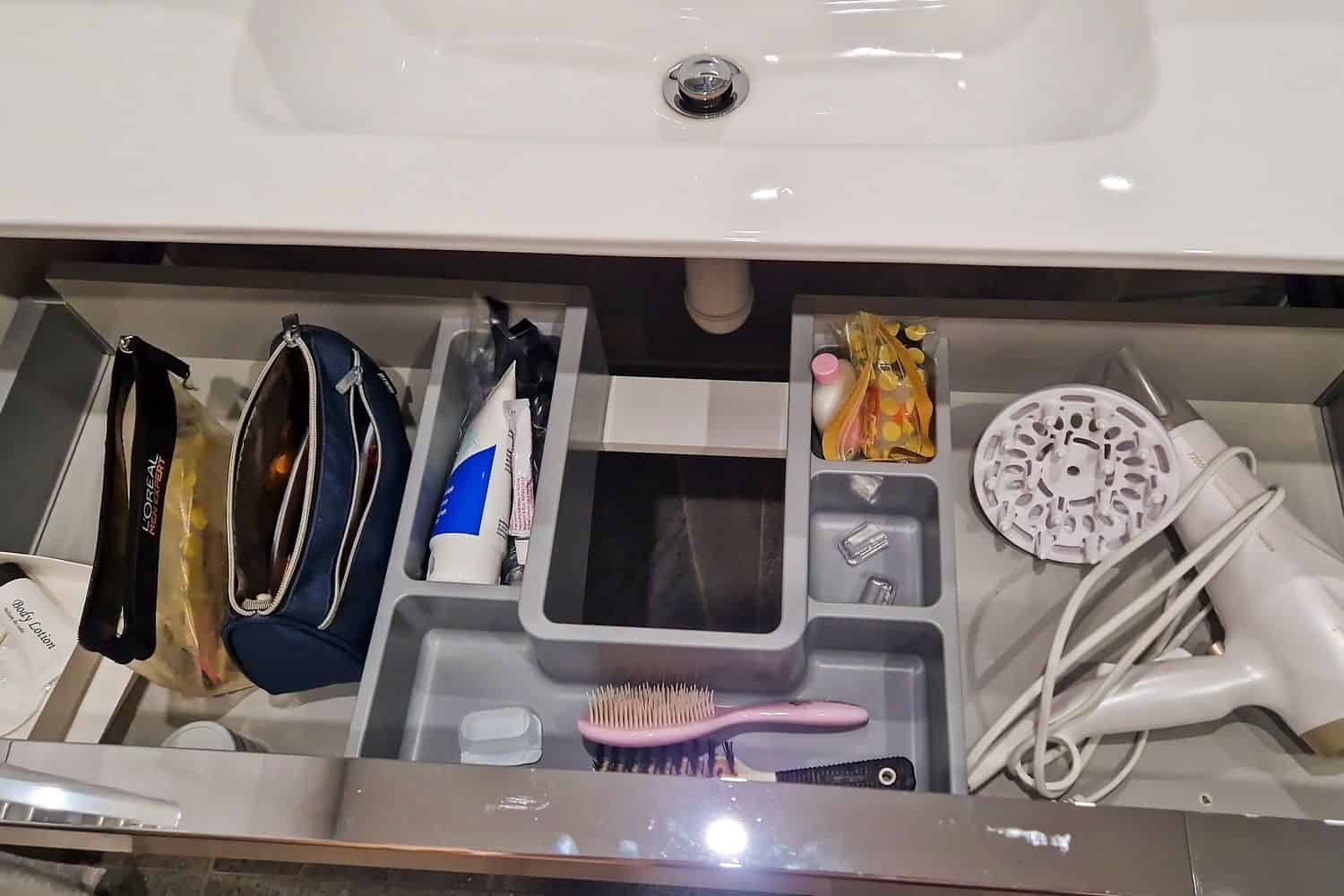
Toothpaste, toothbrush, deodorant, and hair products probably don’t need any explanation, right?
But soap/shower gel, shampoo, and clothes washing liquid might.
I usually take a travel-sized bottle of these, as my hair and body very rarely agree with the ones that hotels provide. Just buy an empty container and fill it in with the ones that you have at home.
And I usually pack a tiny bit of clothes washing liquid, as we’ve had occasions that we’ve run out of clean socks or t-shirts, haha. So I just rinse the sweat out so that we have what to wear.
Sunscreen and a hygienic lip balm are very important if you’re going to the mountains – yes, even in winter. The sun is stronger up there, and the air – drier. The same goes for hand cream.
For those of us with periods, I recommend packing some period products with you. I pack some period underwear, as if my menstruation comes unexpectedly, I have protection, so to say. And, well, if it doesn’t come, I have extra panties to wear.
Want to have a trip of a lifetime?
Forget the desperate hours and hours of tedious reading, calculating, thinking, wondering, and putting everything together – we’ll happily do it for you!
Check out more info right here
Add-ons for Ski Trips

- Skis/snowboard
- Boots
- Helmet
- Goggles
- Gloves
- Jackets
- Pants
- Travel insurance that includes mountain sports’ protection
- Balaclava
For skiing in the Italian Dolomites – the Dolomiti SuperSki area, it’s mandatory to have insurance that includes high-altitude winter sports. Without such, you can get a fine. So keep this in mind when planning the Dolomites portion of your trip.
It’s possible to rent almost all of the equipment for skiing or snowboarding, but of course, if you have yours and can take it with you, it’s better.
You need your own gloves, for example. Make sure to get proper waterproof ones, especially if you’re learning to ski or snowboard.
I like to have my own helmet and goggles with me, though, as I find it more trustworthy to use mine.
Boots can be rented, for sure. If you don’t have ones, I recommend renting, as it takes time for them to become comfier.
There are many comfy ski jackets that can double as your everyday winter jacket. That’s how I’ve been using mine, for sure. With pants, the ski and snowboard ones are usually a bit too long to use as normal pants, so I have two pairs that I take specifically for snowboarding.
What to wear in Italian cities in winter

There’s this idea that Northern Italians are always fashionable and look like they’ve just stepped off a runway.
After living in Italy and visiting it more times than I can count, I can with all honesty say that it’s not true. At least, not more true than anywhere else in the world.
The thing is – when you visit somewhere, you see people who, generally, go to work. Of course they will not be wearing leggings and a crop top if they go to an office! The same is true for Northern Italy.
My only observation is that Italians in general don’t wear sports clothes (such as leggings) when out and about, unless they go to do some sports activities.
So, if you’re going out, wear jeans or trousers.
And make sure to wear layers, as it will help you adjust to temperature swings between heated interiors and cold streets without sacrificing style.
Last thoughts

Because of the temperature differences from the mountains and the valleys and the coast, you might need to pack quite many things with you.
Make sure to choose lighter items such as merino wool to save space in your luggage!
Not sure what to pack? Let’s talk it through – book a call and get clear fast.


