Skiing in the Dolomites for the first time
Skiing in the Dolomites can look a little intimidating when you’re planning your first trip. The ski area is enormous, you keep seeing famous World Cup runs and places like the Sellaronda, and then you open a ski map and realize you don’t entirely understand which lifts, resorts and ski passes connect to what.
But you absolutely don’t need to be an advanced skier to ski in the Dolomites. Both Emma and I actually started our proper learning journey here – we went from a complete beginner level to being comfortable on reds in just a couple of week-long trips.
Actually, on our first trip to Carezza, Emma went from the beginner slopes to skiing red runs within the first few days. I progressed rather less dramatically and was still making friends with the “magic carpet” lift on my snowboard, haha.
By our second trip, to Alpe di Siusi and Val Gardena, we were both confidently skiing and snowboarding red slopes, with a couple more lessons at the beginning to work on our technique.
And that’s probably the biggest thing I’d want a first-time skier to know about the Dolomites: despite the sheer size of the ski region, there’s plenty here for beginners. The trickier part is understanding where to ski, which pass you actually need, and how the different ski areas connect before you book anything.
This post might contain affiliate links, which means that if you purchase anything via them, we might earn a small commission – at no extra cost to you. Check our disclaimer policy for more information.
As an Amazon Associate we earn from qualifying purchases.
What skiing in the Dolomites is like
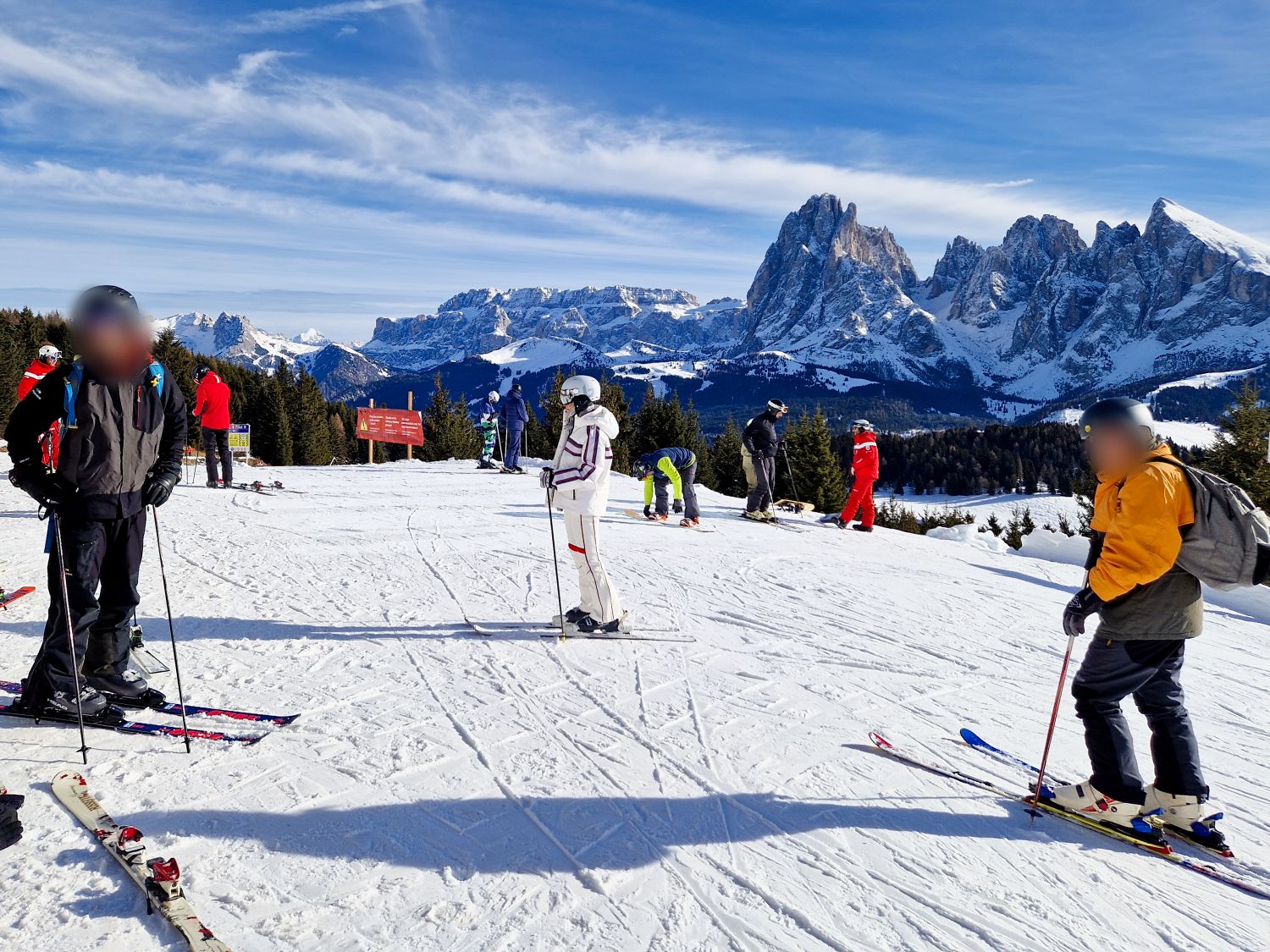
One of the things I love most about skiing in the Dolomites is how much variety there is, both in the slopes themselves and in how you can spend your day.
You have everything from little bunny slopes and easy blues to challenging blacks and famous World Cup runs.
Although you must be careful – sometimes even when two slopes fall within the same color rating, and are in the same resort, their difficulty can vary quite a bit. Some red runs are really gentle, while others feel much closer to blacks (I’m looking at you, Bravo in Val Gardena). So make sure you check the incline – the Dolomiti Superski app is amazing for this.
Speaking of incline – Dolomiti Superski, as the name suggests, is more geared towards skiers instead of snowboarders. Some areas can get flat, even at places where you wouldn’t expect it, such as Sellaronda.
Something that surprised me – pleasantly this time – was how wide and open many of the pistes are. Of course, there are some narrower runs, but overall, I’ve found the slopes really comfortable to snowboard on.
They’re also exceptionally well-maintained. The snowmaking and grooming are excellent, so you can often enjoy really good skiing even at the beginning and end of the season, when the weather might not be particularly ski-friendly.
Although, especially later in the season, the snow can get slushy and the pistes more uneven by the afternoon, particularly on sunny or heavily used slopes.
And with how much terrain is available in the Dolomites, you can choose to practice on the same slope all day or head off and explore for hours without repeating a run.
Depending on the ski area, you can even spend the entire day skiing between different valleys or take on one of the longer ski circuits and challenges.
The different ski areas are also exceptionally well-connected, although not necessarily always on skis. Sometimes you can ski straight from one area to another, while elsewhere you might need a ski bus, a short drive, or even a horse-drawn carriage!
With a Dolomiti Superski pass, you can use the lifts throughout its participating ski areas without buying separate tickets. Which is, you know, most of the Dolomites skiing.
And of course, the scenery is incredible. You’re skiing beneath some of the most spectacular mountains in the Dolomites, occasionally even crossing roads on specially built ski bridges.
Just keep in mind that the more popular slopes and connections can get quite crowded. It’s especially noticeable when you come in January or February.
Dolomiti Superski is what you’re probably thinking
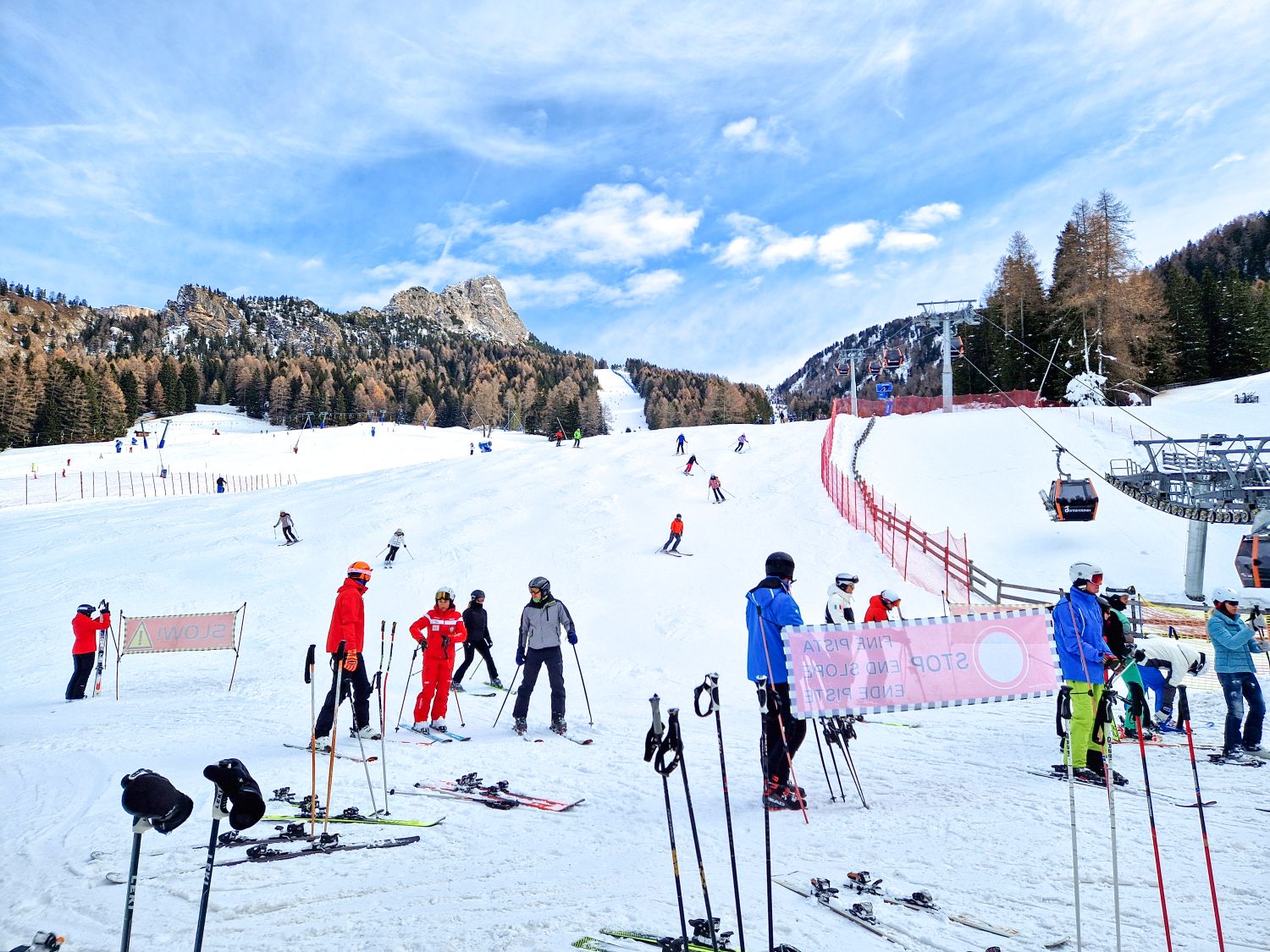
First, there’s an important distinction to make: the Dolomites and Dolomiti Superski aren’t quite the same thing.
The Dolomites are the mountain range, and there are ski resorts throughout the region. Dolomiti Superski is a network of 12 ski areas, with around 1,200 km of pistes and 450 lifts, all covered by a single ski pass.
The resorts are:
- Cortina d’Ampezzo
- Kronplatz
- Alta Badia
- Val Gardena / Seiser Alm
- Val di Fassa / Carezza
- Arabba / Marmolada
- 3 Zinnen Dolomites
- Val di Fiemme / Obereggen
- San Martino di Castrozza – Passo Rolle
- Rio Pusteria-Bressanone
- Alpe Lusia / San Pellegrino
- Civetta
But don’t assume that all 1,200 km of slopes are connected and you can ski from one end of the Dolomites to the other!
How Dolomiti Superski works
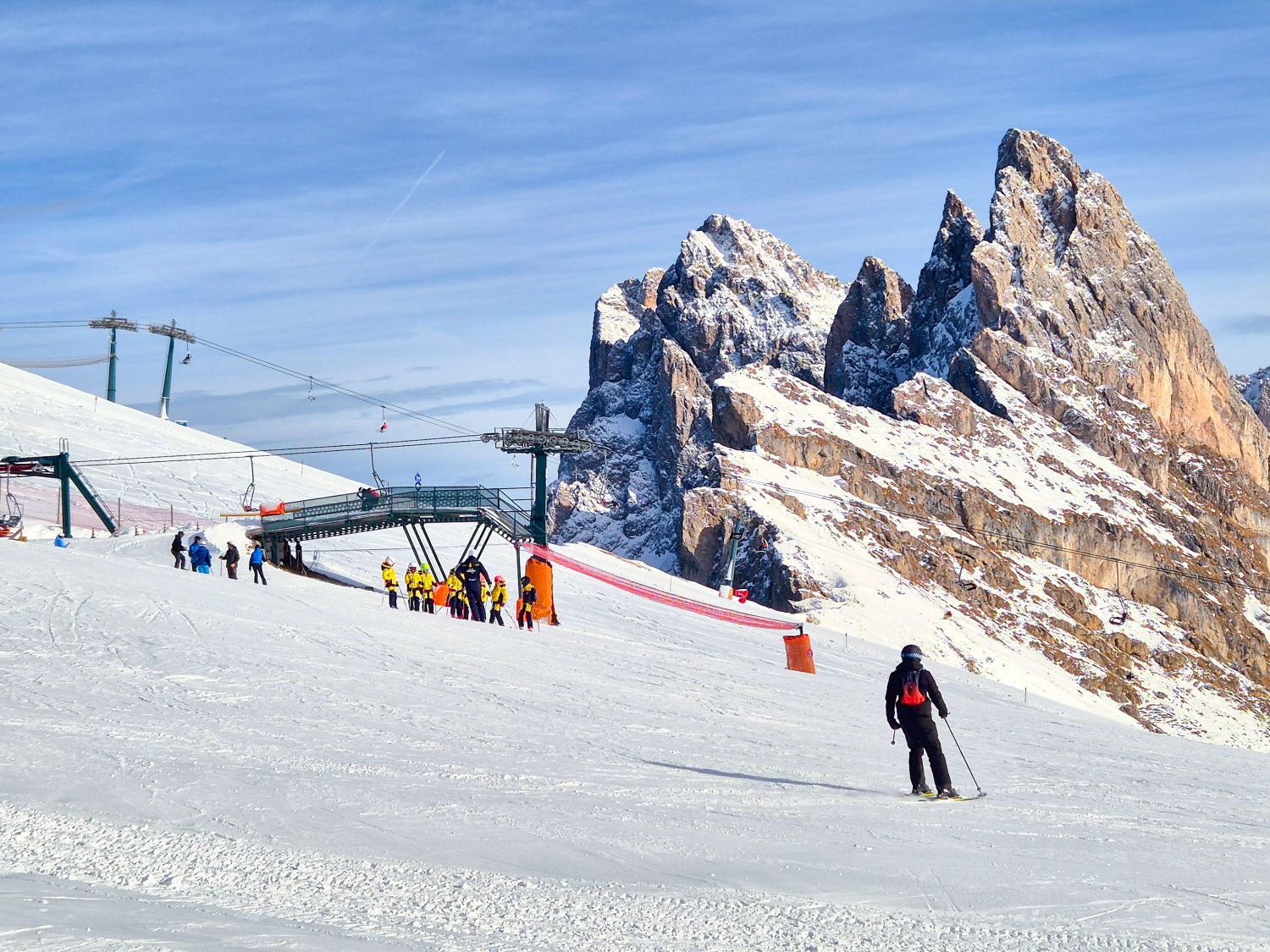
Some areas are connected directly by pistes and lifts, including the four valleys around the Sella massif, where you can ski the famous Sellaronda. Others are separate, so you’ll need to take a ski bus, train, or drive to reach them.
You can buy the Dolomiti Superski pass that covers all of the ski areas, also buy local ski passes that cover a particular resort or group of ski areas, which can be a good option if you’re planning to stay and ski in the same place throughout your trip.
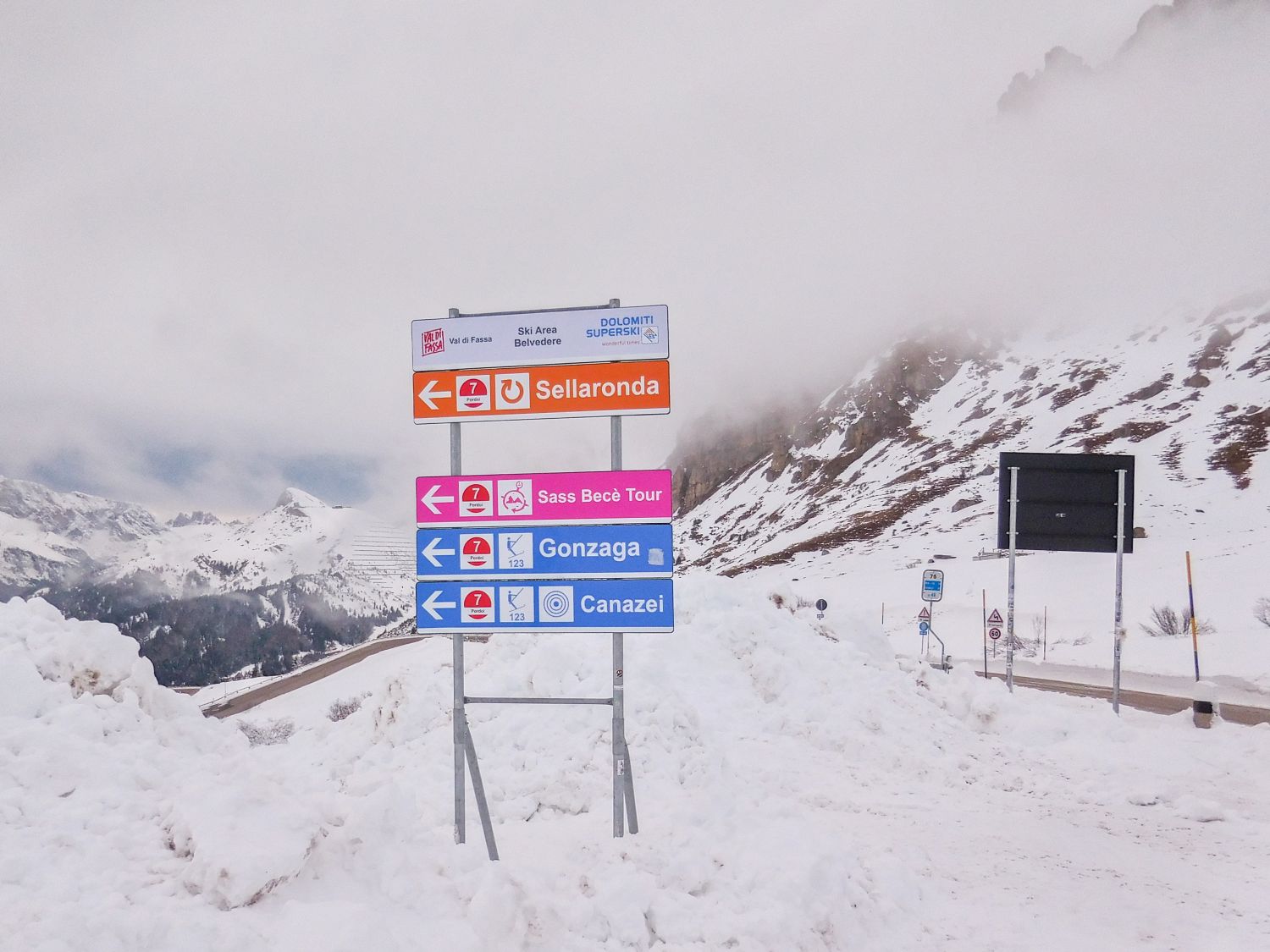
Just be careful about where those passes are valid, especially if you’re planning to explore. I remember seeing a sign on the Sellaronda at Passo Sella, where you cross from Val di Fassa into Val Gardena, warning that the Val di Fassa ski pass wasn’t valid beyond that point.
It’s actually quite easy to cross from one ski area into another without realizing it, especially when you’re following a connected ski route.
So if you’re planning to explore several areas, or you simply want the freedom to decide where to ski each day, I’d consider getting the full Dolomiti Superski pass. The price difference may be worth it for the flexibility, although it’s always worth comparing the current prices for your trip.
Which of the ski resorts is right for you?
Out of the 12 Dolomiti Superski areas, I generally would choose between Val Gardena, Alpe di Siusi, Alta Badia, Val di Fassa, Carezza, Cortina d’Ampezzo, and Kronplatz for the first trips.
They’re a bit more touristy, which actually works perfect when you’re starting out in the Dolomites, because you can get a great idea of how it all works there.
Val Gardena and Alpe di Siusi (Seiser Alm)
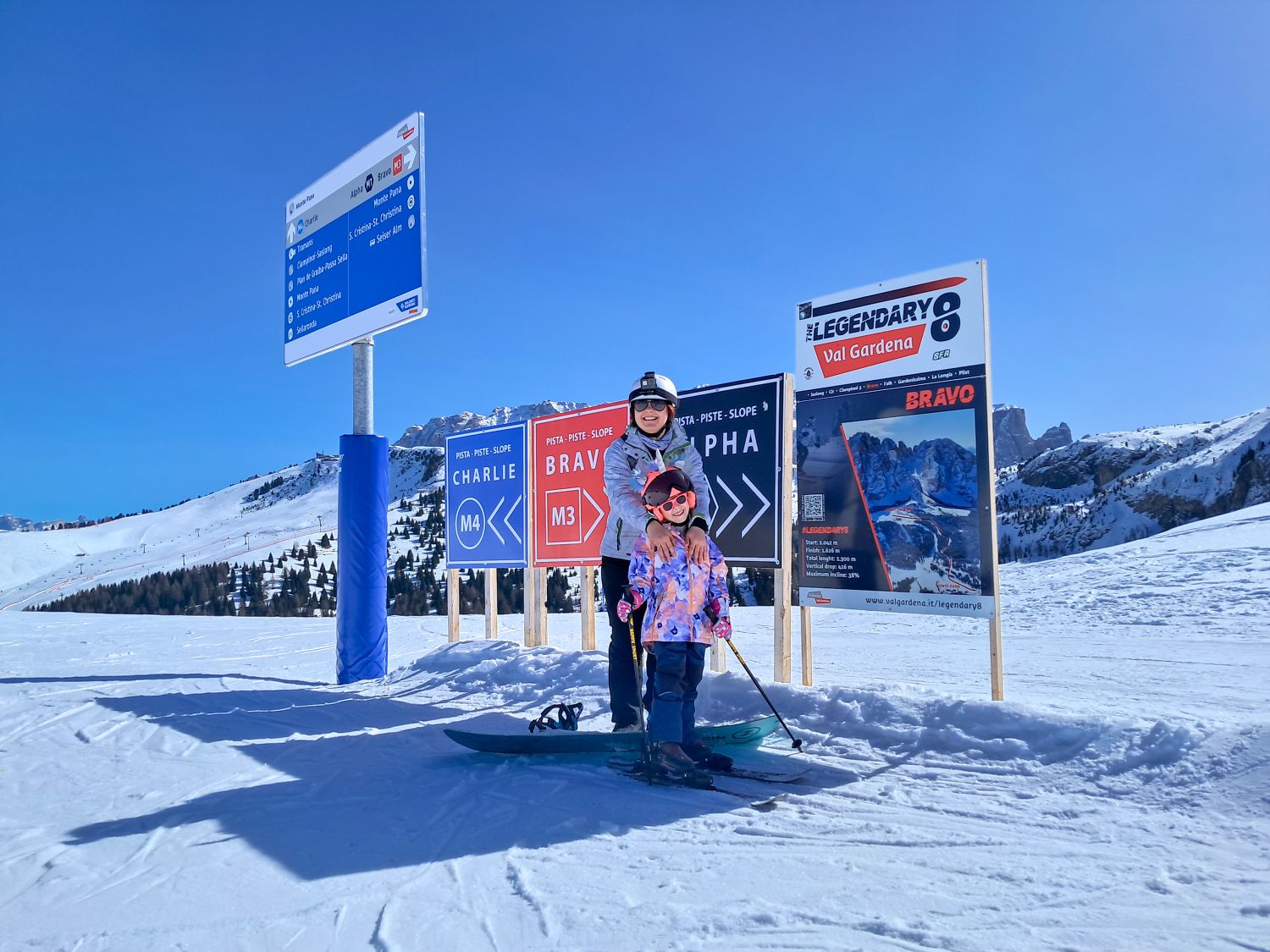
Val Gardena and Alpe di Siusi are counted as one ski area within Dolomiti Superski, with 175 km of pistes and 79 lifts between them.
Although they’re connected, the skiing experience is quite different. Val Gardena has more challenging terrain and is especially good for intermediate and advanced skiers, while Alpe di Siusi has gentler slopes and is generally more beginner-friendly.
Val Gardena
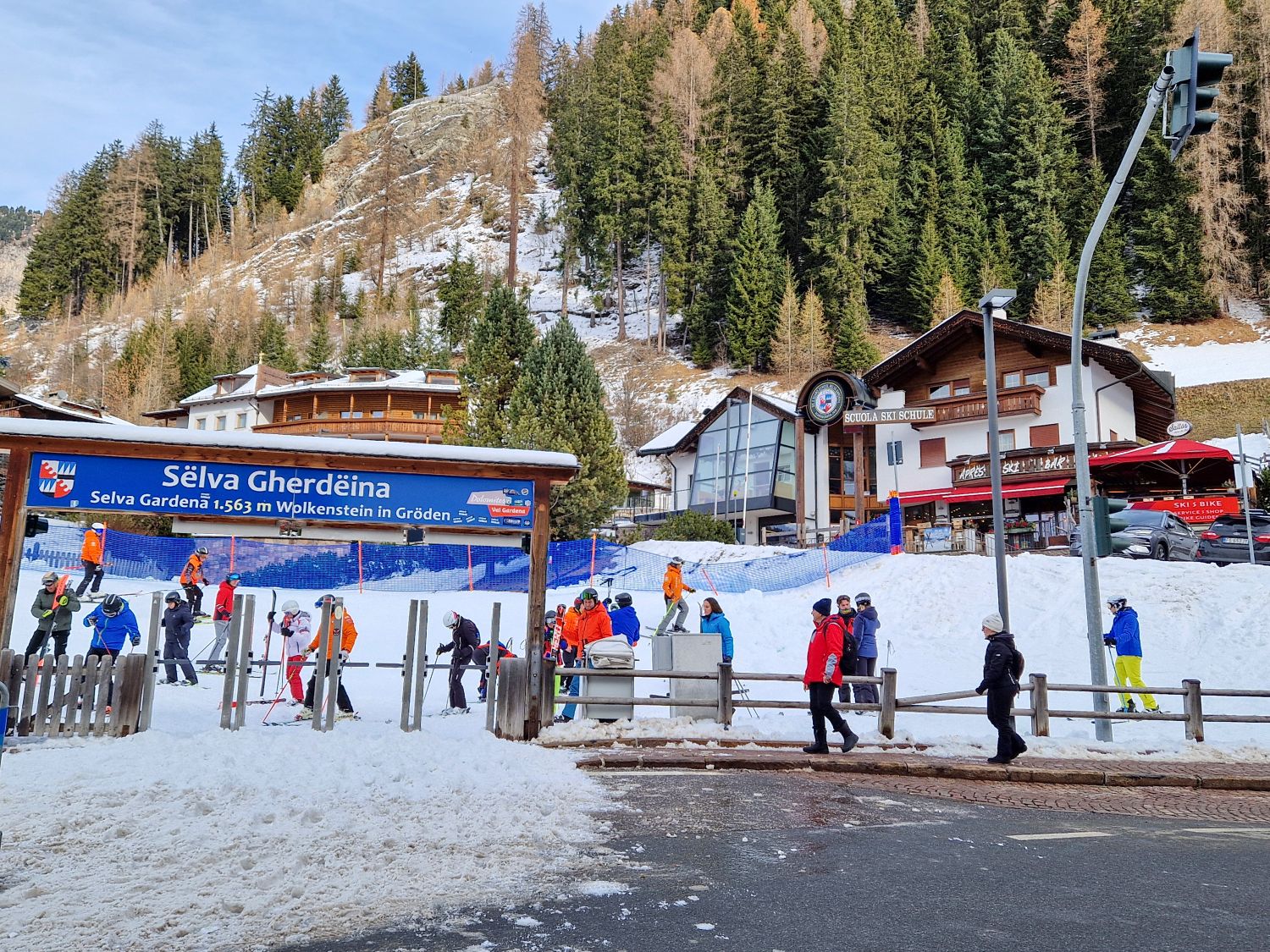
Val Gardena is one of my favorite places to recommend for skiing in the Dolomites, especially if you’re already comfortable on red runs and want plenty of variety.
The skiing is spread across several areas above Ortisei, Santa Cristina, and Selva, so there’s quite a lot to explore. And you’re not limited to the valley either, since Val Gardena is connected to the famous Sellaronda, which takes you around the Sella massif and into three neighboring valleys.
There are plenty of easier slopes and ski schools, too, so it’s still a good choice if you’re traveling with beginners or a group with different skiing abilities.
But I think the intermediate and more confident skiers will particularly enjoy it. There are some fantastic long runs, including La Longia, which stretches for more than 10 km from Seceda to Ortisei, and the famous Saslong World Cup downhill slope.
Val Gardena also has the Legendary 8, a collection of eight famous runs that you can challenge yourself to complete. Emma and I tried Bravo, the red run from Mont de Seura down to Monte Pana, and I can tell you that not all red slopes feel equally red, haha.
And if you want to spend an entire day exploring, there’s also the Val Gardena Ronda, which takes you through different parts of the ski area, including Alpe di Siusi.
The main downside is how popular Val Gardena is, which means that some slopes and connections can get quite crowded. We really noticed it when moving around Selva, where we saw so many skiers almost queuing for the crossroads – some of the connections between pistes are on foot, haha.
Alpe di Siusi (Seiser Alm)
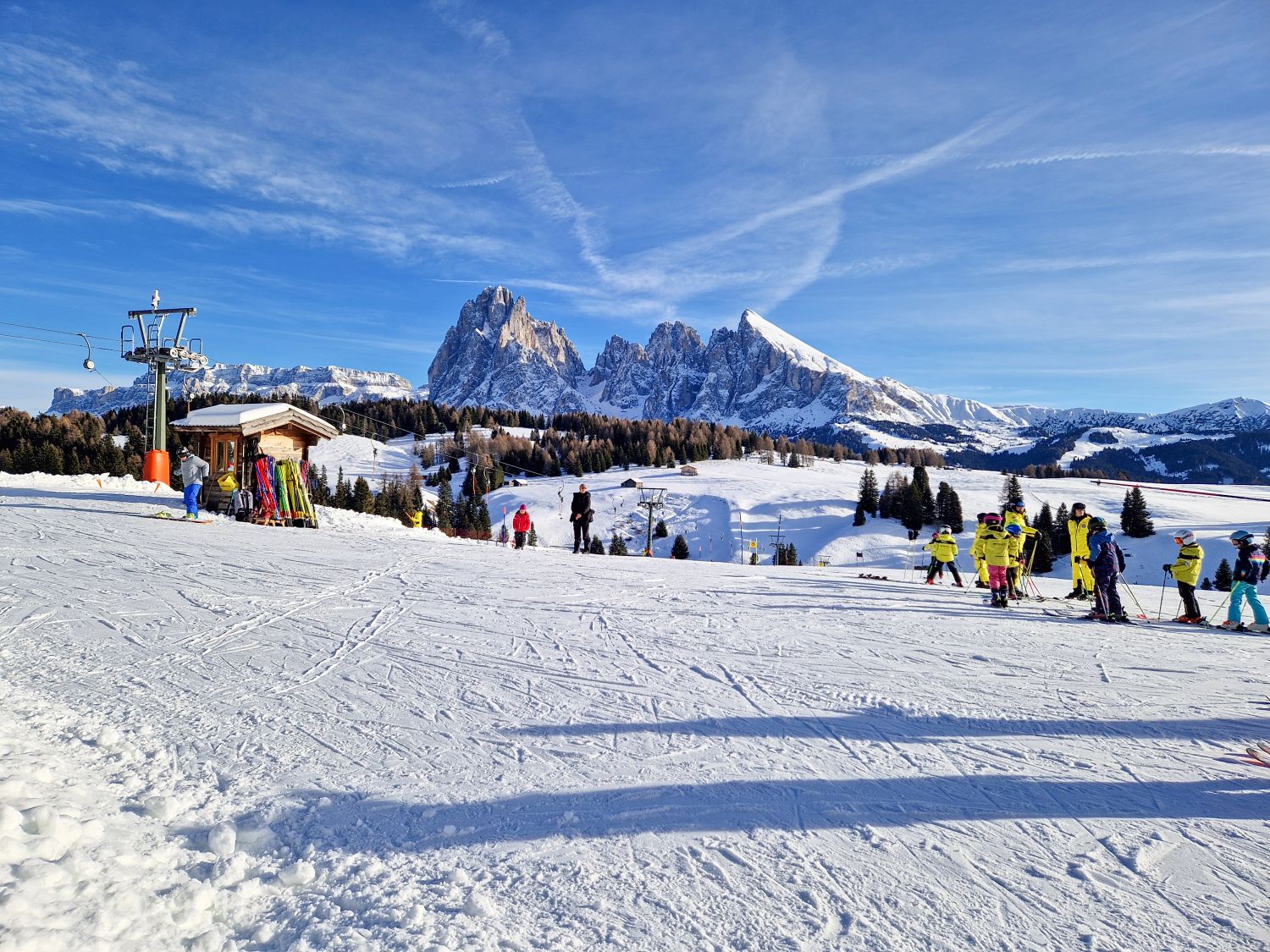
Alpe di Siusi is more geared towards beginners, skiing with kids, or simply a more relaxed skiing experience.
There are 59 km of pistes on Alpe di Siusi, most of which are blue and red, and many are wide, gentle slopes that are great for building confidence. It’s where we spent our second skiing holiday, and I really enjoyed being able to build my skills without staying on bunny slopes.
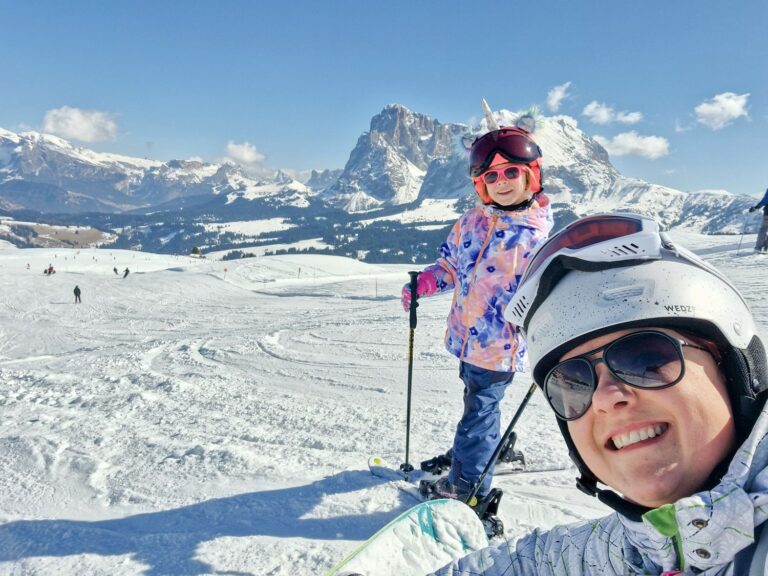
And the setting is also incredible. You’re skiing across this enormous, open alpine plateau, with Sassolungo and Sciliar rising above the slopes. There are also plenty of mountain huts where you can stop for lunch or just enjoy the views for a while.
We stayed around Saltria, which is a little farther from the main arrival points around Compatsch, and I particularly liked that the slopes were less busy there than around Compatsch.
There’s enough skiing on Alpe di Siusi to keep you occupied for several days, and you still have options to wander off towards Val Gardena if you feel like it.
I did one of the circuits on Alpe di Siusi – the Alpe di Siusi Ronda – on my snowboard, and although I enjoyed the route, there were a few rather annoying flat sections. Great on skis when you have poles, but less great when you have to walk uphill with a snowboard in your hands, haha.
And at one point, we even had to cross an actual asphalt road – twice, when going there and back! I decided to take my snowboard off rather than risk damaging it.
Alta Badia
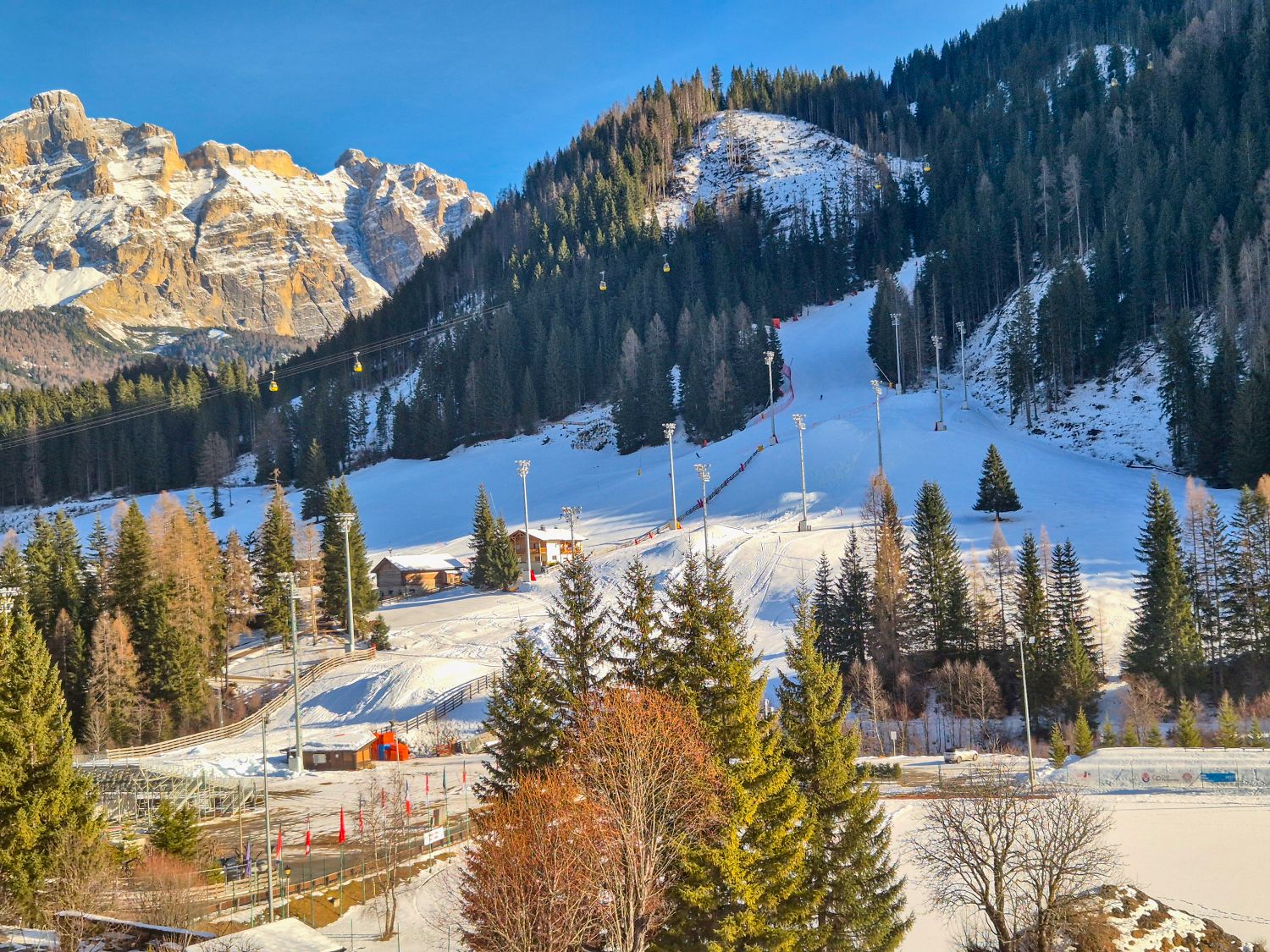
Alta Badia is another great choice for beginners and intermediate skiers, with 130 km of pistes and 54 lifts. Most of the slopes are blue and red, including 74 km of blues, so there’s plenty of terrain to explore without having to tackle particularly difficult runs.
You might be wondering – but how does it differ from Alpe di Siusi? Well, first, it’s bigger and has more km of slopes, but what makes Alta Badia especially interesting is how well it’s connected to the surrounding ski areas.
Unlike Alpe di Siusi, where you’ll probably spend most of your time skiing around the plateau, Alta Badia is right in the middle of a much larger interconnected ski network. You can access around 500 km of connected pistes, including the Sellaronda, which links Alta Badia with Val Gardena, Val di Fassa, and Arabba.
So you can spend your days exploring the gentler slopes around Corvara, La Villa, and San Cassiano, or head off into the neighboring valleys once you’re comfortable skiing longer distances.
And there are some black runs for more experienced skiers, too, if you have someone in your group who’d like more of a challenge, including the famous Gran Risa in La Villa, where the Alpine Ski World Cup giant slalom takes place.
Alta Badia is also known for its excellent mountain huts and food, so it’s a particularly good choice if you enjoy stopping for a nice lunch during your skiing day.
There are some fantastic ski tours you can start from Alta Badia as well, including the Great War Ski Tour, which takes you through several ski areas and past some of the most spectacular mountains in the Dolomites, including Lagazuoi.
Val di Fassa and Carezza
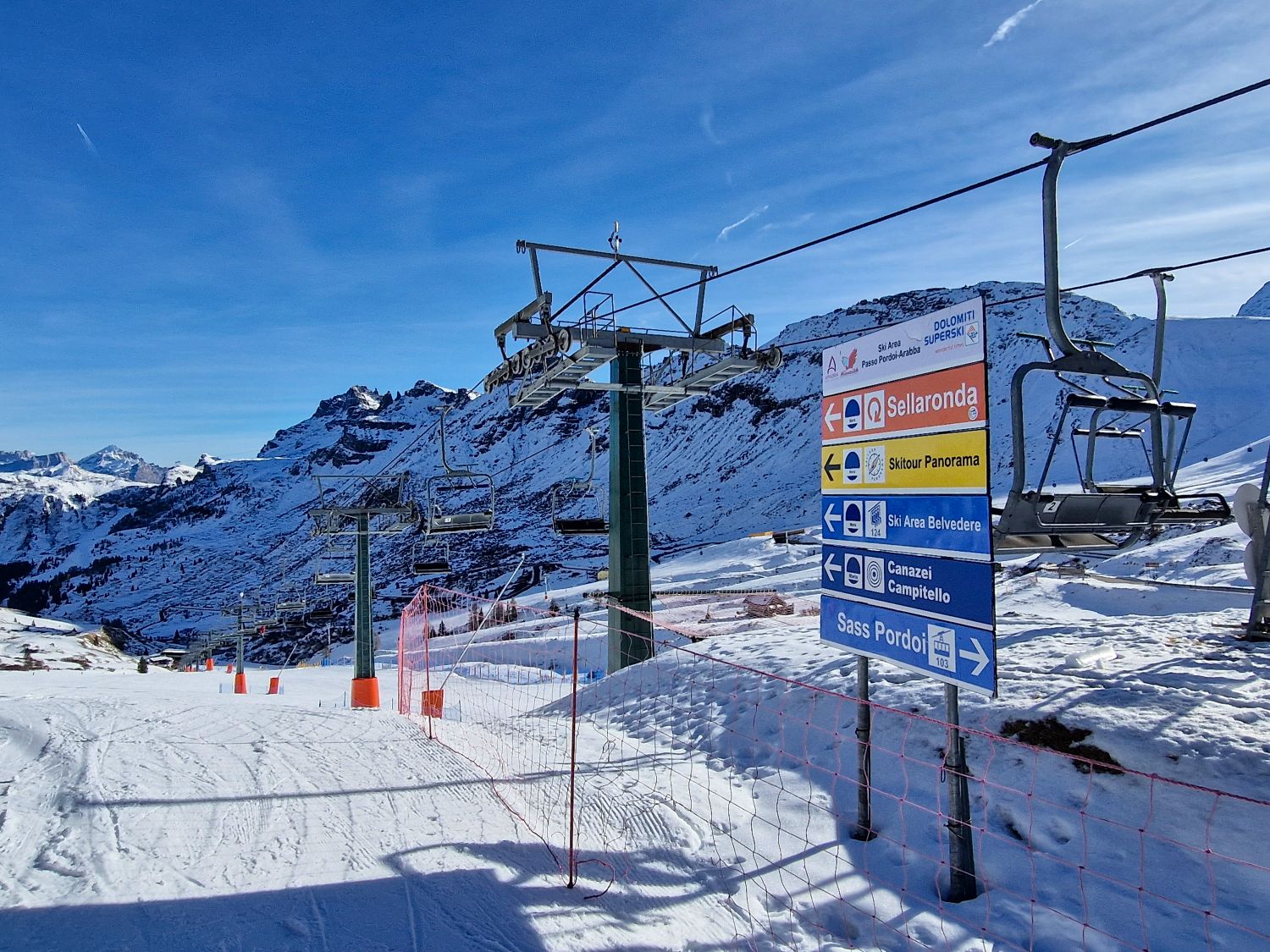
Val di Fassa is actually quite a complicated place to understand when it comes to skiing, haha.
Officially, the Val di Fassa tourism board lists six ski areas, with around 200 km of pistes and 77 lifts between them. These include Belvedere-Col Rodella, Buffaure-Ciampac, Catinaccio, Alpe Lusia, Passo San Pellegrino-Falcade, and Carezza.
But they’re not all connected on skis, and Dolomiti Superski actually divides them into two separate ski-pass areas: Val di Fassa/Carezza and Alpe Lusia/San Pellegrino.
I personally agree with the Val di Fassa division – for me, Carezza feels like a separate place to ski.
Carezza is a smaller, more contained ski area, where Emma and I had our very first skiing holiday. The other areas in Val di Fassa offer much more variety, and some connect directly to the Sellaronda, giving you opportunities to explore the neighboring valleys.
So just like with Val Gardena/Alpe di Siusi, I’d consider Val di Fassa and Carezza separately when choosing where to ski, even though they’re officially grouped together.
Val di Fassa
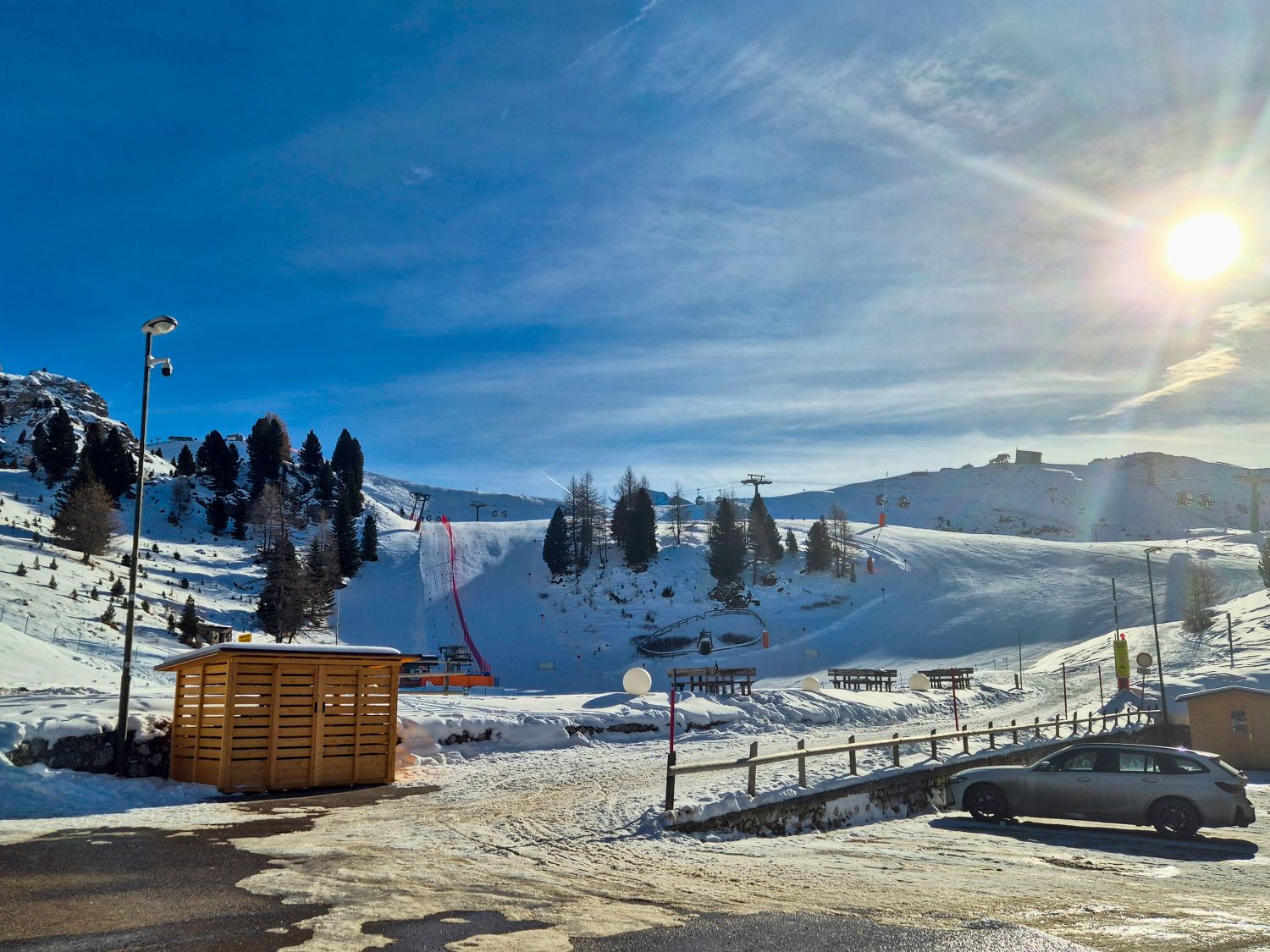
One of the things I really love about Val di Fassa is how open the area feels compared to Val Gardena and Alpe di Siusi.
The mountain views are incredible, especially around Passo Pordoi and Sella, and the whole area felt a little less resort-like to me, with villages that seemed to have more of a local atmosphere.
For where to stay for skiing, I’d particularly consider the areas around Canazei and Campitello, where you can access Belvedere-Col Rodella. There are plenty of slopes for intermediate skiers, and you’re directly connected to the Sellaronda, so you can spend an entire day skiing through the neighboring valleys.
One thing that you need to pay particular attention to when planning a ski trip to Val di Fassa is how the different areas connect. Some are linked by lifts and pistes, while others require taking a ski bus. So just because you’re staying in Val di Fassa, doesn’t mean that you can ski all over it – sometimes, you might need to use transportation to reach the slopes you actually want to ski.
For example, the Panorama Ski Tour connects several skiing areas across the valley, but you can’t complete the entire route without using a ski bus.
There are beginner-friendly slopes and ski schools in Val di Fassa, too, although I’d particularly recommend checking what’s accessible directly from your accommodation before deciding where to stay.
Carezza
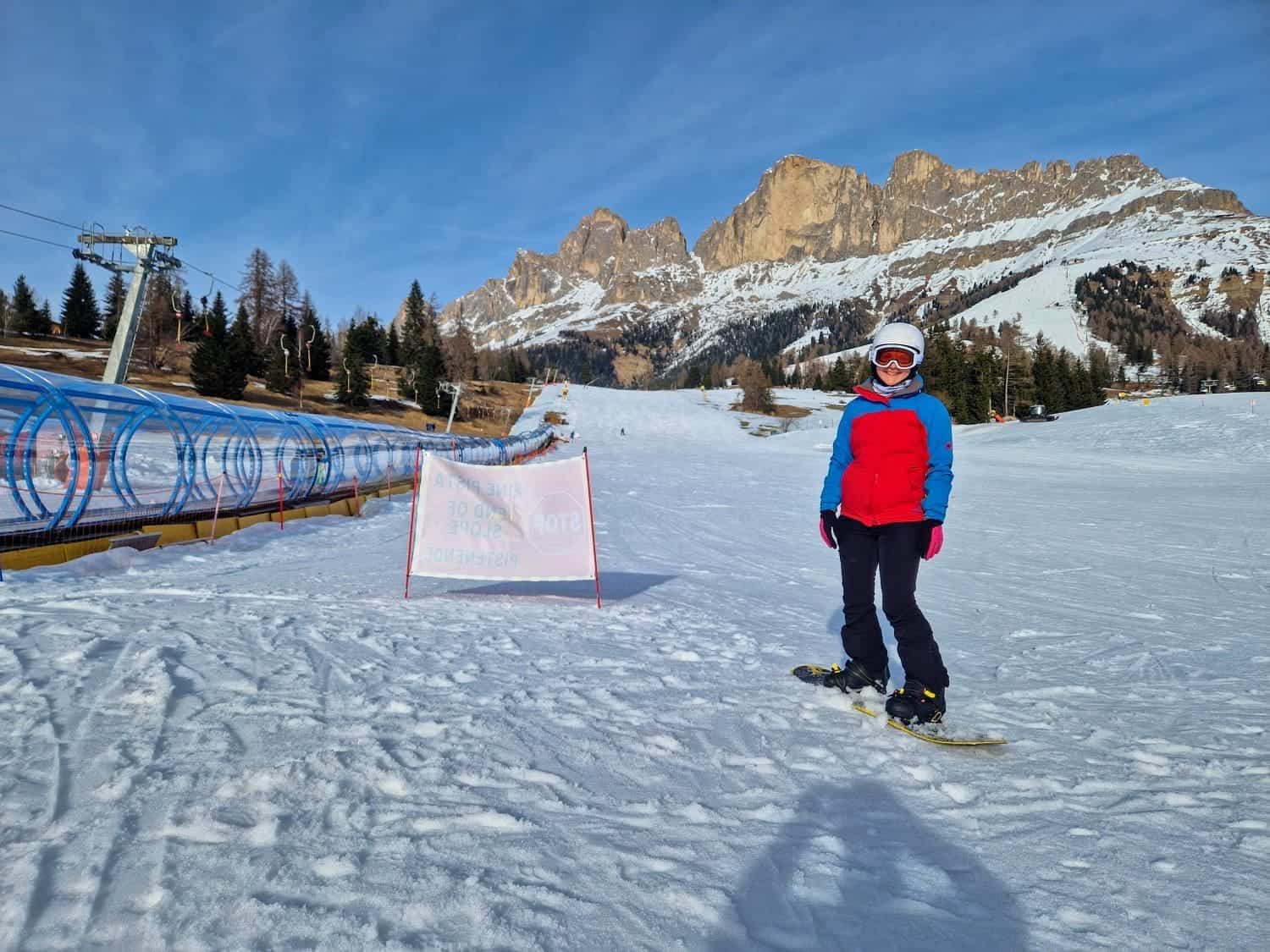
Carezza is where Emma and I had our very first proper skiing holiday, and where Emma went from learning on the beginner slopes to skiing reds within just a few days. I was still using the magic carpet lift after a week, though, haha.
Carezza has 40 km of pistes and 13 lifts, with more than half of the slopes classified as blue. There are some reds and blacks for more experienced skiers, too, so you don’t necessarily have to split up if you’re traveling with people who have different skiing abilities.
And the setting is incredible, with the slopes stretching beneath the Catinaccio (Rosengarten) massif and views towards Latemar.
What I particularly liked about our stay in Carezza was that the nearest slopes, gondolas, and lifts were basically in the same place, right next to our hotel, Hotel Alpenrose, so we didn’t have to worry about navigating an enormous ski area while we were still learning the ropes of skiing.
In the resort, there are also dedicated children’s areas, ski schools, and plenty of easier slopes to practice on.
And there’s enough variety to progress beyond the beginner slopes, which was particularly useful for us with how quickly Emma improved.
One thing to consider, though, is that Carezza isn’t connected to the larger Val di Fassa ski areas by pistes or lifts. So if you want to spend your holiday exploring different valleys and longer ski circuits, you’ll need to use transportation to reach those areas.
Cortina d’Ampezzo

Cortina d’Ampezzo has around 120 km of pistes spread across several ski areas, with slopes for everyone from beginners to experienced skiers.
But just like in Val di Fassa, you need to pay attention to how the different areas connect. Although some are linked by gondolas and pistes, others require a ski bus or a drive, so you can’t necessarily ski from one part of Cortina to another.
As for the skiing, Cortina has some fantastic runs for more confident skiers, including the famous Olympia delle Tofane World Cup downhill slope. There are easier areas for beginners and families, too, particularly around Socrepes and Pocol.
And there are some great ski circuits you can explore, including the Super8 Ski Tour and the Great War Ski Tour. You can also ski down from Lagazuoi along the famous Armentarola run, which ends with a horse-drawn sleigh connection towards Alta Badia.
Our friends absolutely love skiing in Cortina and keep returning year after year, despite my attempts to convince them to try somewhere else, haha. And I really love Cortina as a town, too. It has some fantastic restaurants, cafés, and shops, so there’s plenty to enjoy outside of skiing as well.
Kronplatz (Plan de Corones)
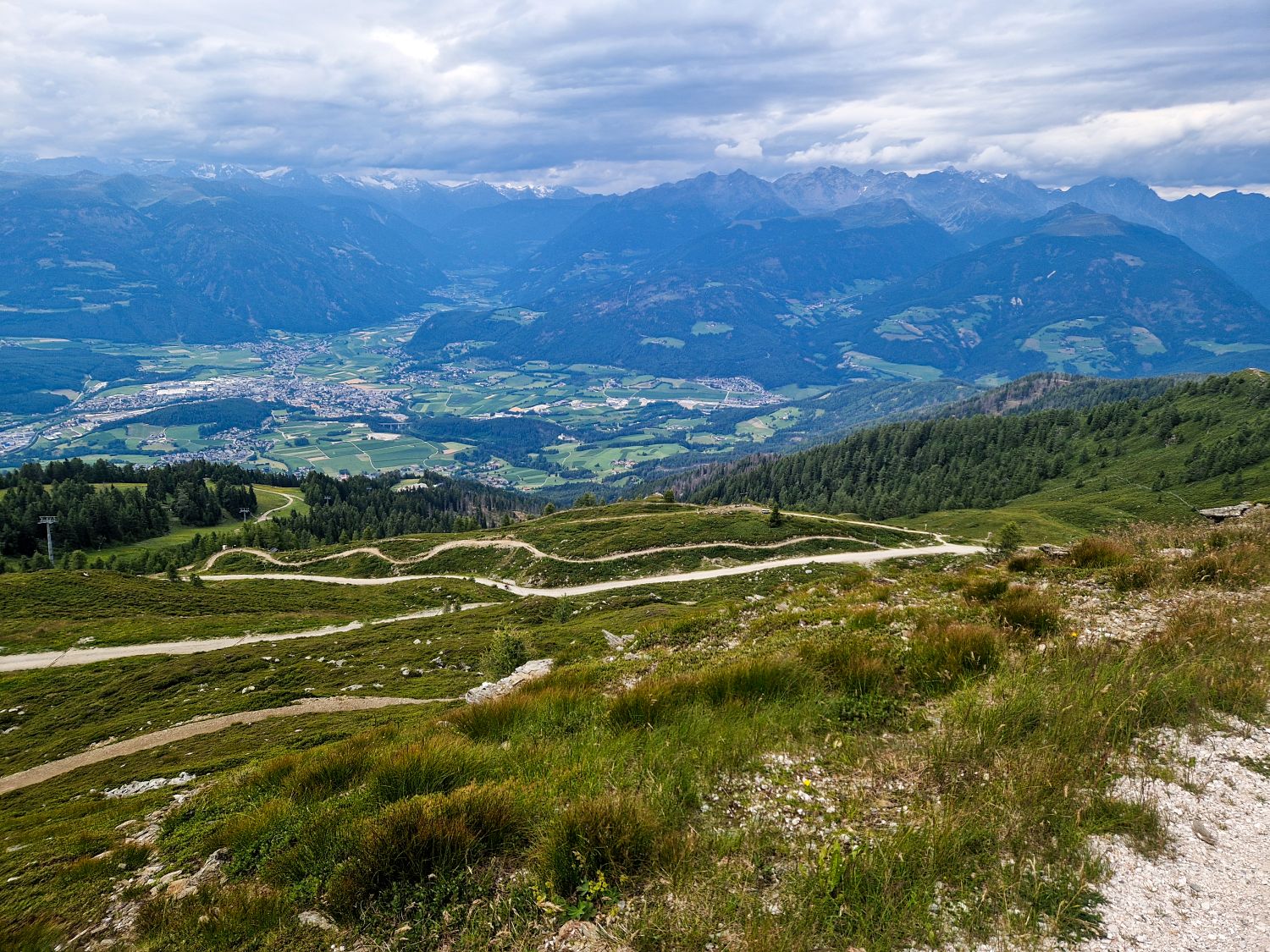
Kronplatz is essentially one big, rounded mountain, with slopes running down in different directions. It has 121 km of pistes and 31 lifts, so there’s quite a lot of skiing concentrated in one area.
And unlike Val di Fassa or Cortina, you don’t have to worry so much about getting between different ski areas. Most of the main runs are connected around the same mountain, so you can spend the day exploring without constantly checking where you need to catch a ski bus.
There’s a good mixture of blue and red slopes, including some really long, wide runs that I think intermediate skiers would particularly enjoy. And for more experienced skiers, there are the famous Black Five, five challenging black runs, including Sylvester and Herrnegg, which descend towards Brunico.
We’ve actually been up Kronplatz twice, although both times in summer. The first time, I went tandem paragliding while Michal and Emma explored the summit, and we liked it so much that we returned another time.
What I particularly remember is how open the summit feels. There are incredible views in pretty much every direction, towards both the Dolomites and the Alps, and lots of space around you.
And although Kronplatz isn’t directly connected on skis to the other major Dolomiti Superski areas, you can reach Alta Badia by ski bus or take the train towards the 3 Zinnen ski area if you want to explore farther.
Ski circuits and tours in the Dolomites
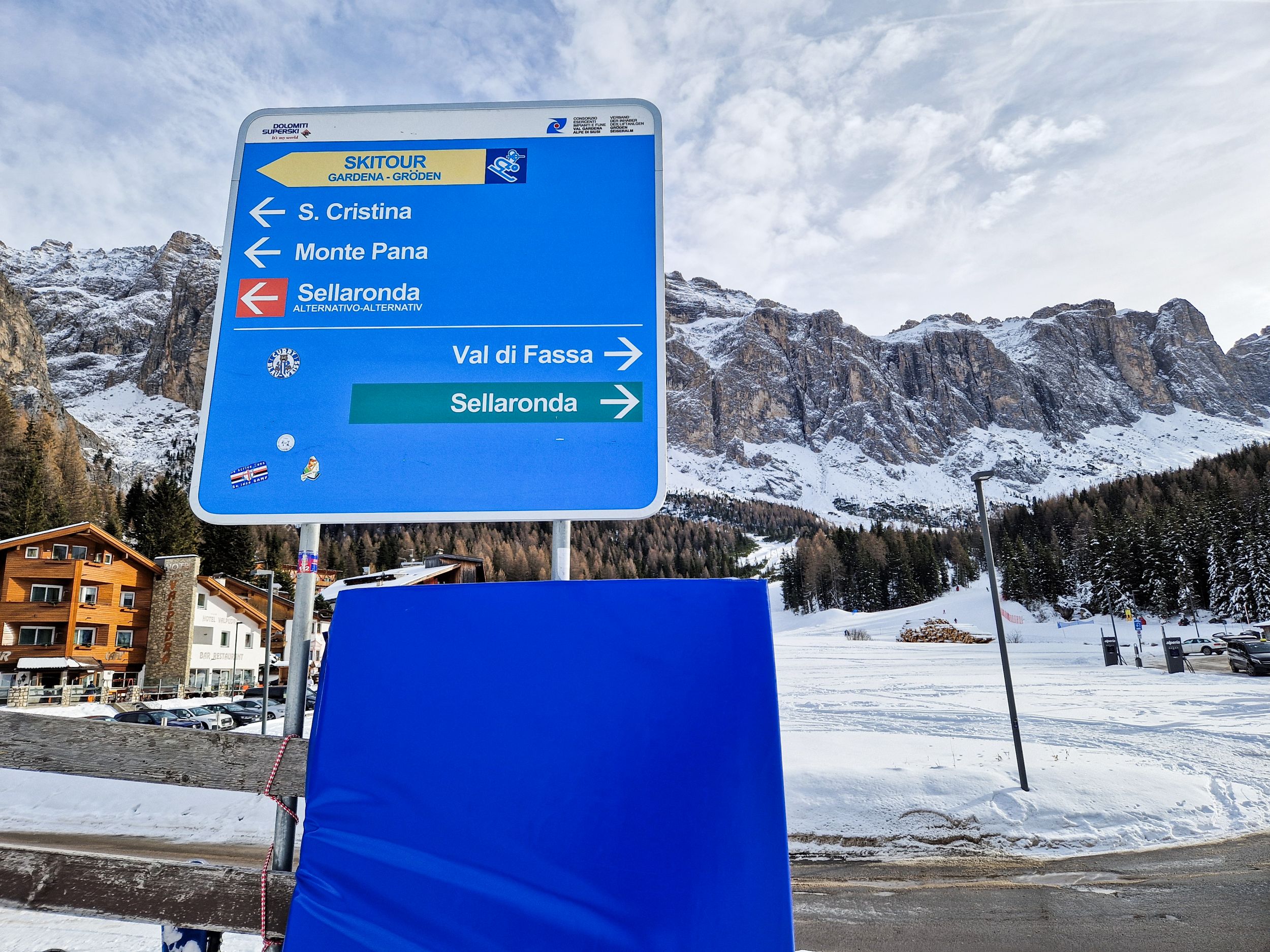
One of the really cool things about skiing in the Dolomites is that there are so many ski circuits and tours you can try.
Some take you through different parts of one ski resort, while others connect several valleys and can take an entire day to complete. You follow a marked route, using different pistes and lifts along the way, and sometimes a ski bus or even a horse-drawn sleigh.
The most famous is probably the Sellaronda, which takes you around the Sella massif through Val Gardena, Alta Badia, Arabba, and Val di Fassa. You can do it clockwise or counterclockwise, following the orange or green signs.
There’s also the Great War Ski Tour, which takes you through several ski areas around Col di Lana, past places connected to the First World War, including Lagazuoi. And around Cortina, you can try the Super8 Ski Tour, which takes you through the beautiful scenery around Cinque Torri and Lagazuoi.
There are shorter routes, too, including the Val Gardena Ronda and Alpe di Siusi Ronda, as well as skiing challenges such as Val Gardena’s Legendary 8, where you try to complete eight famous runs.
As I said, I’ve done the Alpe di Siusi Ronda on my snowboard, and although I really enjoyed it, some of the flat sections were rather annoying.
And it’s not just the Alpe di Siusi Ronda that has flat sections. Even the famous Sellaronda has some, so if you’re snowboarding, be prepared for stretches where you might have to unstrap and walk.
And whichever circuit you choose, make sure you check the difficulty, how long it takes, and whether you’ll need transportation along the way. Pay particular attention to the last lift times, especially on the longer routes, so you don’t end up stranded somewhere on the other side of the mountains.
Is skiing in the Dolomites good for beginners?
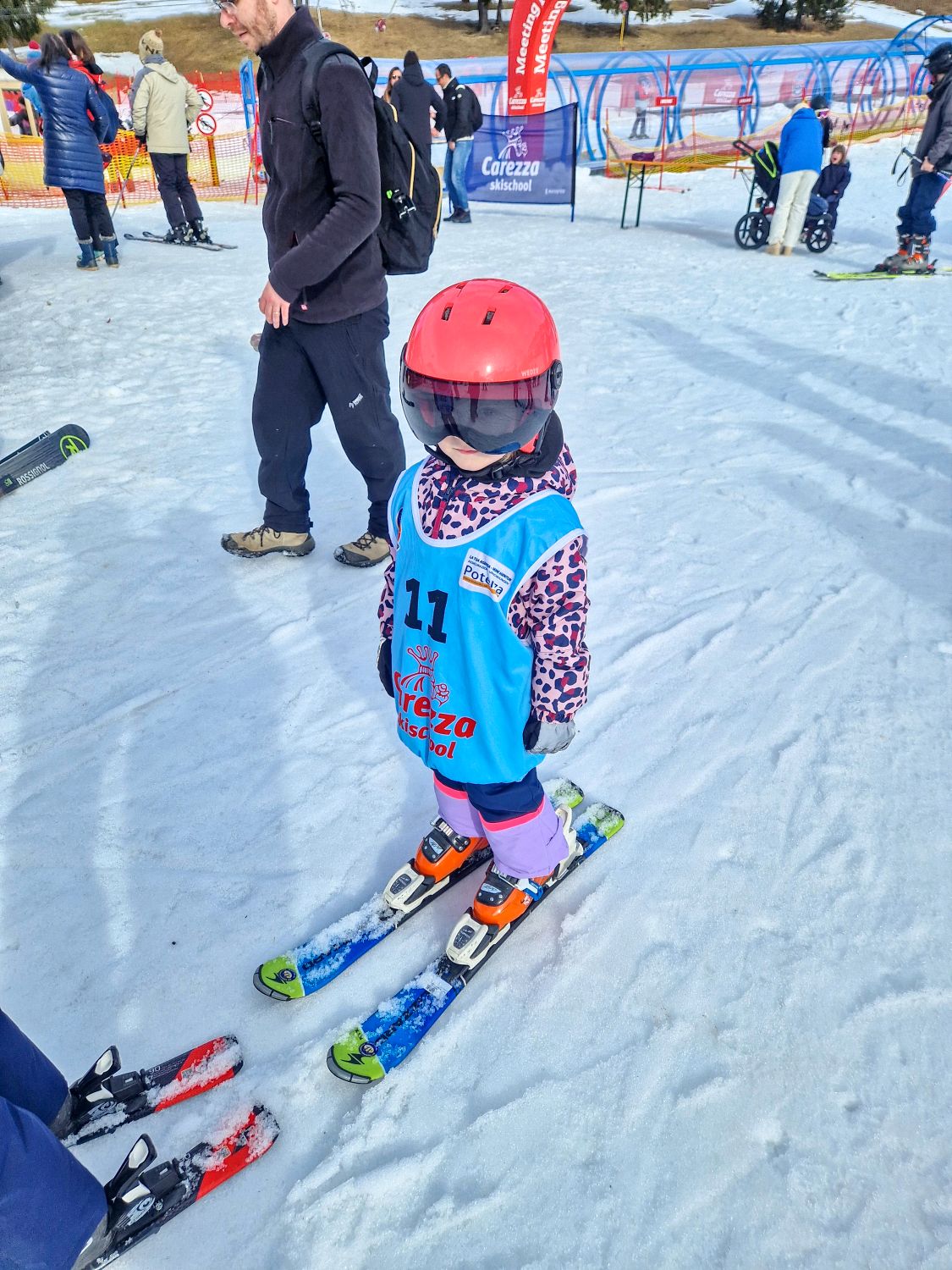
Absolutely! As I mentioned earlier, Emma and I both learned to ski and snowboard in the Dolomites, so I definitely wouldn’t let the size of the ski region intimidate you.
There are plenty of beginner slopes and ski schools throughout the Dolomites, and you don’t have to stay on the little practice slopes for your entire trip, either. Once you’re ready to progress, many ski areas have gentle blue runs where you can start building your confidence.
One thing I’d be careful about is choosing a ski resort based on its total number of kilometers of pistes. Rather, look into how many ski schools and lessons are available at the time you will be in the area – Val Gardena, for example, has many amazing ski schools in all the villages.
I also loved both Carezza and Alpe di Siusi. We learned in Carezza, and Alpe di Siusi was fantastic for continuing to improve without feeling like we were suddenly tackling much more difficult terrain.
And even if you’re progressing quickly, the instructors are amazing – they’re not keeping you on the bunny slope just because, but adjusting to your level. And it’s really helpful to have an instructor on the “harder” slopes – they can help you work on your technique and build confidence.
What you need to plan before skiing in the Dolomites
There are a few things I’d recommend sorting out before your skiing holiday, especially if it’s your first time in the Dolomites.
- Book your ski lessons in advance.
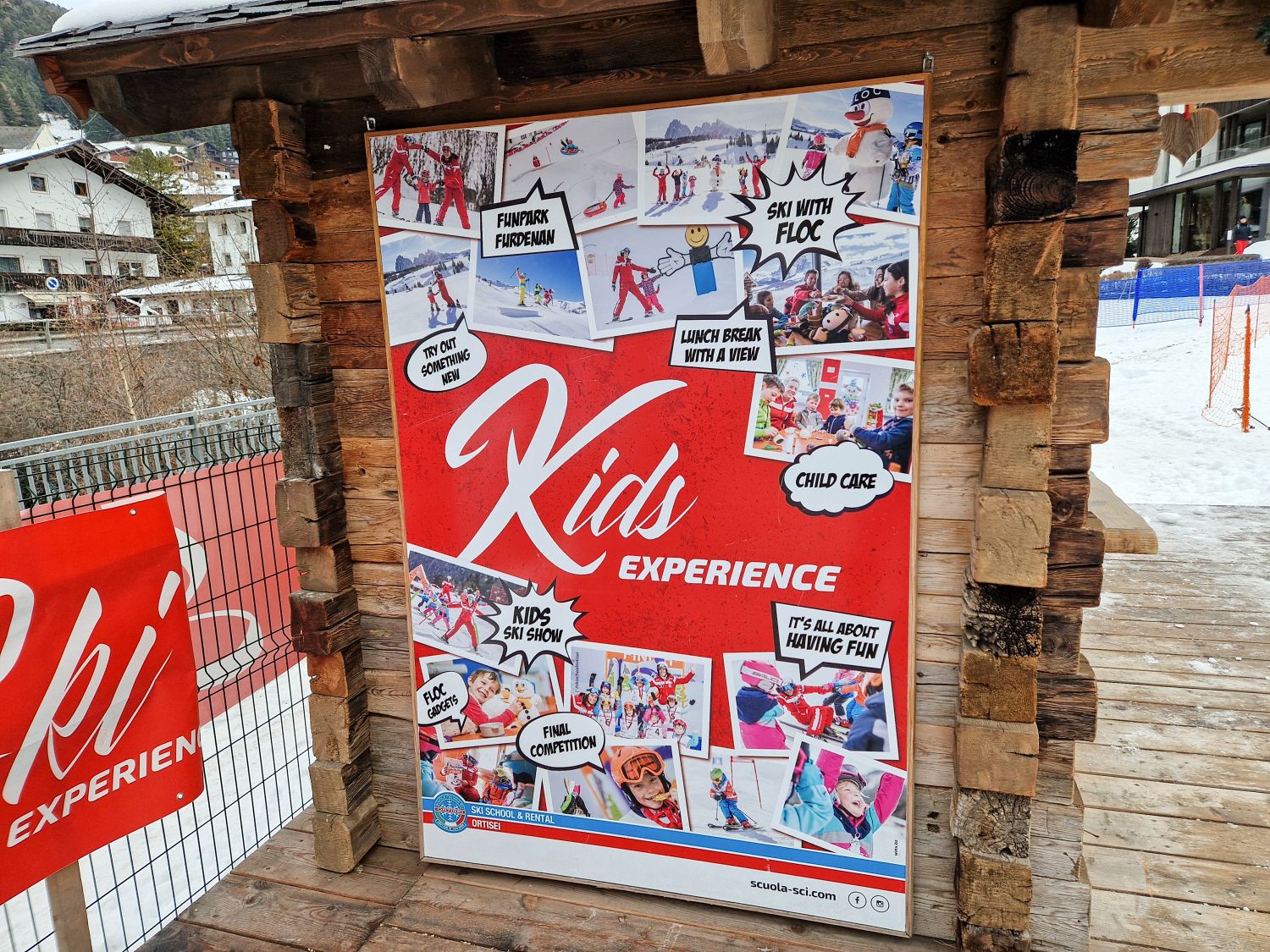
Especially if you’re traveling during the busy winter school holiday periods, I’d book lessons as soon as you know your dates. And if you’re traveling with kids, check the different age groups, whether the lessons are private or in groups, and where the ski school actually meets. - Check which ski pass you’ll need.
As I explained earlier, you can buy a local ski pass or one that covers the entire Dolomiti Superski network. You can also buy your ski passes online, and Dolomiti Superski currently offers a 5% discount on eligible day and multi-day passes purchased at least two days in advance. - Think about equipment rentals.
If you’re renting skis or snowboards, it’s worth looking at the rental shops near the slopes you’ll actually be using. Some offer equipment storage, which is particularly convenient if you don’t want to carry everything back and forth each day. And check with your accommodation, too, because some hotels collaborate with local rental shops and can get you a discount. - Check the ski maps and connections.
Even when you’re staying in a well-connected ski area, you might need to take a bus or walk between certain lifts. And if you’re planning a longer circuit, I’d check the route, the difficulty of the slopes, and the time of the last lifts before setting off. - Keep an eye on the weather and lift openings.
Not every lift opens at the same time at the beginning of the season, and conditions can change during your trip. The Dolomiti Superski website and app are really useful for checking which lifts and pistes are open, as well as finding your way around the ski areas.
Where I’d ski on a first Dolomites trip
If it was my very first trip to the Dolomites for skiing, I’d probably choose Val Gardena or Alpe di Siusi if I was leaning more towards the beginner side, and Cortina d’Ampezzo if I was already a confident intermediate or advanced skier. They’re iconic ski resorts, and that’s for a very good reason.
For a slightly quieter skiing holiday, Alta Badia or Val di Fassa would be great choices, too. Just make sure there are enough slopes for your level and that you can easily reach the ski areas and connections you want to explore.
Carezza would be fantastic if you’re looking for a smaller, more contained ski area where you can spend your days skiing without worrying too much about getting around. And Kronplatz is another great option if you like the idea of having plenty of skiing concentrated around one mountain.
Overall, one of the most important things when planning a skiing holiday in the Dolomites is choosing where to stay. No matter which resort you choose, make sure you can easily reach the slopes you want to ski and that the location also works for whatever you’d like to do after skiing.