
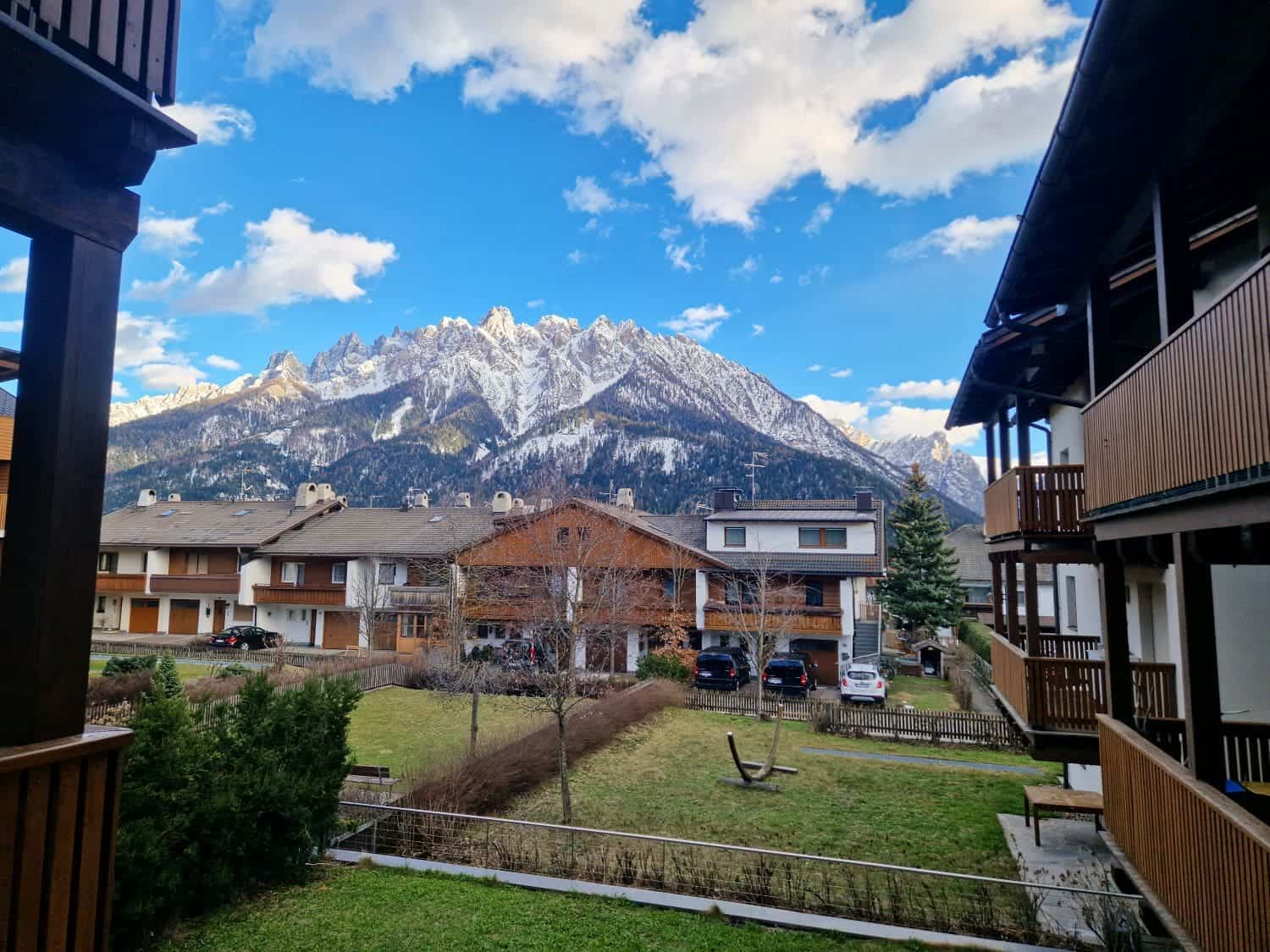
Where to Stay in the Dolomites in The off-season
Choosing where to stay in the Dolomites during the off-season can be a little tricky. In April and November, which are the months generally considered as the “off-season” in the Dolomites, many hotels, restaurants, and cable cars close for a few weeks, and even the bigger towns can feel surprisingly empty.
We’ve experienced this ourselves on our trips to the Dolomites in both months.
And one thing I’ve learned is that you really shouldn’t assume that you’ll find open restaurants or shops just because you’re staying somewhere popular. We even had trouble finding places to eat in Cortina!
On the other hand, it is nice and empty, and still beautiful, in the Dolomites.
Personally, I really like Dobbiaco as a base for exploring the eastern Dolomites during the off-season, while Santa Cristina would be my choice in Val Gardena. But if you’re after a more relaxing trip, somewhere like Val di Funes or Alpe di Siusi can be wonderful, since you have those incredible mountain views right outside your accommodation.
This post might contain affiliate links, which means that if you purchase anything via them, we might earn a small commission – at no extra cost to you. Check our disclaimer policy for more information.
As an Amazon Associate we earn from qualifying purchases.
What to consider when choosing where to stay in the Dolomites in the off-season
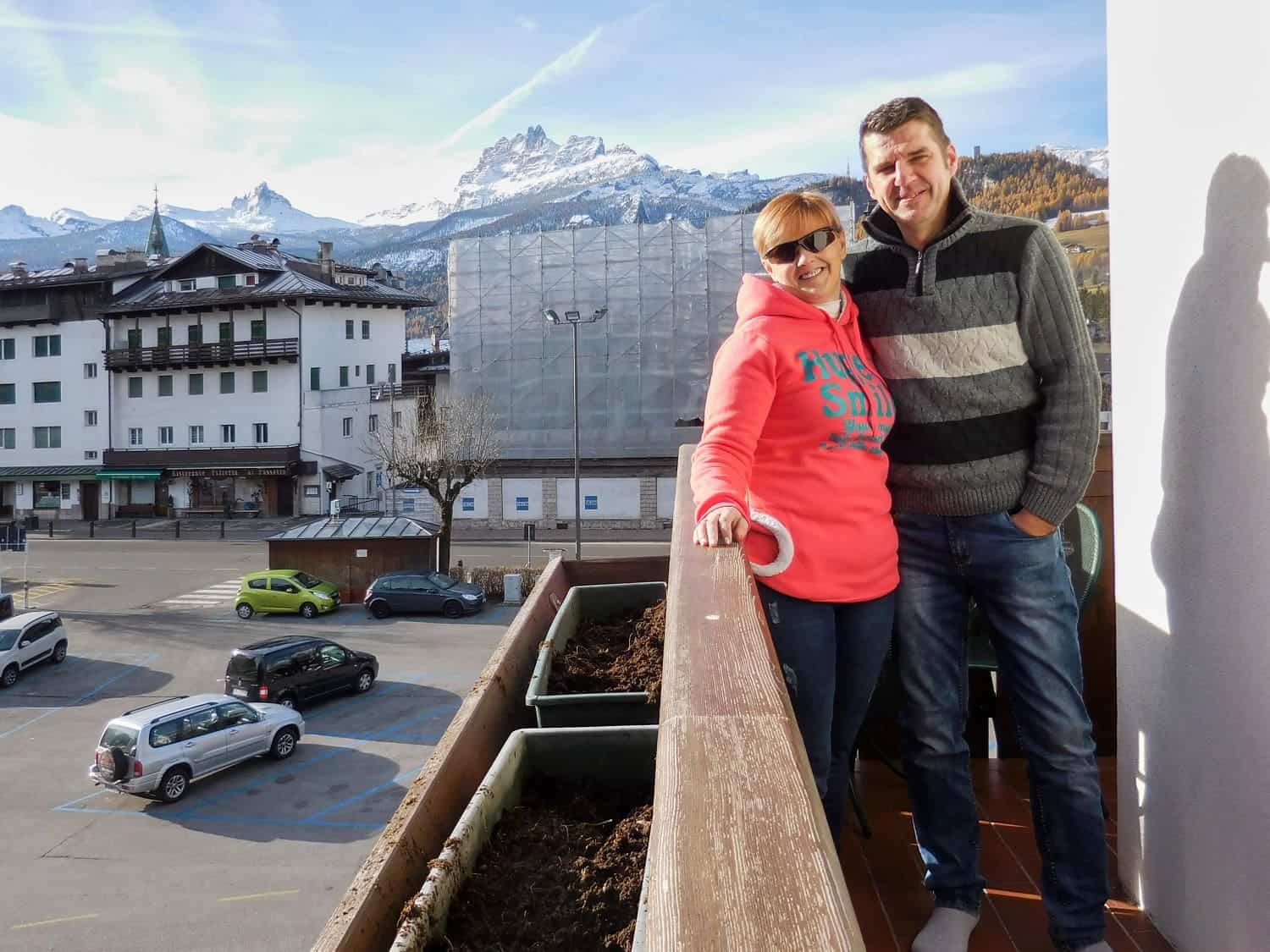
Just a quick few things that you need to keep in mind:
- Your itinerary: Are you planning to explore different areas of the Dolomites, or would you prefer to stay somewhere with beautiful views right outside your accommodation?
- Restaurants and shops: Check what’s actually open nearby, especially if your accommodation doesn’t provide meals.
- Getting around: Having a car gives you much more flexibility, particularly when cable cars aren’t running.
- Altitude and accessibility: Higher areas may still be covered in snow, and some roads and hiking trails may be inaccessible.
One important difference between April and November is daylight. November days are much shorter, which gives you less time for exploring. Snow is possible in both months, particularly at higher elevations, so check the conditions before making plans.
Ready to book? Here are the best hotels (that should be open!) for your trip in the off-season.
Best places to stay in the Dolomites during the off-season
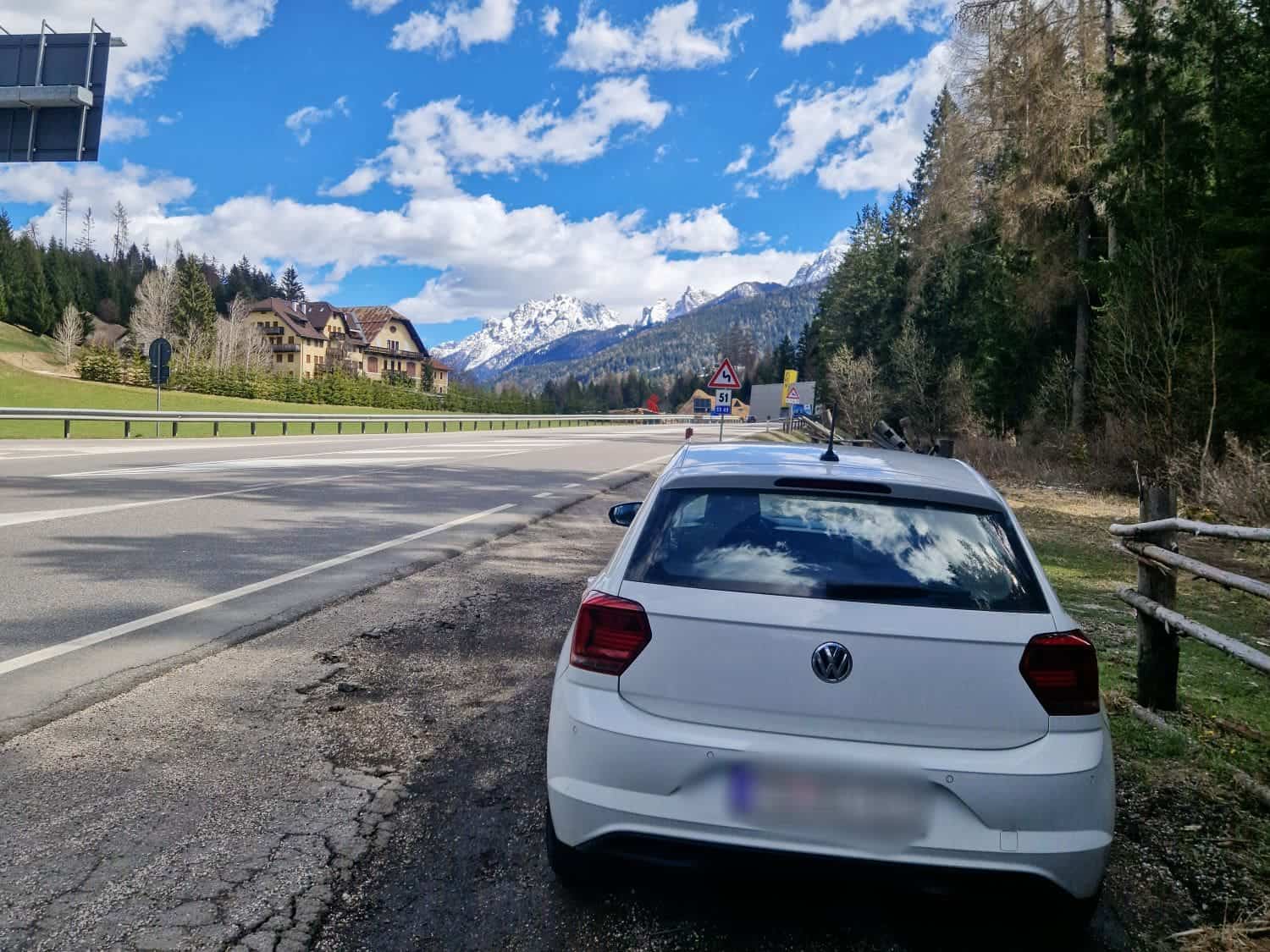
There are quite a few places in the Dolomites worth considering for an April or November trip, depending on what you’re planning to do.
Here are some of my favorites, starting with the best bases for exploring and then moving on to places where you can enjoy the mountains without going very far from your accommodation.
Dobbiaco and San Candido
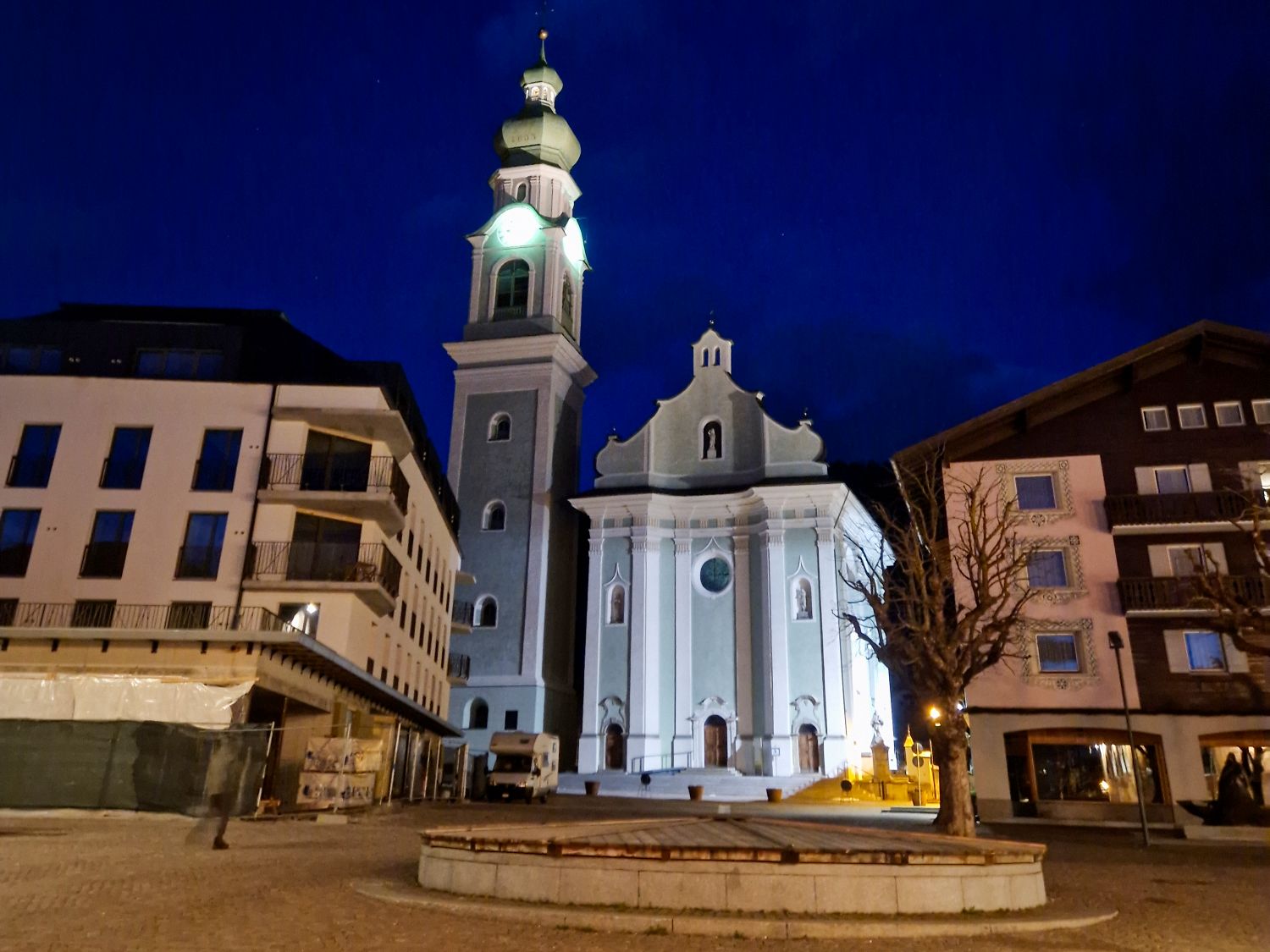
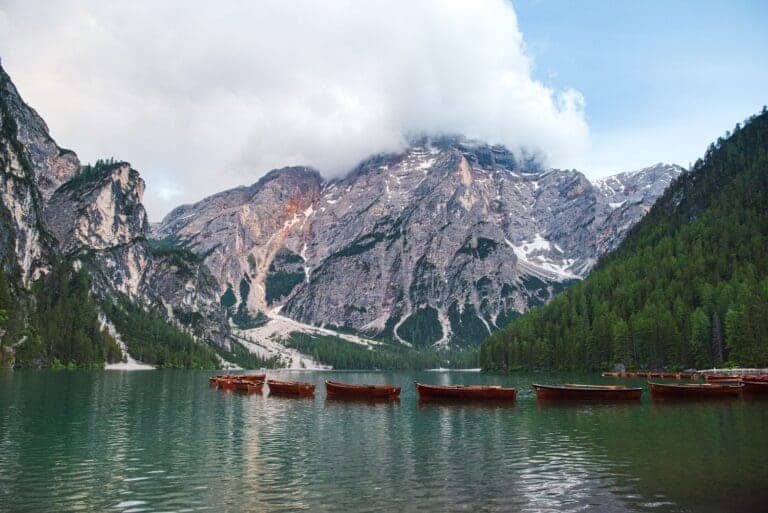
Dobbiaco is probably my favorite place to stay in the eastern Dolomites during the off-season. From here, you can easily explore Lago di Braies, Lago di Dobbiaco, Lago di Landro, and Lago di Misurina. You can also drive toward Cortina, stopping at viewpoints and other interesting places along the way.
That’s essentially what we did during our April trip, and we found some lovely places that weren’t even on our original itinerary.
Another possibility is Prato Piazza, although at around 2,000 meters above sea level, you’ll need to check the road and snow conditions before visiting.
Dobbiaco itself is a proper town, with supermarkets, restaurants, and other services. Of course, some businesses close during the off-season, but we found it quite convenient. We stayed in an apartment at Haus Greg, right in the center, which gave us the flexibility to cook when we didn’t feel like looking for an open restaurant.
Nearby San Candido is another good option. It’s a lovely town, and you can explore essentially the same areas from there, so I’d be happy staying in either.
The main disadvantage of choosing Dobbiaco or San Candido is the distance to the western Dolomites. If you’re planning to explore Val Gardena, Alpe di Siusi, or Val di Funes extensively, choose another base for that part of your trip.
Cortina d’Ampezzo
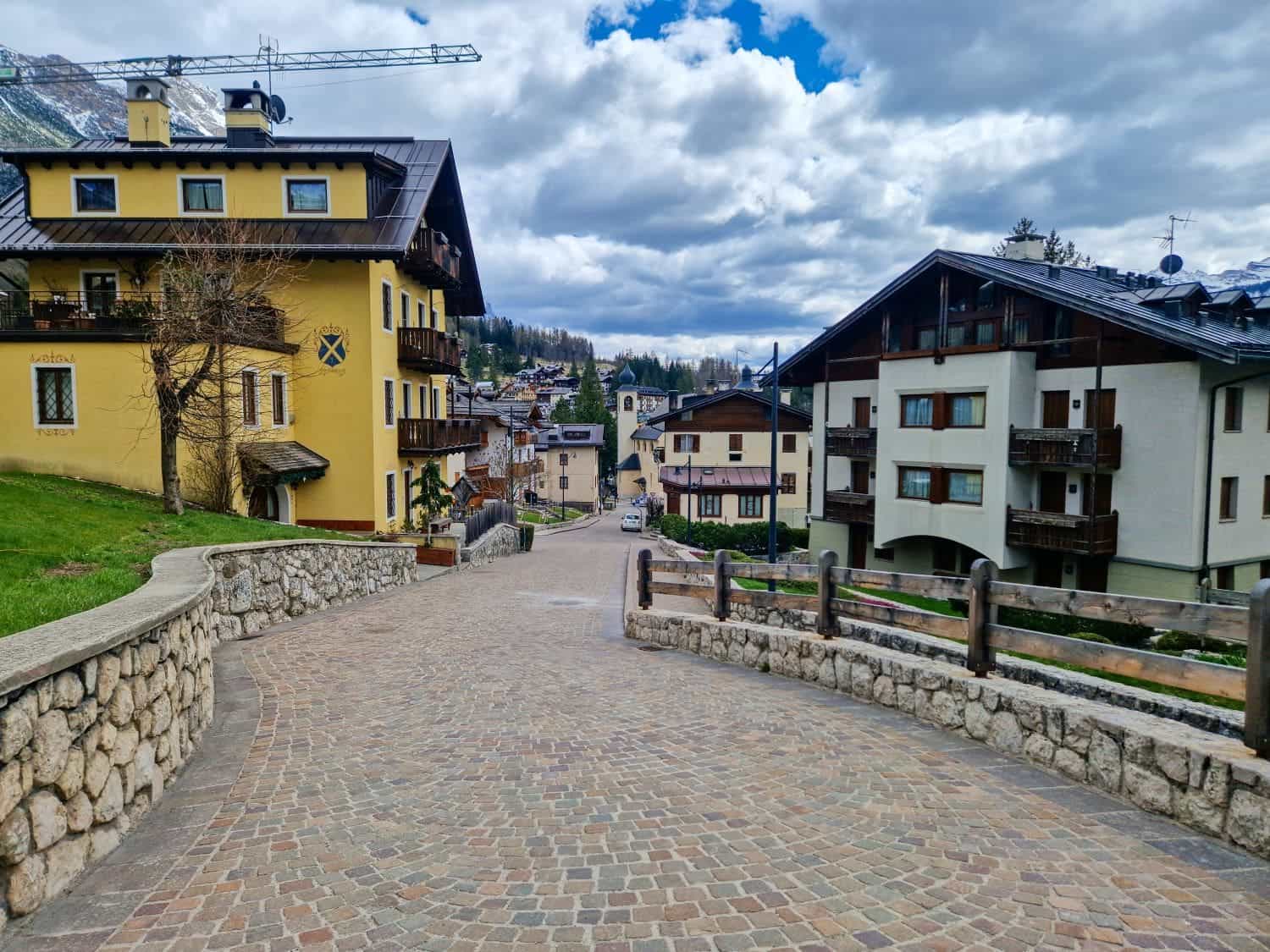
Cortina is one of the most famous places in the Dolomites, which is exactly why it feels like it should be a safe choice.
We’ve visited Cortina in both April and November, and the town felt surprisingly empty on both occasions. Especially in April, when the weather was quite miserable, I remember walking around thinking how glad I was that we’d chosen to stay in Dobbiaco.
But I also really enjoyed being able to explore Cortina without the usual crowds. It’s such a beautiful town, and it was lovely to just wander around without so many people everywhere.
In November, we actually stayed right in the center of Cortina, and it worked perfectly well for our trip. We only needed somewhere to sleep before continuing to explore the eastern Dolomites, and the scenery was incredible, with autumn colors in the valleys and snow on the mountains. Cortina is also conveniently located for places like Lago di Misurina and Passo Falzarego.
The biggest issue we encountered on both trips was finding somewhere to eat. Quite a few restaurants were closed, including one of our favorites in the area, Baita Fraina, and the options we found were mostly the more touristy places.
Michal also had trouble finding a grocery store when he visited Cortina in October and ended up doing his shopping in Dobbiaco instead.
If you find a lovely apartment or a really good hotel, Cortina can still be a great base for exploring more of the area. Just check the restaurant situation beforehand and choose it based on the places you want to visit, rather than assuming it would be more convenient simply because it’s one of the biggest and most popular towns in the Dolomites.
Castelrotto and Siusi (Alpe di Siusi area)
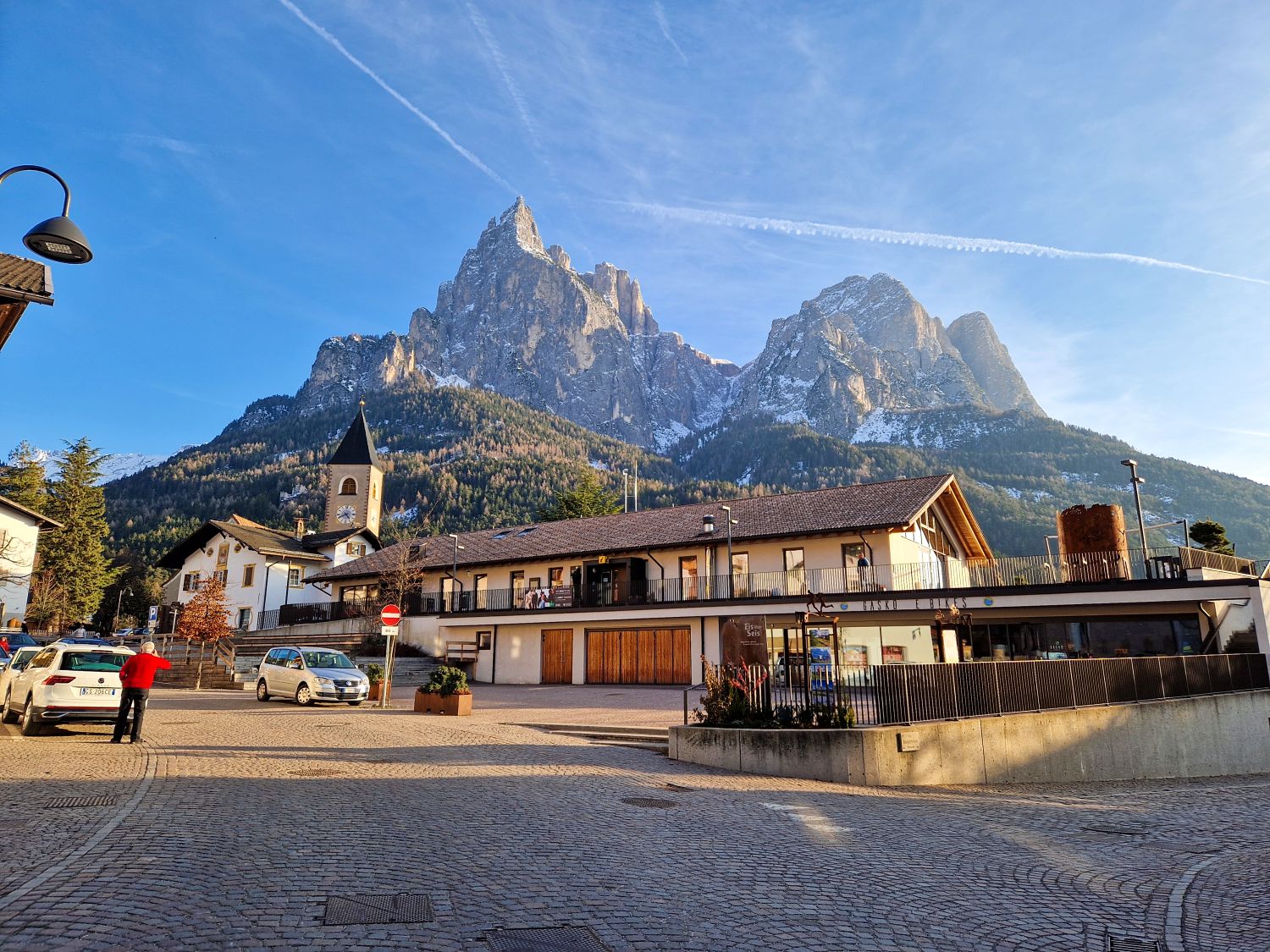
Castelrotto and Siusi allo Sciliar are both excellent bases for exploring the western Dolomites during the off-season, especially if you’re planning to do some sightseeing by car and are looking into visiting Alpe di Siusi.
From either village, you can get to Alpe di Siusi (much easier than from, say, Santa Cristina), explore Val Gardena, or even drive over to Val di Funes. And since you’re staying down in the villages rather than up on the Alpe di Siusi plateau, it’s easier to get around and explore different areas.
Both villages have beautiful views, too. I personally prefer Siusi, especially the view of the Sciliar mountains rising behind the church in the village center – the one in the picture above. I remember standing in that little square and being so impressed by the scenery. Castelrotto is lovely as well, though, with its beautiful historic center.
Another advantage is that you have more accommodation options, restaurants, and grocery stores to choose from than up on Alpe di Siusi itself. Of course, some will still be closed during the off-season, so check what’s open before booking your hotel to avoid any bad surprises.
Santa Cristina (Val Gardena)
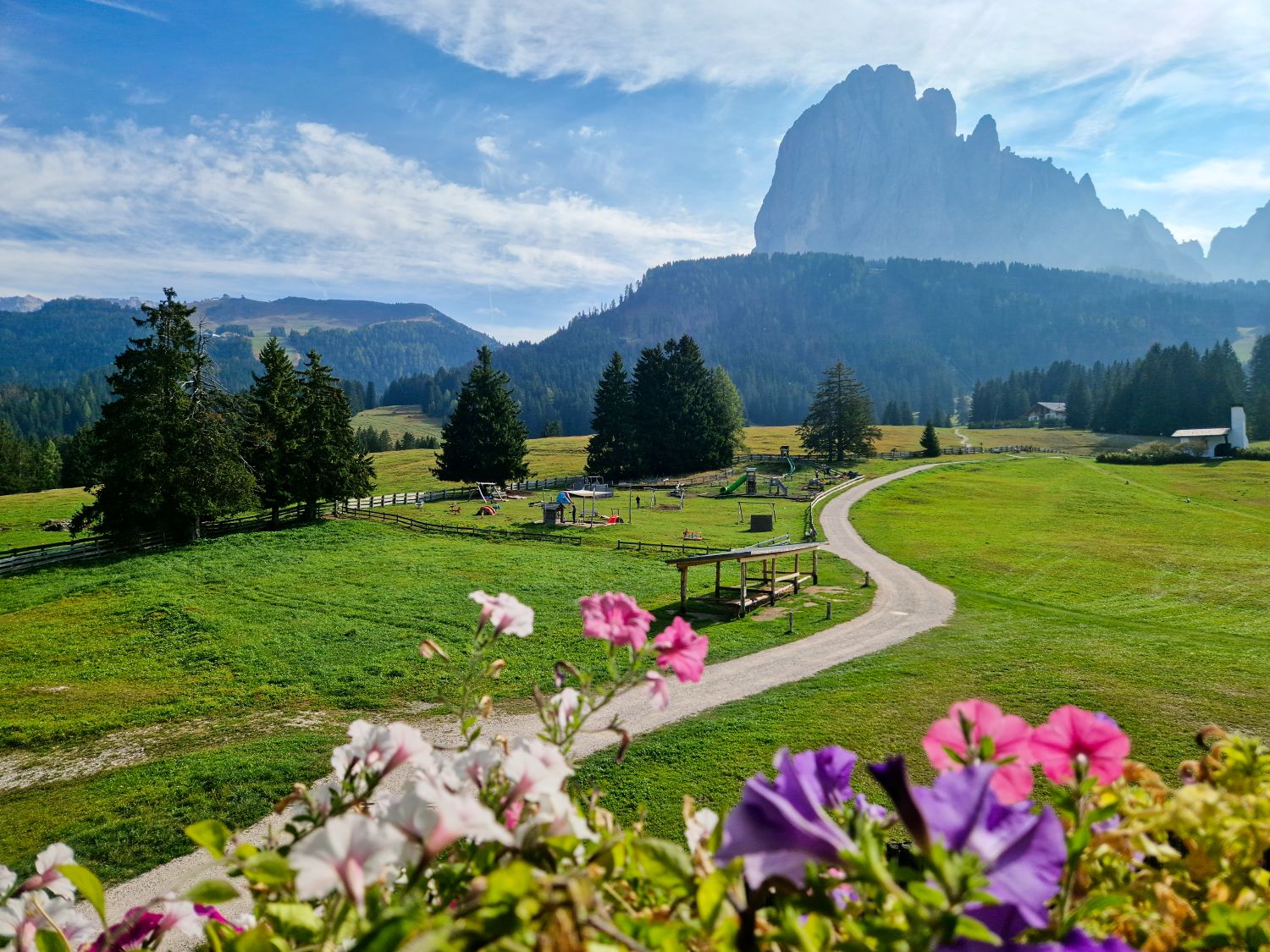
If you’re looking into exploring the mountain passes around Val Gardena or the valley itself, or even thinking about venturing to Alta Badia, Val di Fassa, or further east, Santa Cristina is a great location – much better than the nearby Siusi or Castelrotto.
What I really like about Santa Cristina is that there’s so much you can do right from the village, even when the cable cars aren’t running.
You already have beautiful views of the surrounding mountains, and Santa Cristina feels a bit more local than the other villages in Val Gardena. There are good grocery stores, too, which is particularly useful during the off-season.
And then there’s Monte Pana, one of my favorite places in Val Gardena. You can actually drive up there from Santa Cristina, so you can enjoy those incredible views of Sassolungo without needing to take a lift.
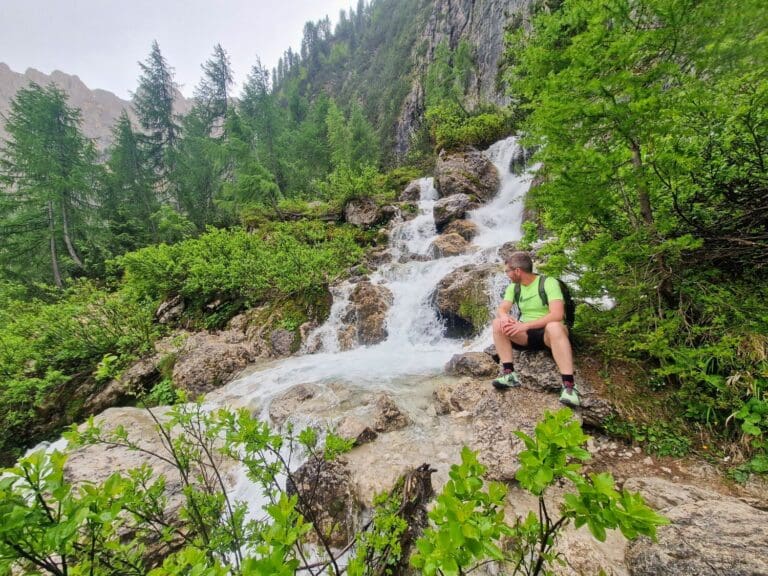
There are walking options right from the village, too, including Tervela Waterfall. If the conditions allow, you could also hike up toward Sëurasas or Col Raiser, although those are proper uphill hikes, and snow or ice can make them inaccessible in April or November.
I also really like the cycling path that connects the villages of Val Gardena. You can walk or cycle between them, and from Santa Cristina, it’s easy to reach Selva and continue toward Vallunga.
But if you’re not planning to explore different areas every day and would rather stay somewhere with incredible views right outside your accommodation, I’d also consider Alpe di Siusi or Val di Funes.
Alpe di Siusi
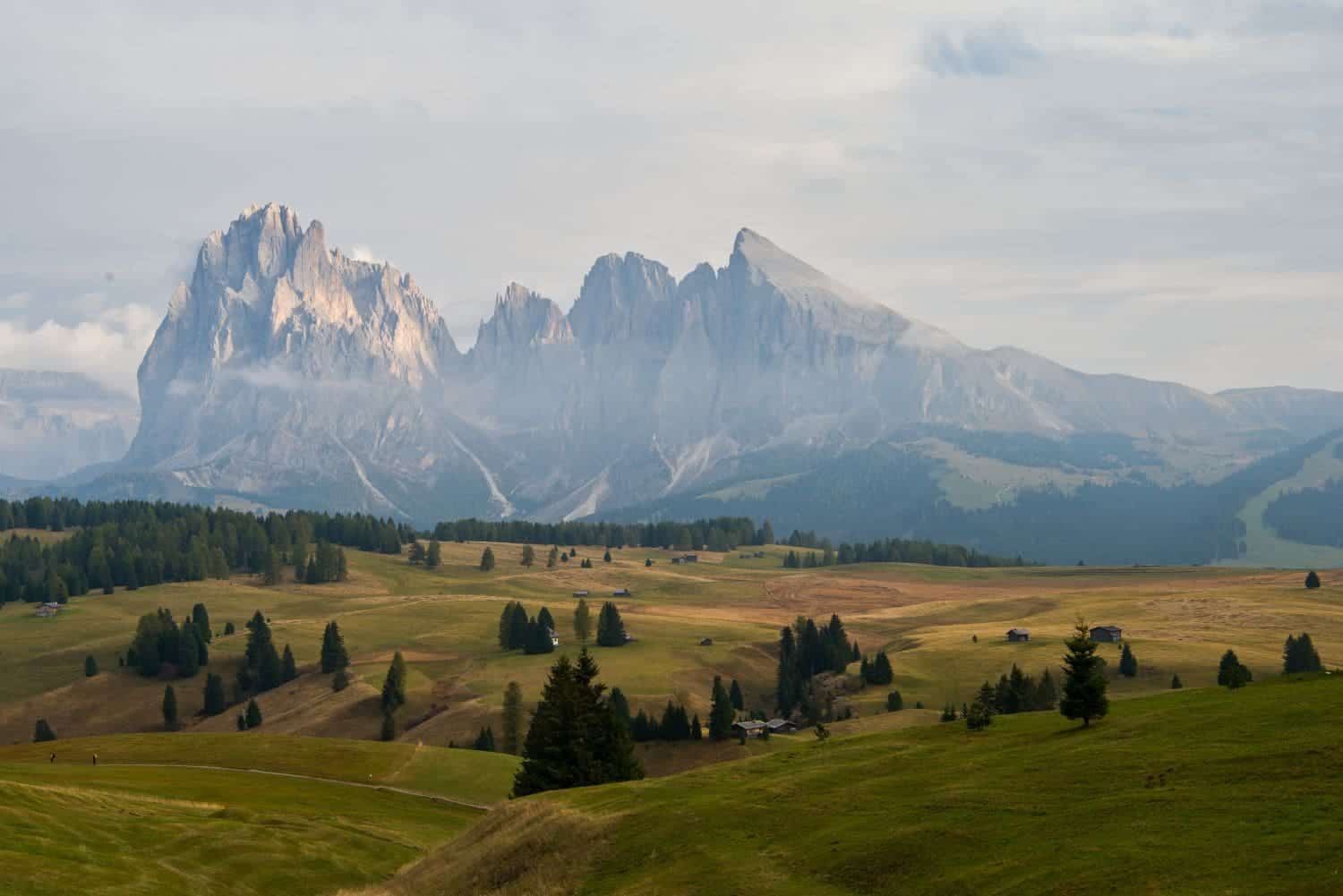
I can easily imagine spending a few days on Alpe di Siusi during the off-season, just relaxing, enjoying the views, and going for walks around the plateau.
Especially when I think of those rolling hills around Compatsch, with Sassolungo and Sasso Piatto in the background. Just imagine walking there in the late evening, just around the sunset time, with hardly anyone around, enjoying the mountains without rushing somewhere or trying to tick another place off your itinerary.
And you can still go exploring further, if you feel like it. When the cable car isn’t operating during the off-season, you can actually drive up to Compatsch throughout the day, although driving further around the plateau is restricted.
Look for a hotel with half-board or an apartment with a kitchen, since restaurants may be closed during the off-season. That way, you can spend a couple of days enjoying Alpe di Siusi without having to worry about where to eat.
Val di Funes

The biggest advantage of staying in Val di Funes is that you have incredible views of the Odle mountains pretty much everywhere, even from the little villages. That makes Val di Funes a wonderful option for a quieter trip, especially if you like the idea of staying somewhere surrounded by beautiful views but don’t particularly want to stay high up on Alpe di Siusi.
And the villages themselves are really cute, with that authentic, small Alpine village feel. My favorite for staying in Val di Funes would be Santa Magdalena – it’s really conveniently located, and the views directly from it are magnificent.
There are lovely walks around the valley, too. Some of the smaller roads, like the one to Passo delle Erbe, aren’t cleared when it snows, but you may still be able to walk along them with microspikes, depending on the conditions.
And remember that snow is possible in both November and April.
The main thing you should check before booking is, once again, where you’re getting your food.
Val di Funes is made up of small villages, and restaurant options can be very limited during the off-season. So choose somewhere with a kitchen or meals included, rather than counting on finding somewhere to eat every evening.
Where should you actually stay
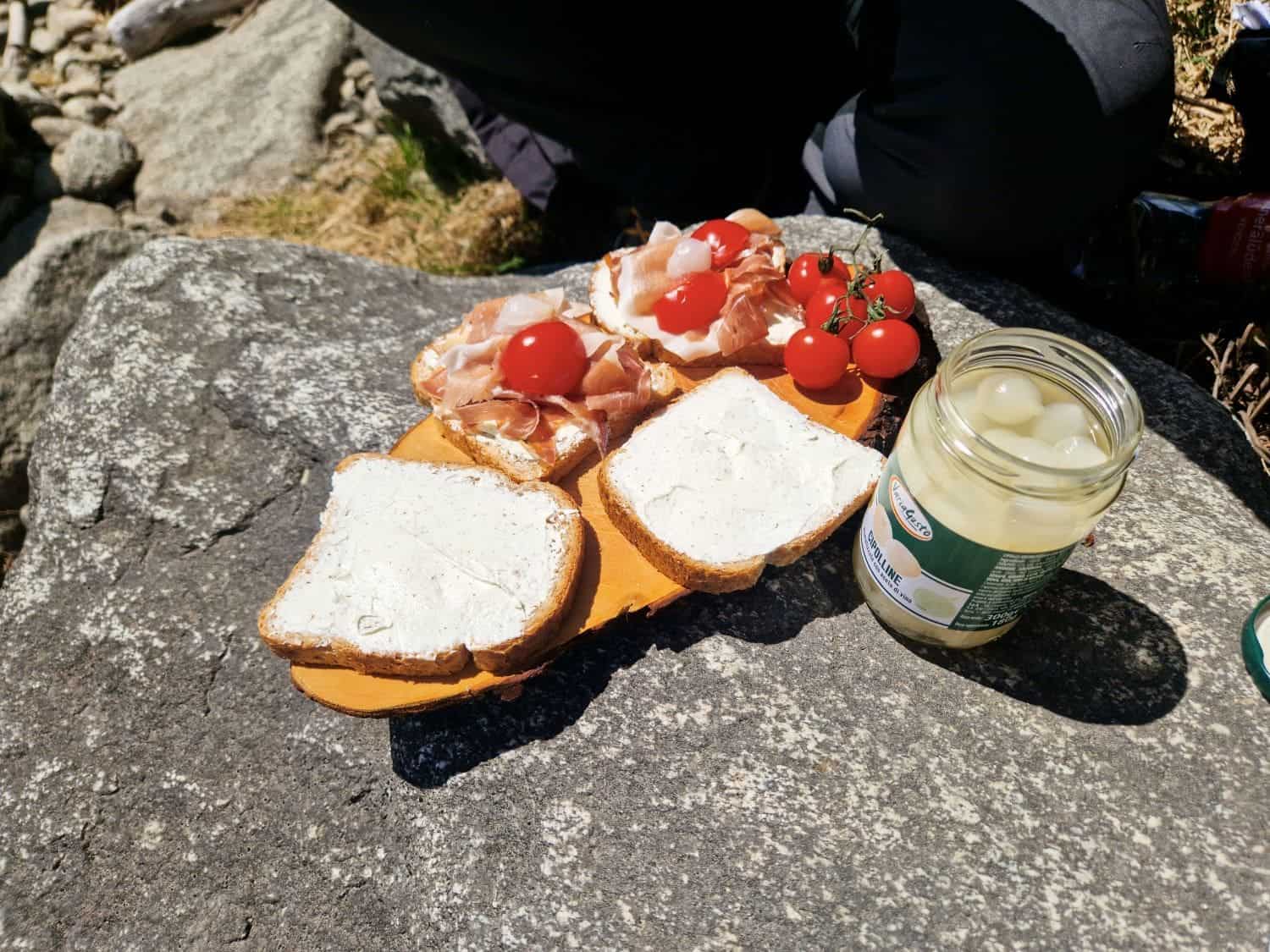
There are some wonderful places to stay in the Dolomites even during the off-season.
I’d choose somewhere like Dobbiaco for exploring the Eastern Dolomites, or Alpe di Siusi for a few relaxing days surrounded by mountains, and Santa Cristina for exploring the Western Dolomites. But in the end, it really depends on what you want from the trip.
Whichever area you choose, though, there’s one thing you need to pay particular attention to when booking accommodation: food.
Yes, I’m mentioning food again. And I would mention it once more – the Dolomites don’t work like many other destinations, and when I say that the restaurants and shops are closed, I mean it – they’re closed.
Since many restaurants get closed, I think a self-catering apartment is the easiest and most flexible option for many trips. We stayed in one during our April trip, and it was so convenient not having to worry about finding an open restaurant every evening.
A hotel with half-board is another excellent option, especially if you’re planning a stay where you just want to relax.
And there’s nothing wrong with choosing a regular hotel and eating out, either, as long as you’ve checked that there are actually restaurants open nearby.
Once you’ve decided which area you want to stay in, have a look at my recommendations for the best hotels in the Dolomites during the off-season. I’ve included places that are particularly worth considering in April and November.

I watched a show once where they want camping around the area in April and almost got snowed in—yikes! Thank you so much for your super helpful tips!